Choosing the right tires and wheels for your golf cart is crucial for optimizing performance, safety, and comfort. With various options available, understanding the key factors can help you make an informed decision. This guide outlines what to consider when selecting tires and wheels for your golf cart.
Understand Your Golf Cart's Use
The first step in selecting tires and wheels is to consider how you plan to use your golf cart. If you primarily drive on smooth, paved surfaces, standard tires may suffice. However, if you frequently navigate rough terrain or off-road conditions, investing in all-terrain or rugged tires is essential for better traction and stability.
Consider Tire Size and Fitment
Tire size is another critical factor. Golf cart tires come in various sizes, and it’s vital to select a size that fits your cart's specifications. An incorrect size can lead to handling issues, increased wear, or even safety hazards. Always refer to your golf cart's manual for recommended tire sizes and ensure that the wheels you choose can accommodate them.
Material and Construction
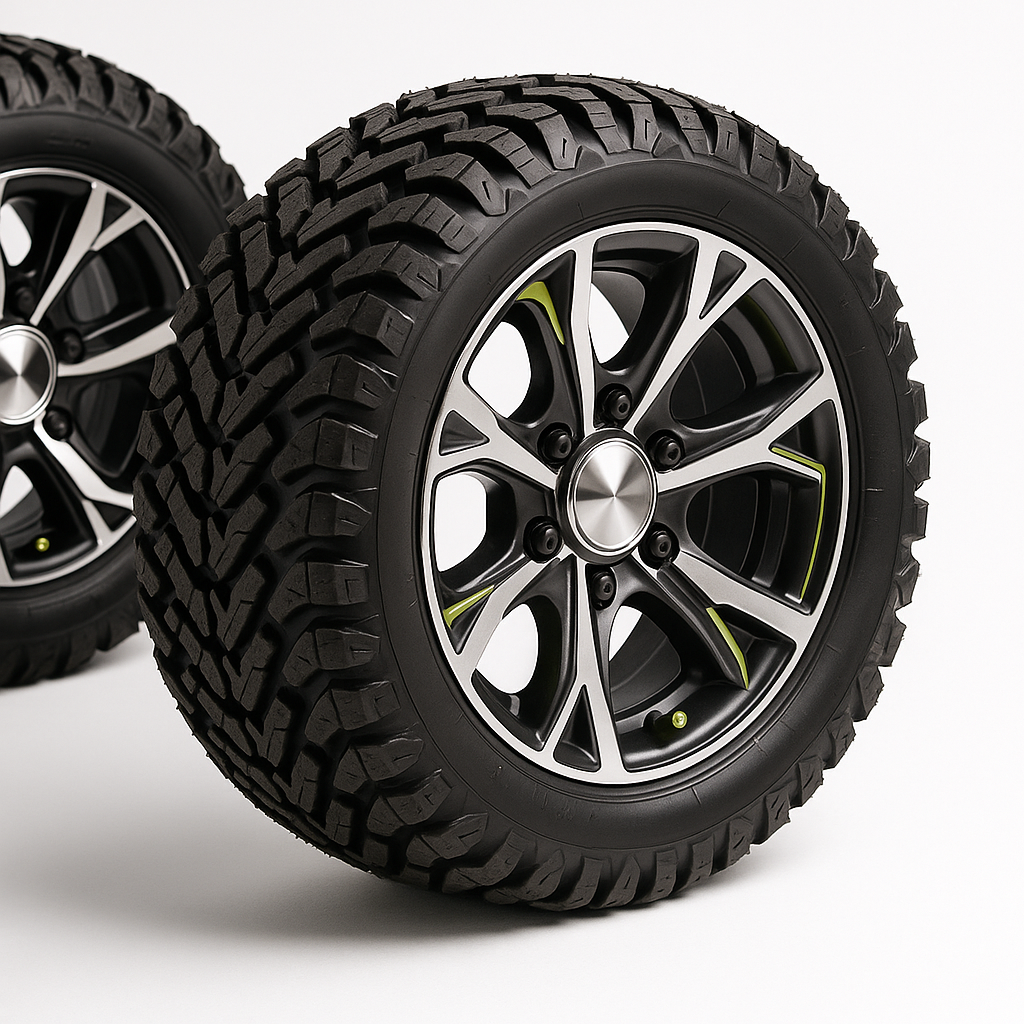
The materials used in tire and wheel construction significantly affect performance and durability. Look for tires made from high-quality rubber compounds that offer good traction and resistance to wear. Wheels can be made from steel or aluminum; while steel wheels are generally more affordable and durable, aluminum wheels tend to be lighter and provide a sportier appearance.
Evaluate Tread Patterns
Tread patterns play a crucial role in how well your tires perform in different conditions. A deeper, more aggressive tread pattern is better for off-road use, providing enhanced grip on uneven surfaces. Conversely, a smoother tread pattern is ideal for paved surfaces, offering a quieter ride and improved fuel efficiency. Choose a tread pattern that aligns with your typical driving conditions.
Assess Common Trade-offs
When choosing tires and wheels, be aware of common trade-offs. For instance, larger tires may improve ground clearance and off-road capability but can affect acceleration and battery life. Similarly, lighter wheels can enhance performance but may compromise durability. Understanding these trade-offs will help you select a combination that best suits your needs.
Budget Considerations
Finally, consider your budget. While it may be tempting to opt for the cheapest option, investing in quality tires and wheels can save you money in the long run by reducing maintenance costs and improving performance. Look for a balance between quality and affordability to ensure you get the best value for your investment.