Battery cables are one of the most overlooked components on a golf cart, yet they're responsible for delivering every amp of power from your battery pack to your motor and controller. A worn, undersized, or corroded cable doesn't just hurt performance — it generates heat, wastes energy, and in serious cases can become a fire risk. When it's time to replace or upgrade your cables, knowing what actually matters will save you from making an expensive mistake.
Gauge: The Most Important Spec You Need to Get Right
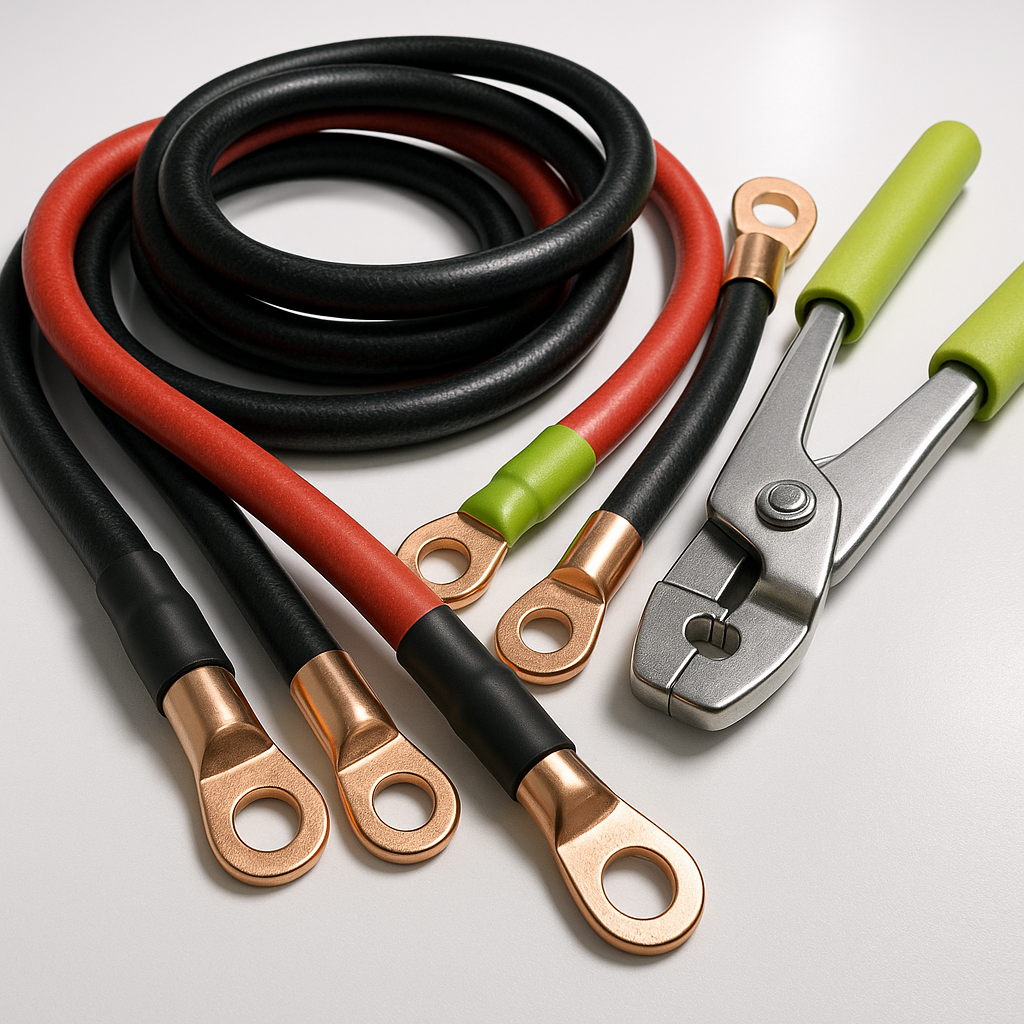
Wire gauge determines how much current a cable can carry without overheating. Golf carts draw significant amperage, especially under load — going uphill, carrying passengers, or accelerating from a stop. Most golf cart battery cables fall in the 2 AWG to 6 AWG range, with lower numbers meaning thicker, higher-capacity wire. A 2 AWG cable can handle substantially more current than a 6 AWG cable. For most stock golf carts, the factory gauge is adequate, but if you've upgraded to a higher-voltage system, added accessories that draw power, or are running a performance controller, stepping up to a heavier gauge is worth considering. When in doubt, match or exceed the original equipment gauge — never go thinner.
Cable Material: Pure Copper vs. Copper-Clad and Tin Plating
Not all copper wire is equal. The best battery cables use pure copper stranding, which offers the lowest resistance and the best flexibility. Cheaper cables sometimes use copper-clad aluminum (CCA), which looks similar but has higher resistance and is more prone to corrosion at connection points. Tin-plated copper is another option — the tin coating gives the individual strands better corrosion resistance, which matters a lot in humid climates or carts stored outdoors. For most golf cart applications, pure copper or tin-plated pure copper are the materials worth paying for. The small price difference between quality copper and a budget alternative is nothing compared to the cost of a failed connection or damaged controller.
Length and Routing: Get the Fit Right Before You Buy
Battery cables aren't one-size-fits-all. The distance between your battery bank and your motor or solenoid varies depending on your cart model, battery configuration, and whether you've relocated components. Cables that are too short put tension on terminals, which loosens connections over time and creates resistance. Cables that are excessively long create unnecessary voltage drop and routing clutter. Measure your existing cables before ordering — or trace the exact route you need — and give yourself a small amount of slack for clean routing without excess. Many cables are sold as vehicle-specific replacements for common platforms, which takes the guesswork out of length and terminal placement.
Terminals and Connectors: Where Failure Usually Starts
The terminal ends — the lugs that bolt to your batteries and electrical components — matter as much as the wire itself. Look for terminals that are either crimped with industrial-grade tooling or soldered, not just folded over. The connection between the lug and the wire strands is where resistance builds up and heat is generated if the joint is poor. Terminals also need to match your battery post type (top-post vs. side-post) and the bolt size used on your solenoid, controller, and motor. On universal cables you may need to verify lug sizing yourself; vehicle-specific cables sold for your make and model typically handle this for you.
Universal vs. Vehicle-Specific Cables
You'll find two general categories of golf cart battery cables: universal lengths sold by gauge and length, and vehicle-specific cables engineered for particular makes, models, and voltage configurations. Universal cables give you flexibility — useful if you've custom-built your battery tray, relocated components, or are working on a non-standard build. Vehicle-specific cables are the safer choice for a stock or near-stock cart because the lengths, terminal orientations, and lug sizes are already worked out for your application. For a direct replacement job, vehicle-specific cables almost always save time and reduce the chance of a wiring error.
Signs It's Time to Replace Your Cables
Battery cables degrade gradually, so the problem isn't always obvious until something fails. Look for insulation that's cracked, brittle, or melted anywhere along the length. Check terminals for heavy corrosion — a little surface oxidation is normal, but white or green buildup that's eaten into the metal means the connection is compromised. Cables that feel stiff and inflexible have likely been heat-cycled too many times and the copper stranding inside may be partially broken. If your cart is sluggish, struggles on hills it used to handle easily, or your batteries test fine but performance is still off, degraded cables are a common culprit worth checking before you start replacing expensive components.
Replacing battery cables is straightforward work, but it's also work where mistakes have consequences — always disconnect the negative terminal first, work on one cable at a time to avoid accidental shorts, and use proper insulated tools. A quality set of cables installed correctly will last years and keep your entire electrical system running at its best.