Battery cables are one of the most overlooked parts on a golf cart, but they have a direct impact on how your cart performs. A cable that's undersized, corroded, or poorly terminated creates resistance in the circuit — and resistance means voltage drop, heat buildup, and sluggish acceleration. Whether you're replacing a cracked original cable or rewiring after a battery upgrade, knowing what actually separates a good cable from a cheap one will save you headaches down the road.
Wire Gauge: Don't Skimp Here
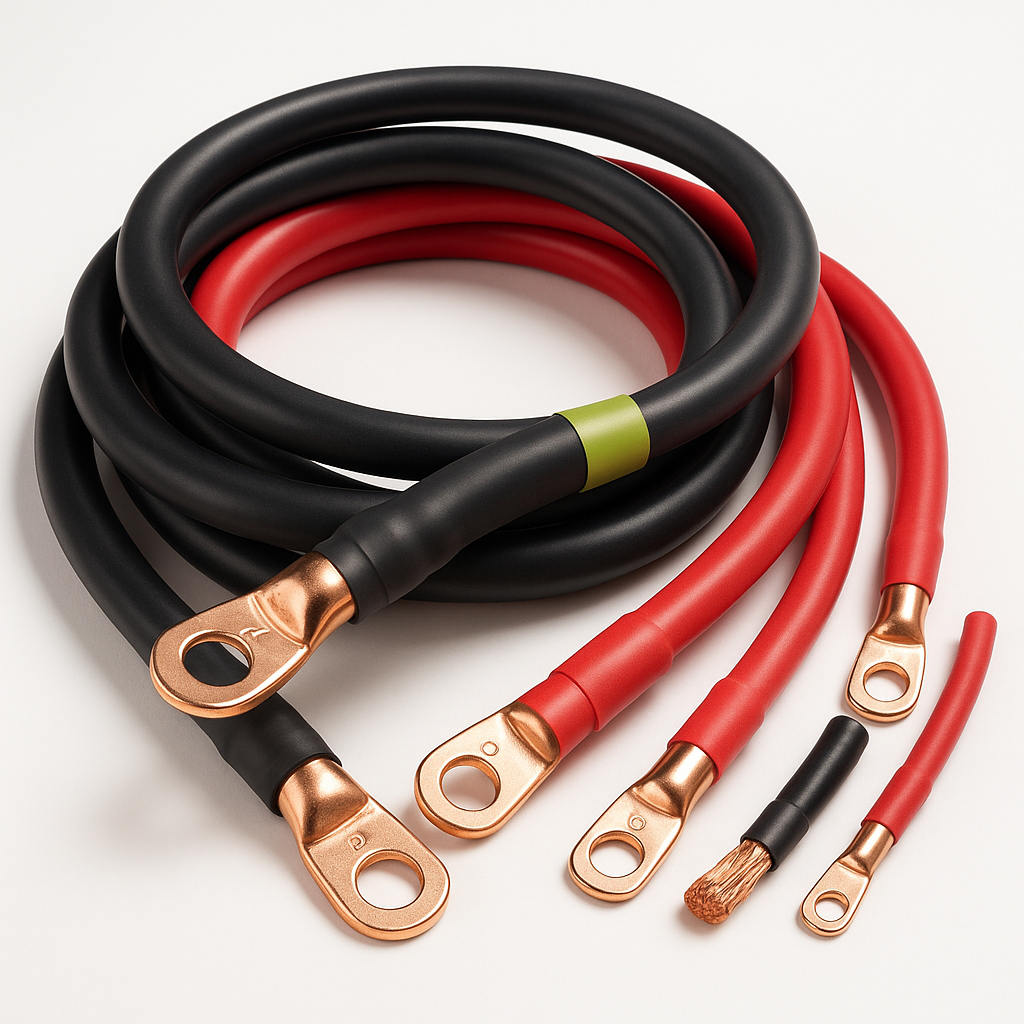
Gauge is the single most important spec on a battery cable. In the American Wire Gauge (AWG) system, lower numbers mean thicker wire — and thicker wire carries more current with less resistance. Golf carts running higher-voltage or higher-draw systems need heavier gauge cable to handle the load safely. Most stock golf cart battery cables fall in the 2 AWG to 6 AWG range, with 2 AWG being the heavier option better suited for high-current applications and longer cable runs. If you're upgrading to lithium batteries or adding accessories that draw significant power, going with a heavier gauge than stock is rarely a mistake.
Conductor Material: Copper Is King, but Coatings Matter Too
Pure copper is the standard for high-quality battery cables because it offers excellent conductivity and flexibility. However, bare copper oxidizes over time, especially in humid or outdoor environments — and oxidation on the conductor surface increases resistance. Tin-plated copper cables address this by coating each strand with a thin layer of tin, which resists corrosion significantly better than bare copper. If your cart lives outdoors, near salt air, or in a damp climate, tin-plated conductors are worth the modest additional cost. Avoid cables marketed simply as "copper-clad" — that usually means an aluminum core with a copper coating, which conducts less efficiently and can cause compatibility issues at terminals.
Cable Length and Routing
Battery cables need to reach their connection points without being stretched tight or coiled in excess. A cable under tension will stress the terminals and eventually crack the insulation at flex points. Too much extra length isn't ideal either — it adds unnecessary resistance and creates a mess that's harder to route away from heat sources and moving parts. When buying replacement cables, measure your existing run carefully, account for the routing path (not just straight-line distance), and choose a length that allows a clean, relaxed installation. Universal cables work well when they're the right length; application-specific cables for particular cart models and configurations take the guesswork out of fitment entirely.
Terminal Style and Connection Quality
The terminal — the metal lug crimped or soldered onto the cable end — is where most cable failures actually originate. A poorly attached terminal creates a high-resistance hot spot that can melt insulation, arc, or cause intermittent power loss. Look for cables with heavy-duty ring terminals that are properly sized for your battery post bolts. Terminals should be either machine-crimped with a hydraulic die (visible parallel crimp marks) or soldered, not just hand-crimped with pliers. The best cables have both a mechanical crimp and a soldered connection. Copper or tin-plated copper terminals are preferred over zinc or aluminum for the same corrosion reasons that apply to the conductor itself.
Insulation Jacket: Flexibility and Temperature Rating
The outer jacket protects the conductor from abrasion, moisture, and heat. A good battery cable jacket stays flexible even in cold temperatures — stiff cables crack at the terminal entry point over time. Look for a jacket rated for the temperature range your cart will see, especially if you're in a climate with cold winters or if cables route near motor housings. SGT or SGX style automotive battery cable jackets are a common and reliable choice. Avoid any cable where the jacket already feels brittle or shows cracks — that's a sign the insulation has degraded and the cable should be replaced regardless of how the conductor looks.
OEM Replacement vs. Universal Fit
Application-specific cables are pre-cut and pre-terminated for a particular cart model and battery configuration. They're the easiest option if you just want to restore a cart to stock and don't plan to change anything. Universal cables require you to verify length and terminal sizing yourself, but they give you more flexibility when customizing your battery layout or upgrading components. Neither is inherently better — the right choice depends on whether you're doing a straightforward replacement or building something custom. Just make sure whatever you buy is the correct voltage rating for your system and that the gauge is appropriate for your cart's draw.
Safety First
Always disconnect the negative terminal first when removing old cables, and reconnect it last when installing new ones. Battery cables on golf carts carry enough current to cause serious burns, start fires, or damage electronics if they short against the frame. If you're not comfortable working around live battery banks, have the work done by a shop. Clean terminal connections with a wire brush before installing new cables, and apply a light coat of dielectric grease or anti-corrosion terminal spray after the connections are torqued down. Good cables, properly installed, should last years — skip any of these steps and even the best cable won't perform the way it should.