Golf cart brakes don't get nearly as much attention as batteries or motors, but they're the one system you genuinely can't afford to get wrong. Whether you're replacing a stretched cable, worn brake pads, or a scored drum, buying the right part comes down to three things: knowing your cart's make and model, understanding which style of brake system you're working with, and choosing materials that match how and where you actually ride. This guide breaks down what matters so you're not guessing at the parts counter — or worse, installing something that doesn't fit or fails early.
Know Your Cart Before You Shop
Golf cart brake parts are not universal across brands. EZGO, Club Car, and Yamaha each use different brake configurations, and within each brand, the design often changed significantly across model years. A brake drum or cable that fits a mid-1990s EZGO TXT is not the same as one designed for a later generation. Before you search for anything, have your model name and production year in hand — ideally confirmed by the serial number plate on the cart itself, since year estimates can be off. Getting this right upfront saves you a return shipment and downtime waiting for the correct part.
Drum Brakes vs. Disc Brakes
Most golf carts — especially older gas and electric models — use drum brakes at the rear wheels. Drum systems are simple, durable, and easy to service, which is why they've remained the standard for decades. Some newer or performance-oriented carts have moved toward disc brakes, which offer better heat dissipation and more consistent stopping power, particularly on hilly terrain or with heavier loads. If your cart has drum brakes and you're just doing routine maintenance, stick with quality drum-style replacements. Upgrading to disc involves more than just a pad swap — it typically requires new calipers, rotors, and sometimes bracket fabrication, so it's a bigger project than most owners take on.
Brake Cables: The Overlooked Wear Item
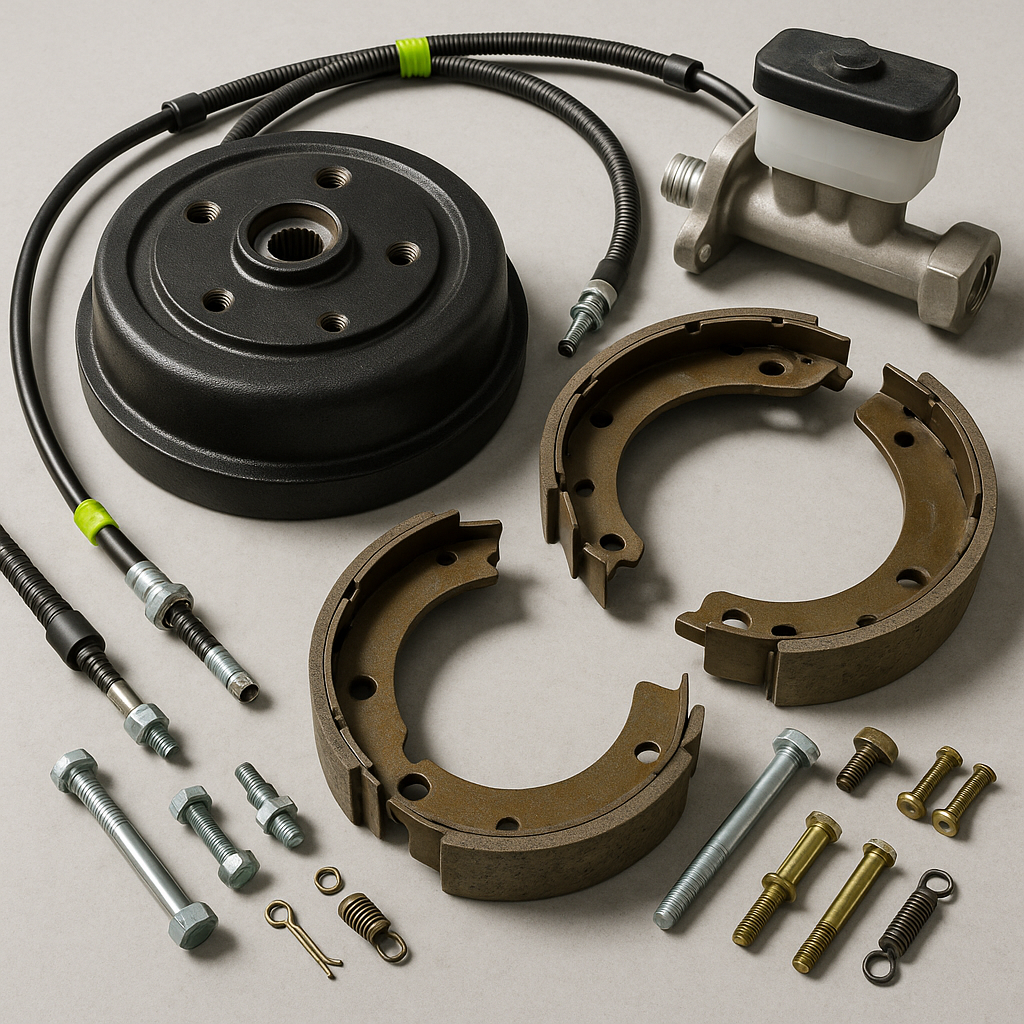
Mechanical brake cables stretch, fray, and corrode over time — especially on carts that sit outdoors or in humid climates. A cable that's lost tension makes the whole brake system feel spongy or unresponsive even if the pads and drums are fine. When shopping for a replacement cable, length and routing matter as much as the end fittings. Cables are generally model-specific because the run from the pedal to the wheel assembly varies by chassis. A cable that's too short won't reach full travel; one that's too long creates slack that's impossible to properly adjust out. Look for cables with quality outer housing and corrosion-resistant inner wire if your cart lives in a wet or salty environment.
Brake Pads and Shoes: Material Matters
For drum brake systems, you're typically replacing brake shoes — the curved friction material that presses against the inside of the drum. For disc systems, you're looking at brake pads. In both cases, the friction material compound affects stopping feel, noise, dust, and longevity. Organic compounds are quieter and gentler on drums and rotors but wear faster. Semi-metallic compounds last longer and handle heat better but can be noisier and harder on mating surfaces. For most recreational golf cart use, organic or light semi-metallic is plenty. If you regularly carry heavy loads, navigate steep hills, or use your cart in an environment where brakes get a real workout, lean toward a more durable compound.
Drum Condition and Replacement Thresholds
A brake drum can be resurfaced a limited number of times before the wall becomes too thin to safely contain heat and stress. Most drums have a maximum diameter spec stamped or cast into them — once the inner diameter is worn or machined beyond that mark, the drum should be replaced, not reused. If you're replacing shoes or pads, inspect the drum surface carefully for deep scoring, heat cracks, or hard spots. A glazed or lightly scored drum can sometimes be cleaned up, but significant damage means you're throwing good friction material at a bad surface and your stopping distance will suffer. Replacement drums are generally affordable enough that pairing new shoes with a new drum is the smarter move.
OEM Fit vs. Aftermarket Parts
Original equipment manufacturer parts guarantee fitment but often come at a premium and may have limited availability for older carts. Quality aftermarket parts, made specifically for your make and model, can offer comparable performance at a better price — but quality varies widely. Look for aftermarket suppliers that clearly list compatibility by model and year rather than vague "universal fit" claims for drum and cable components. For friction materials specifically, check that the parts meet or exceed OEM specs for your application. Avoid heavily discounted brake components from unknown sources — this is one category where saving a few dollars on the wrong part has real safety consequences.
When to Replace vs. Adjust
Not every brake problem requires new parts. Golf cart mechanical brakes often just need adjustment — the cable tension and shoe-to-drum clearance can drift over time as components wear in. If your cart pulls to one side when braking, or if the pedal travel feels long before engagement, try a proper adjustment before ordering parts. Most drum brake systems have an adjuster accessible through a slot in the backing plate or drum that lets you take up slack as shoes wear. That said, adjustment has limits: if you're maxed out on adjustment and still don't have adequate braking, or if you hear grinding rather than just feel reduced response, it's time for new components.