Upgrading your golf cart's mirrors and steering wheel is one of the most impactful changes you can make for both safety and comfort — but it's also one of the easiest ways to waste money on parts that don't fit or don't hold up. Before you add anything to your cart, it helps to understand what separates a solid upgrade from a frustrating mismatch.
Golf Cart Mirrors: What Actually Matters
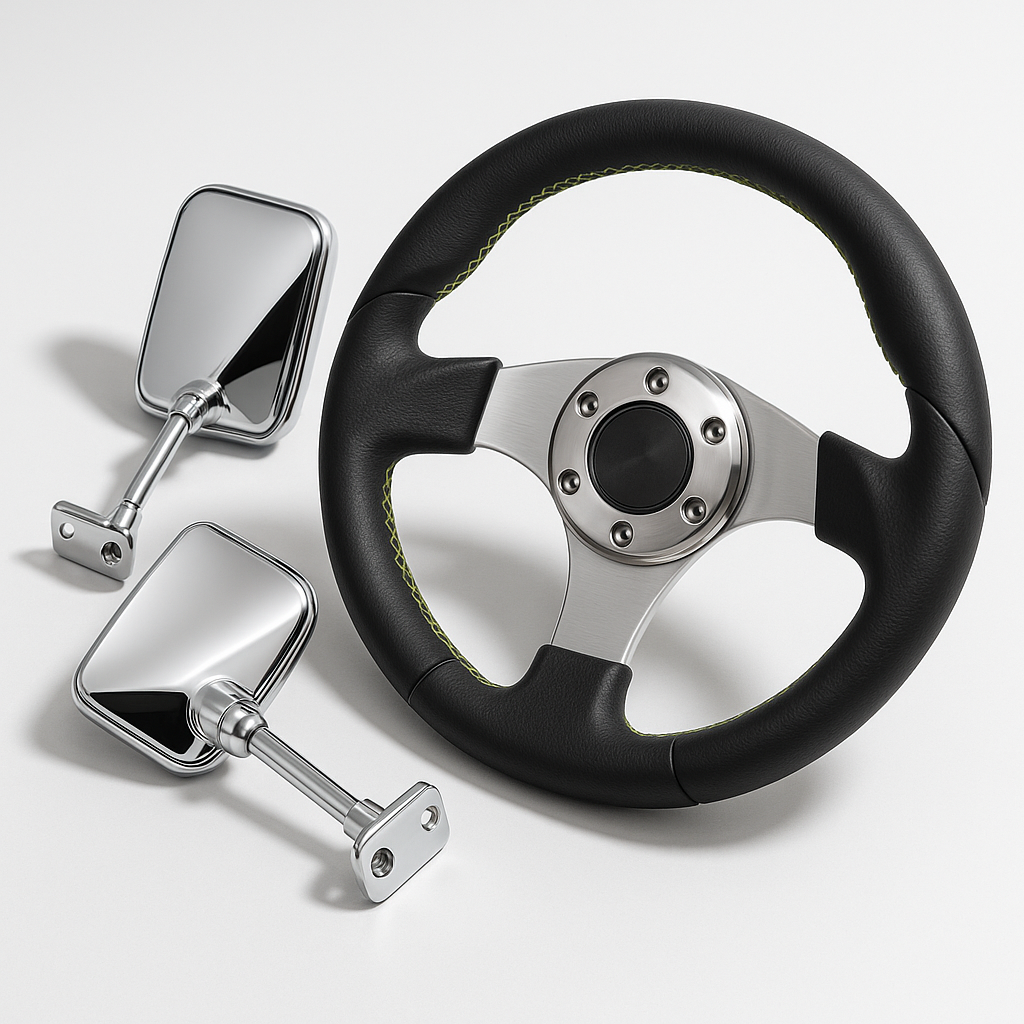
The most important thing to know about golf cart mirrors is that "universal" doesn't always mean truly universal. Mirror mounting hardware is designed to clamp onto a roll bar, roof support, windshield frame, or fender — and the diameter and shape of those surfaces vary between manufacturers like Club Car, EZGO, and Yamaha, and even between model years of the same brand. Before buying, measure the diameter of whatever tube or surface you plan to mount to and compare it against the clamp range listed for the mirror. A mirror that wobbles because the clamp won't tighten properly is worse than no mirror at all.
Material matters more than most buyers expect. Plastic-framed mirrors are lighter and cheaper, but they crack in cold weather and fade in sun over time. Die-cast or stainless steel brackets last significantly longer, especially on carts that see year-round use or street-legal duty cycles. For the mirror glass itself, look for shatter-resistant acrylic or tempered glass rather than standard glass — golf carts vibrate, and standard glass mirrors can crack on rough terrain. Convex glass gives you a wider field of view, which is generally preferable on a vehicle without side-view mirror redundancy.
Think about how you'll actually use the cart. A golf-only cart on a manicured course needs basic rear visibility. A street-legal LSV (Low Speed Vehicle) or a cart used on paths with cross-traffic genuinely benefits from a set of side mirrors in addition to a rearview mirror — and in some jurisdictions, side mirrors are legally required for street use. Check your local ordinances if that applies to you.
Steering Wheels: Fitment First, Style Second
Golf cart steering wheels look like a straightforward swap until you're standing in your driveway holding a wheel that won't fit the hub. The critical measurement is the steering column spline pattern and hub diameter — these vary by manufacturer and even by year, and an aftermarket steering wheel almost always requires a matched adapter hub to install correctly. Most quality steering wheel kits are sold with a compatible hub or adapter, but verify this before buying if you're purchasing wheel and hub separately.
Wheel diameter is a legitimate comfort and handling consideration, not just aesthetics. A smaller diameter wheel gives you quicker steering response with less arm travel — useful on tight courses or in communities with frequent turns. A larger diameter wheel requires less grip strength and is often more comfortable for riders with joint issues or older drivers. Most golf carts are forgiving enough that this comes down to personal preference, but it's worth thinking through before you commit.
For materials, molded urethane and padded vinyl are the most common and practical choices. They're grippy in a variety of weather conditions, resistant to cracking, and easy to clean. Wood-wrapped or chrome wheels look sharp but require more maintenance — bare chrome can get extremely hot in direct sun, and natural wood can dry and crack without occasional treatment. If your cart lives outdoors or is used in high-sun environments, a padded grip surface is the more practical call.
Don't Overlook Adjustability and Visibility Together
One thing buyers often don't consider until after installation: mirrors need to be adjustable enough to account for different drivers. If multiple people use the cart — family members of different heights, for example — look for mirrors with ball-joint or pivot mounts rather than fixed-angle brackets. A few degrees of adjustment makes a real difference in whether shorter or taller drivers can actually use the mirror effectively. The same logic applies to tilt-adjustable steering columns if your cart supports one, though that's more of a cart-level feature than an accessory consideration.
The bottom line is straightforward: prioritize fitment verification over price, choose materials appropriate for your climate and use case, and buy mirrors and steering wheels as a matched system in terms of style if you care about the finished look. A mismatched setup that fits perfectly will always serve you better than a coordinated setup that doesn't seat right.