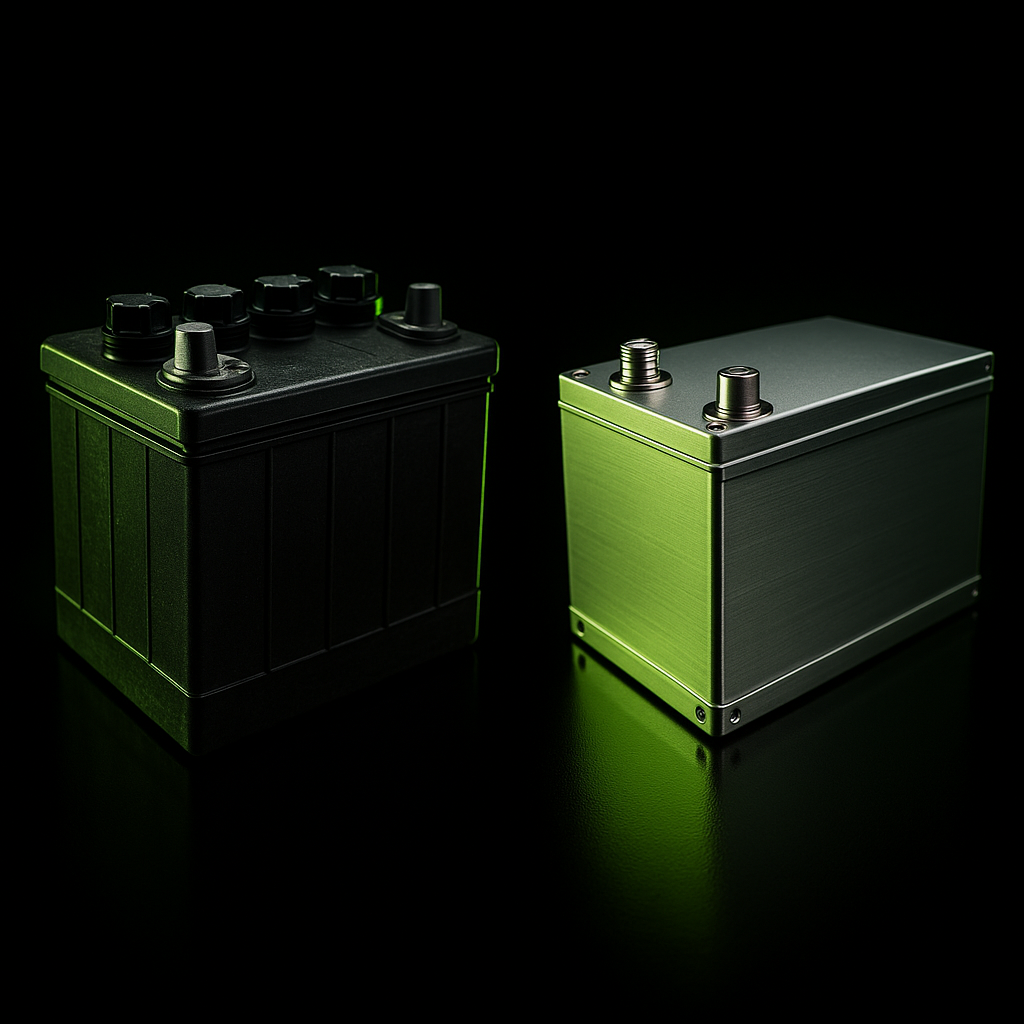
If you're shopping for a battery replacement or planning a lithium conversion, it helps to understand what's actually different between the two technologies — beyond just the price tag.
Weight
Lithium batteries are meaningfully lighter than lead-acid batteries of comparable capacity. This can noticeably improve a cart's handling and can matter if you're close to a weight limit for towing or lift-related modifications.
Maintenance
Flooded lead-acid batteries need regular water top-offs and terminal cleaning to perform well and last their full lifespan. Lithium batteries are sealed and don't require this kind of routine maintenance.
Charging Behavior
Lithium batteries generally charge faster and can be partially charged without the same risk of long-term damage that repeated partial charging can cause in lead-acid batteries. However, they typically require a charger specifically designed for lithium chemistry — using a lead-acid charger on a lithium pack (or vice versa) is not recommended.
Upfront Cost
Lead-acid remains the cheaper option upfront. Lithium carries a higher initial cost, though the gap has been narrowing as lithium manufacturing scales up industry-wide.
Which Makes Sense for You
If you drive your cart daily or want to minimize maintenance, lithium's convenience may be worth the higher upfront cost. If your cart sees occasional or seasonal use and you're prioritizing upfront cost, a quality lead-acid set remains a reasonable, well-proven choice.