Installing a lift kit is one of the most satisfying upgrades you can make to a golf cart, but the job isn't done when the last bolt is tightened. Lifting the suspension changes the angles of your spindles, tie rods, and camber, and if you put the cart back on the ground and drive it without checking alignment, you'll chew through tires faster, fight the steering wheel, and put unnecessary stress on your front-end components. Taking an extra hour to verify alignment after a lift is worth every minute.
Understand What Changes When You Lift
When you raise a golf cart's suspension — whether through a spindle lift, a drop-spindle kit, or a long-travel A-arm setup — the geometry of the front end shifts. The most common issues are toe-out (the fronts of the tires splaying outward) and changes in camber (the vertical tilt of the tire). Toe is the most critical to correct first because even a small amount of toe-out creates continuous scrubbing across the tire tread. Camber matters too, but on most golf carts it's either not adjustable or only slightly adjustable depending on the kit and the cart model.
What You'll Need
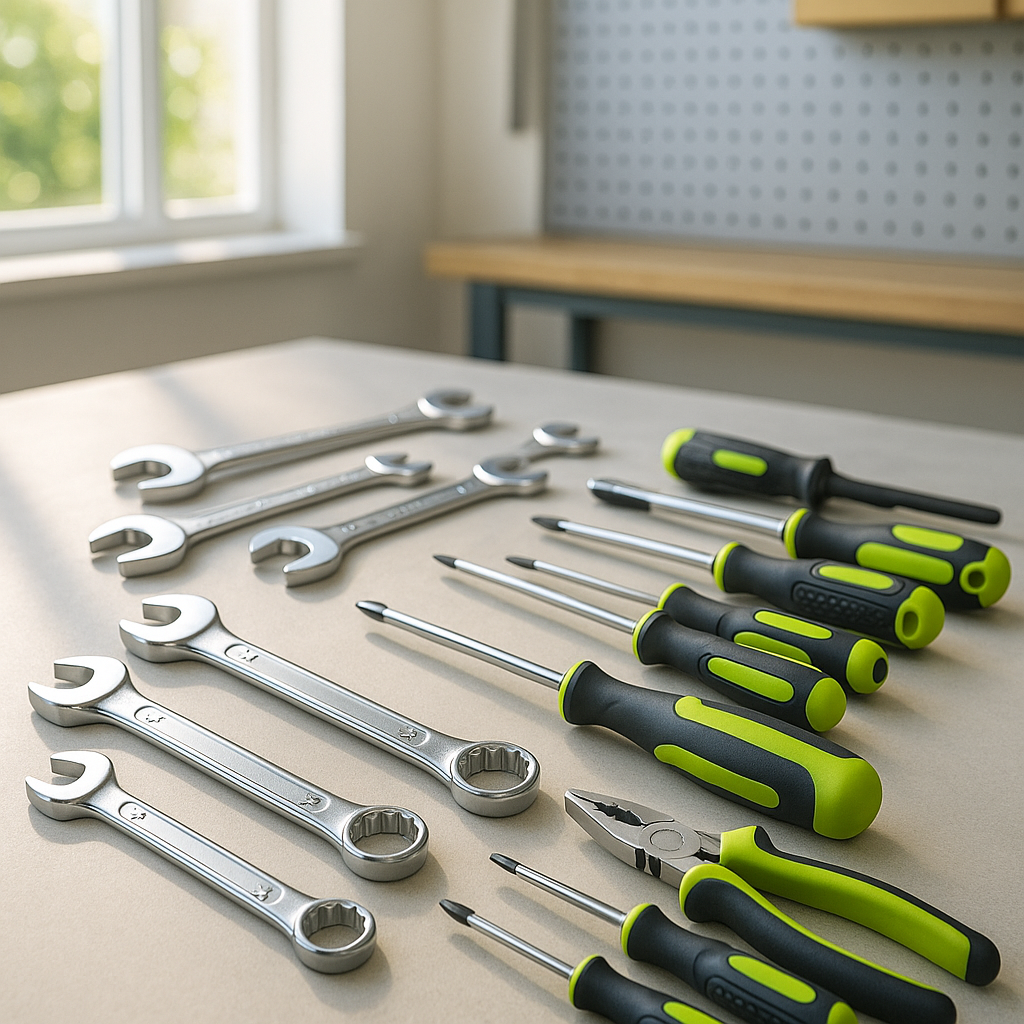
You don't need expensive shop equipment to get a solid baseline alignment on a golf cart. A quality tape measure, a piece of chalk or a marker, a straight edge or alignment bar, and a floor jack and jack stands are enough for a reliable toe check. Some owners use a length of angle iron or a taut string line run along both sides of the cart as a reference — this is a well-established DIY method that works well when done carefully. A wrench set to loosen and adjust your tie rod ends is the other essential tool.
How to Check Toe
Park the cart on flat, level ground with the steering wheel centered and the front tires pointing straight ahead. Mark the center of each front tire at hub height — both on the front face and the rear face of the tire — using chalk or tape. Measure the distance between your two front marks, then measure the distance between your two rear marks. On most golf carts, a slight toe-in (front measurement slightly narrower than rear measurement by a small amount) is the target, as this creates stable, predictable steering. If your measurements show toe-out, the front of the tires are wider than the rear, and you need to bring them in. The exact target spec will vary by cart model and lift configuration, so consult your lift kit's documentation or a service manual for your specific cart.
Adjusting Toe Through the Tie Rods
Toe is corrected by adjusting the length of the tie rods — the rods that connect your steering rack or drag link to each front spindle. Loosen the jam nut at each tie rod end, then rotate the tie rod body to lengthen or shorten it. Rotating the tie rod to lengthen it pushes the wheel outward (more toe-out); shortening it pulls the wheel inward (more toe-in). Make small adjustments — a half-turn at a time — and re-measure after each adjustment. Work both sides evenly to keep the steering wheel centered. Once your measurements are correct, snug down the jam nuts firmly so the tie rod ends can't walk out of position over time.
Checking Camber
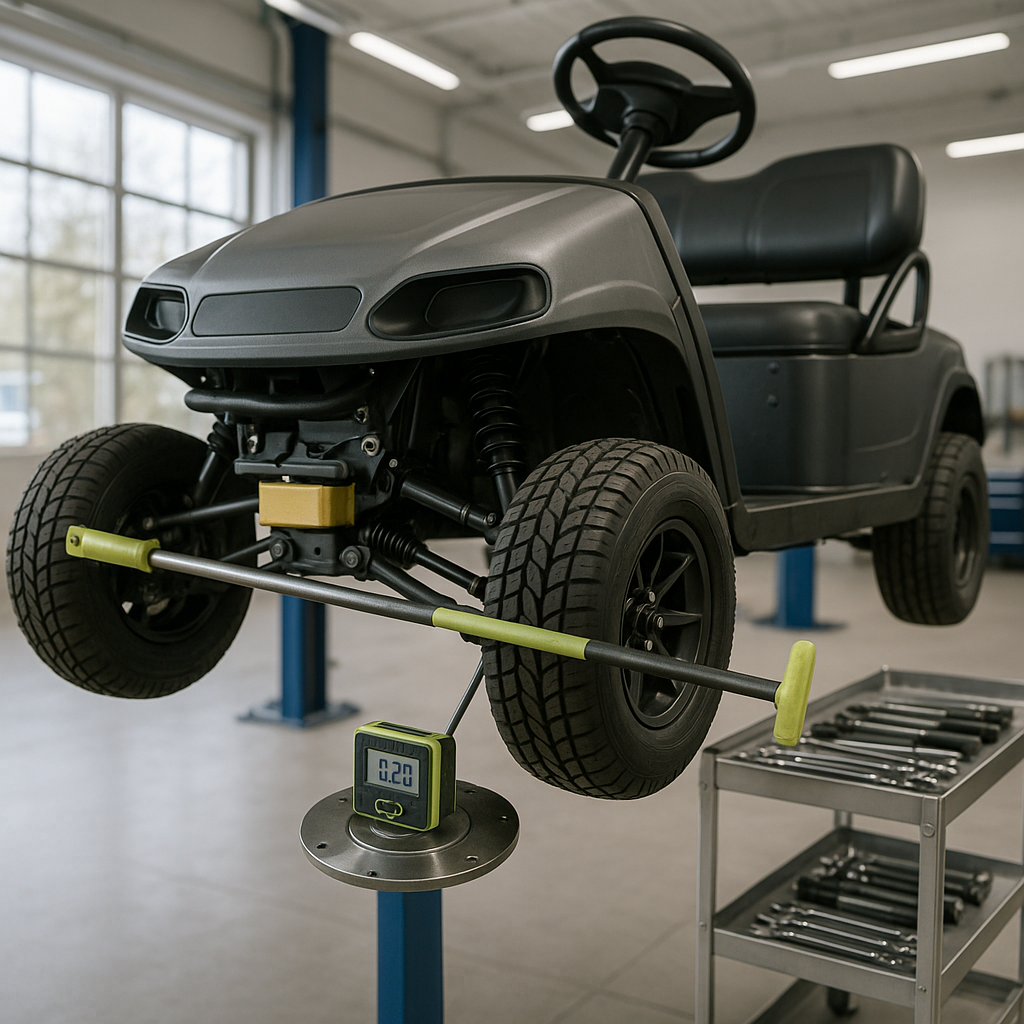
Camber — whether the top of the tire leans inward (negative) or outward (positive) — is trickier on a golf cart because most factory suspensions don't have a dedicated camber adjustment. After a spindle lift in particular, some camber change is normal and usually falls within an acceptable range. You can get a rough visual check by standing in front of the cart and looking at whether the tires appear to lean noticeably in one direction. A more accurate check uses a digital camber gauge held flat against the wheel face. If your lift kit introduced camber shims or adjustable A-arms, use those to bring the camber as close to neutral as possible. If your setup has no camber adjustment, a minor deviation is typically tolerable, but significant camber will wear your tires unevenly on the inside or outside edges.
Don't Skip the Post-Drive Recheck
After your initial alignment check, take the cart for a short test drive on a flat surface and pay attention to whether it tracks straight without input, and whether the steering returns to center predictably after a turn. Then pull it back into the garage and do a quick visual re-inspection of all your tie rod ends, spindle bolts, and lift kit hardware. New lifts — especially on carts that see rough terrain — can experience slight settling after the first few miles. Retorquing your hardware and re-verifying your toe measurement after the first ride is a smart habit, and it's the kind of step that separates a clean, reliable build from one that slowly develops problems.