Flooded lead-acid batteries are still the most common battery type in gas and electric golf carts, and they need one thing that sealed or lithium batteries don't: regular watering. Neglect this, and your batteries sulfate, overheat, and fail years ahead of schedule. Stay on top of it, and a quality set of flooded batteries can give you reliable service for five or more years. This guide walks you through everything you need to know — when to water, how much to add, and the mistakes that silently destroy battery packs.
Why Water Level Matters So Much
Inside each cell of a flooded lead-acid battery, the lead plates must stay submerged in electrolyte — a solution of sulfuric acid and distilled water. Every charge cycle causes some of that water to evaporate or break down through a process called electrolysis. If the plates become exposed to air, they oxidize and sulfate rapidly. That damage is largely permanent. Even brief exposure during charging — when the battery is gassing and temperatures are highest — can shorten cell life significantly. Keeping the electrolyte at the correct level isn't optional maintenance; it's the core requirement for keeping flooded batteries alive.
What You'll Need
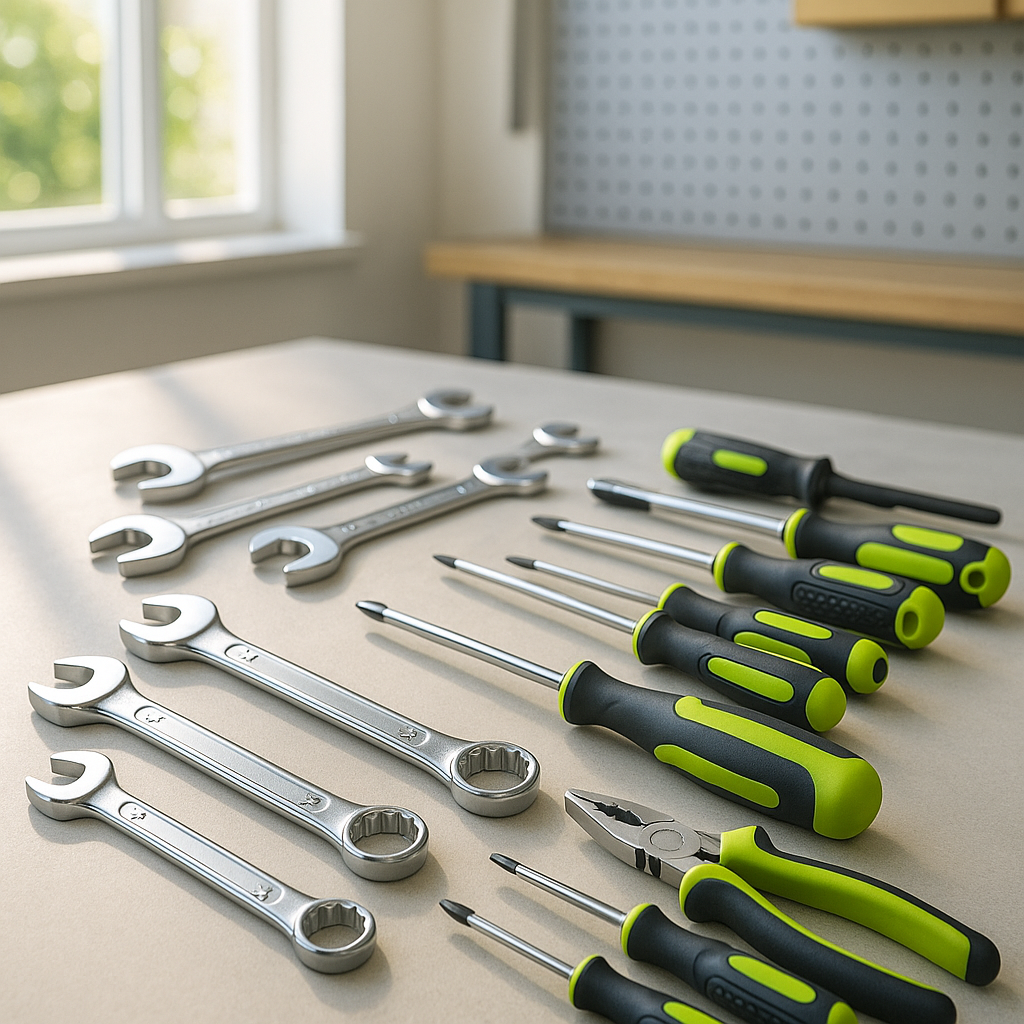
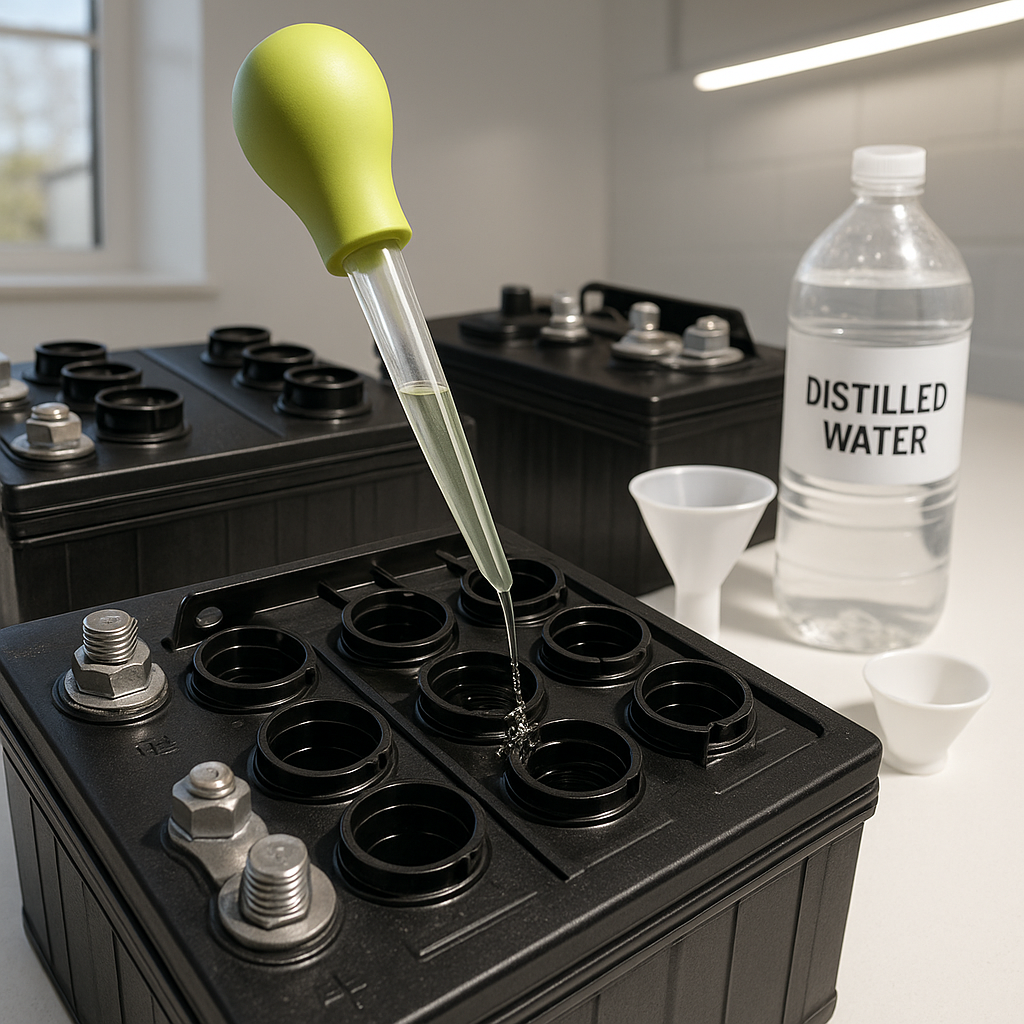
Before you start, gather a few basic supplies. You'll need distilled water — never tap water, which contains minerals that contaminate the electrolyte and accelerate plate degradation. A turkey baster or dedicated battery water filler (a simple squeeze bottle with a shutoff tip) makes it much easier to add water precisely without splashing. Grab a pair of safety glasses and acid-resistant gloves. Battery acid is dilute, but it will still irritate skin and eyes and damage clothing. Have a clean rag nearby as well. That's genuinely all you need.
When to Check Water Levels
A common rule of thumb is to check water levels every 30 days or after every 10 to 15 charge cycles — whichever comes first. You should also check after any unusually heavy use, like a long day of hauling or riding hilly terrain, since that stresses batteries more than light cruising. One important timing note: always check and add water after a full charge, not before. Charging causes the electrolyte to expand. If you top off before charging, the water can overflow and push acid out of the cells, making a mess and lowering electrolyte concentration. The only exception is if a cell looks dangerously low — plates visibly exposed — in which case add just enough water to cover the plates before charging, then top off properly once the charge is complete.
How to Add Water Correctly
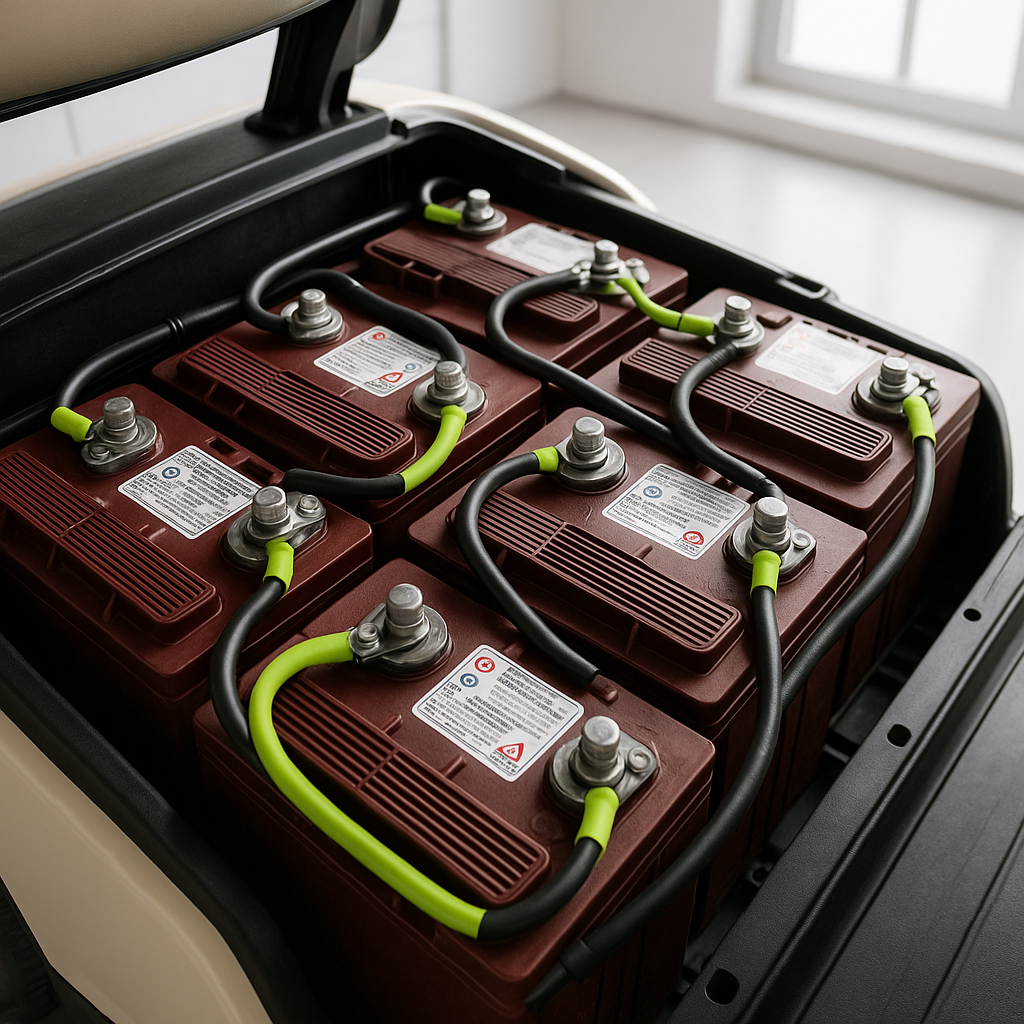
Start by removing the vent caps from each cell — most twist off counterclockwise, though some simply pull straight up. Look inside each cell opening. You should see the electrolyte level sitting just below the bottom of the fill tube or split-ring indicator inside the cell. The correct fill level is typically about a quarter to half an inch below the bottom of that fill tube, leaving a small air gap. Do not fill to the very brim. Add distilled water slowly until you reach that level, recap the cell, and move to the next. Work methodically across all cells — a 36V cart typically has six batteries with three cells each, so you're checking 18 fill points. A 48V cart with six batteries has the same number. Don't rush it. When you're done, wipe down the tops of the batteries with a damp rag to remove any spills or residue, since surface contamination can create small parasitic discharge paths over time.
What to Do If a Battery Keeps Running Low Quickly
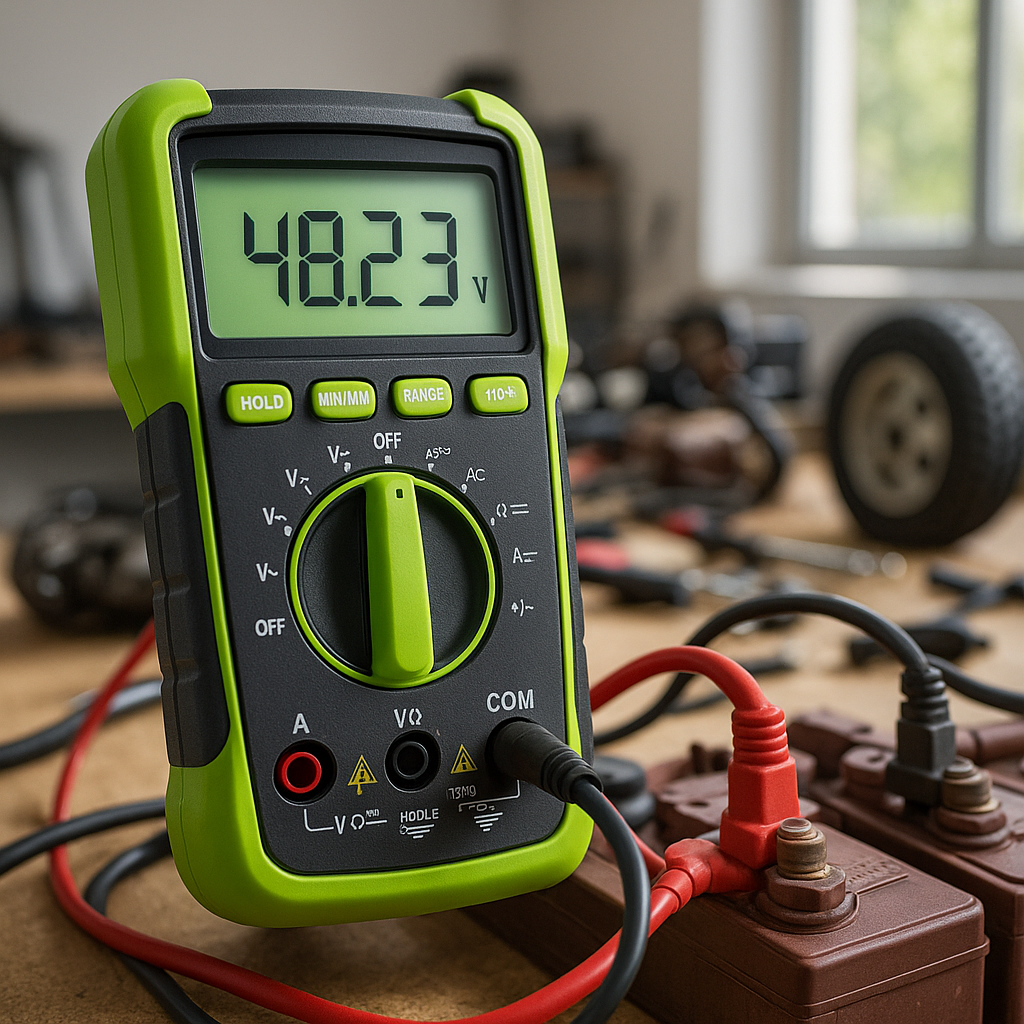
If one battery — or one cell within a battery — consistently loses water faster than the others, pay attention. Rapid water loss from a single cell usually indicates that cell is overcharging or has an internal issue causing it to gas excessively. An imbalanced battery pack can cause your charger to push too much voltage into weaker batteries while trying to bring the whole pack up to charge, which accelerates water loss in those cells. Check your charger settings if adjustable, and consider having the battery pack load-tested to identify any weak cells. A single failing battery dragging down the rest of the pack is one of the most common — and most preventable — causes of premature pack failure.
Storage and Seasonal Maintenance
If you're storing your cart for more than a few weeks, water your batteries immediately before putting them away, then make sure they're fully charged. Flooded lead-acid batteries self-discharge slowly over time, and a discharged battery sitting in storage sulfates quickly. Depending on your climate and storage duration, you may need to check the charge state monthly and top it off with a brief charge cycle. When you bring the cart back out, check water levels again before putting it into regular use. Some owners find a single off-season neglect period more damaging than a full year of regular riding — because the damage from deep discharge and dry plates compounds fast.
Watering your golf cart batteries takes maybe ten minutes a month. It's unglamorous maintenance, but it's the difference between a battery pack that lasts and one that's dead in two years. Get the routine locked in, use only distilled water, always water after charging, and you'll get every mile those batteries owe you.