A golf cart that grinds, squeals, or scrapes when you brake isn't just annoying — it's telling you something is wrong. Unlike a car with a sophisticated brake warning system, your golf cart relies entirely on you to notice the symptoms and act on them. The good news is that brake noise almost always has a clear mechanical cause, and most of them are diagnosable without special tools if you know what to look for.
Start by Identifying the Type of Noise
The sound itself is your first clue. A high-pitched squeal that happens at the beginning of a stop — especially first thing in the morning or after the cart has been sitting — is often just light surface rust on the drum or rotor burning off. This is usually harmless if it clears up quickly. A squeal that happens consistently every time you brake, however, typically means your brake pads or shoes are worn down close to their wear indicators. A grinding or metal-on-metal scraping noise is more serious and usually means the friction material is gone completely, and the metal backing is contacting the drum or rotor directly. Don't ignore grinding — it causes rapid damage to parts that are more expensive to replace.
Check Brake Pad and Shoe Thickness
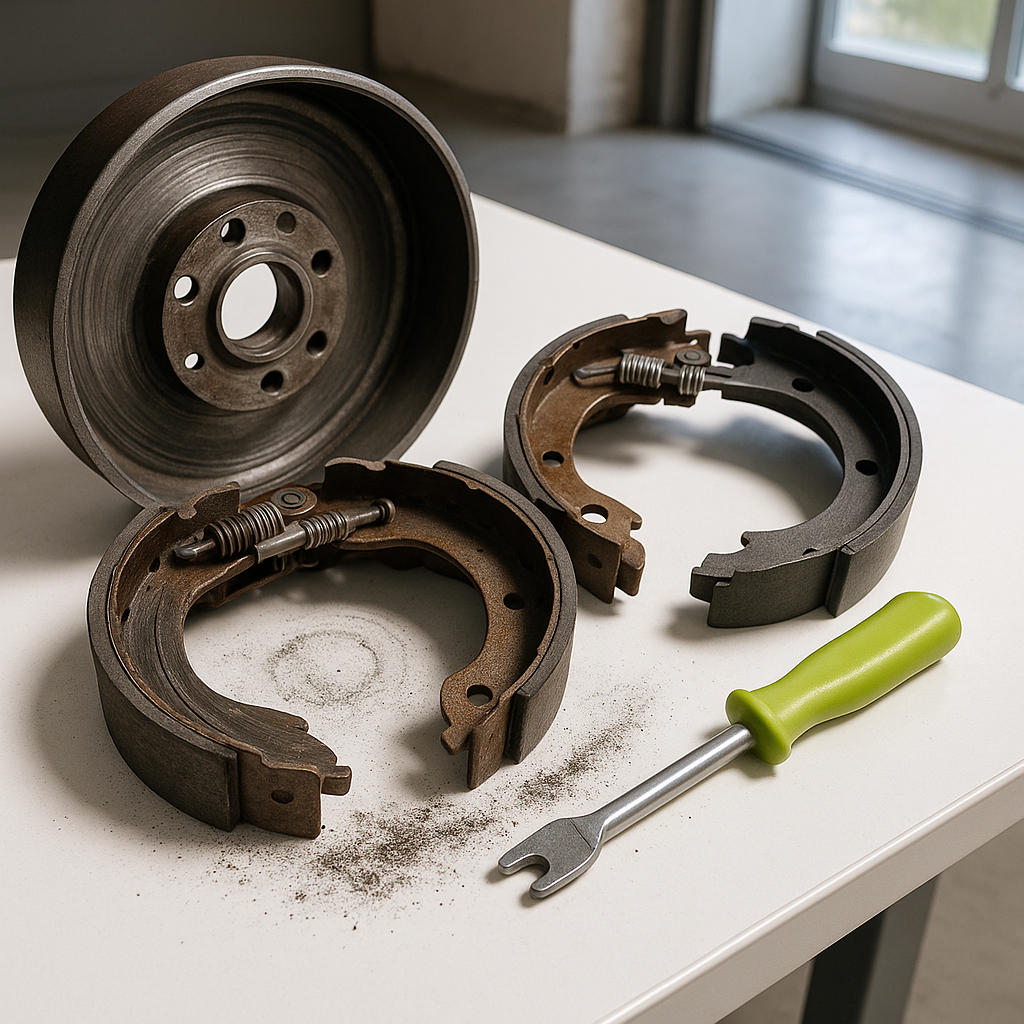
On most golf carts, getting a visual on the brake components means pulling a wheel. This is worth doing at the first sign of persistent noise. Look at the thickness of the brake pads or shoes. If the friction material is very thin — close to the metal backing plate — it's time for replacement regardless of what noise you're hearing. Many brake shoes also have a wear groove or indicator mark built in; if you're at or below that line, you're overdue. On drum brake systems (very common on older gas and electric carts), also look for glazing — a hard, shiny surface on the shoe that reduces friction and causes squealing even when there's material left.
Inspect the Drum or Rotor Surface
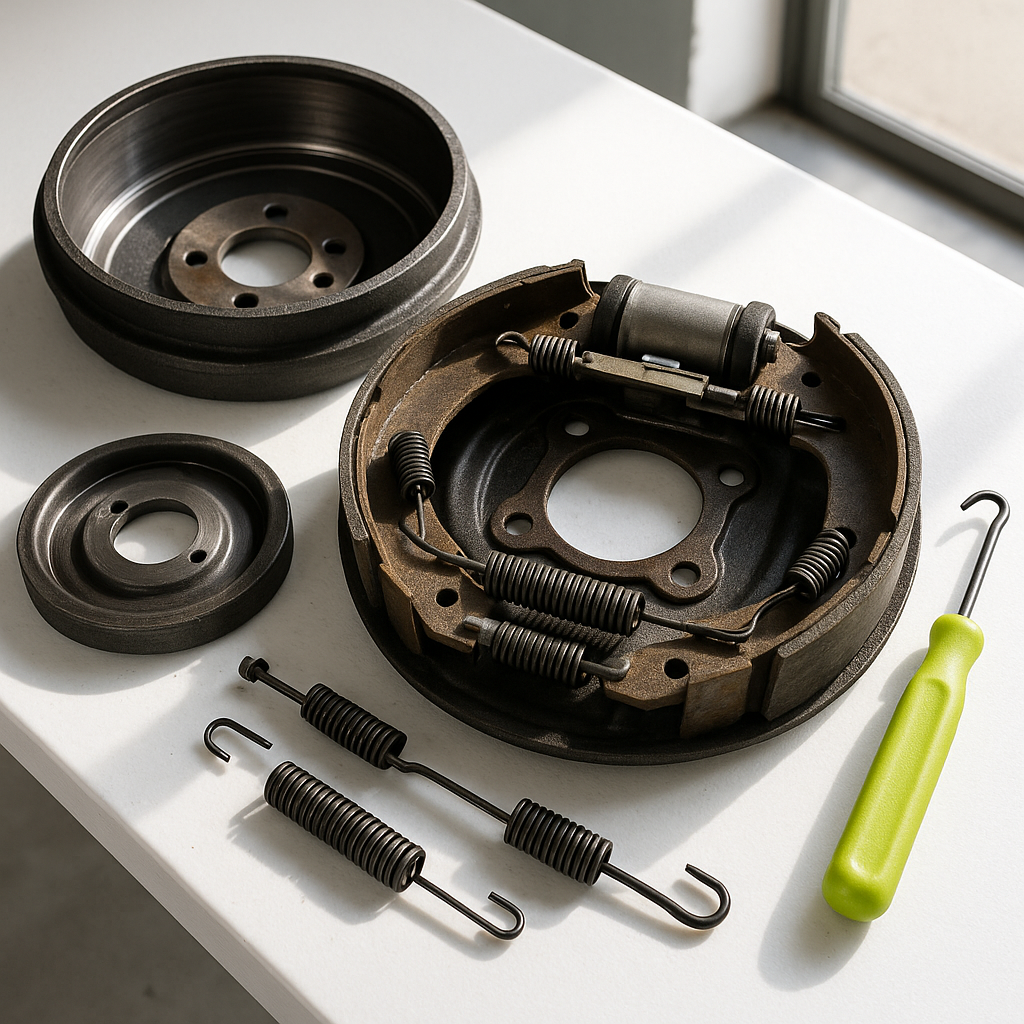
Even if your friction material looks okay, the surface it contacts matters. Brake drums can develop score marks, grooves, or hard spots from prolonged metal-on-metal contact or contamination. Run your finger across the inside of the drum — deep grooves you can catch a fingernail in mean the drum is scored and should be resurfaced or replaced. A lightly grooved or rough drum can sometimes be cleaned up, but a heavily damaged one will keep chewing through new shoes quickly. On disc brake setups, check the rotor face for deep scoring, rust pitting, or thickness variation, which can cause a pulsing sensation and uneven noise.
Look for Contamination
Oil, grease, or brake fluid on the friction surface kills braking performance and causes erratic squealing or grabbing. On rear drum setups especially, a leaking axle seal can coat the inside of the drum and the shoes with gear oil — and this will cause noise plus dramatically reduced stopping power. If you see a greasy film on the drum interior or shoes, don't just clean it off and reinstall; find and fix the source of the leak first or the contamination will return. Similarly, check that no one has over-lubricated nearby components and introduced grease where it doesn't belong.
Check Brake Cable Tension and Hardware
On mechanical drum brake systems, loose or misadjusted brake cables can cause shoes to drag lightly against the drum even when you're not braking — creating a low scraping or squealing sound that happens while moving, not just when you apply the pedal. If the noise happens continuously while rolling rather than only during braking, this is a strong suspect. Check that the cable isn't frayed, kinked, or rusted in place, which can prevent the shoes from fully releasing. Also inspect the return springs inside the drum; weak or broken springs can leave shoes partially engaged. These springs are small and cheap, and they're often overlooked during brake service.
When to Stop Driving and Get It Fixed
Surface rust squeal that clears after the first stop? Probably fine to monitor. Consistent squealing every stop? Time to inspect within the week. Grinding metal-on-metal noise? Stop using the cart for more than slow, careful movement until you've inspected and addressed it. A golf cart that can't stop reliably is a real hazard, especially on hilly terrain or around pedestrians. Brake components are among the least expensive parts on a golf cart relative to the safety role they play — replacing shoes, pads, or even a drum is straightforward work that most owners with basic mechanical confidence can handle, and the parts are widely available across all major cart brands and model years.