Brake noise on a golf cart isn't just annoying — it's one of the clearest signals your braking system is telling you something is wrong. Whether you're hearing a metallic grind, a high-pitched squeal, or a rhythmic scrape every time the wheel turns, each sound points to a different root cause. The good news is that a methodical walkthrough can usually narrow it down without specialized tools. The bad news is that ignoring it tends to turn a cheap fix into an expensive one fast.
Understand What Kind of Noise You're Hearing
The type of sound matters a lot for diagnosis. A constant grinding that gets louder when you apply the brakes almost always means the friction material on your brake pads or shoes has worn down far enough that metal is contacting metal — typically the backing plate scraping against the drum or rotor. A high-pitched squeal that only happens when the brakes are lightly applied is often the wear indicator doing its job, or glazed pads vibrating against the surface. A rhythmic thumping or scraping that happens even when you're not braking and pulses with wheel rotation usually points to something making contact inside the drum or wheel assembly — debris, a bent component, or a drum that's out of round.
Start With a Visual Inspection
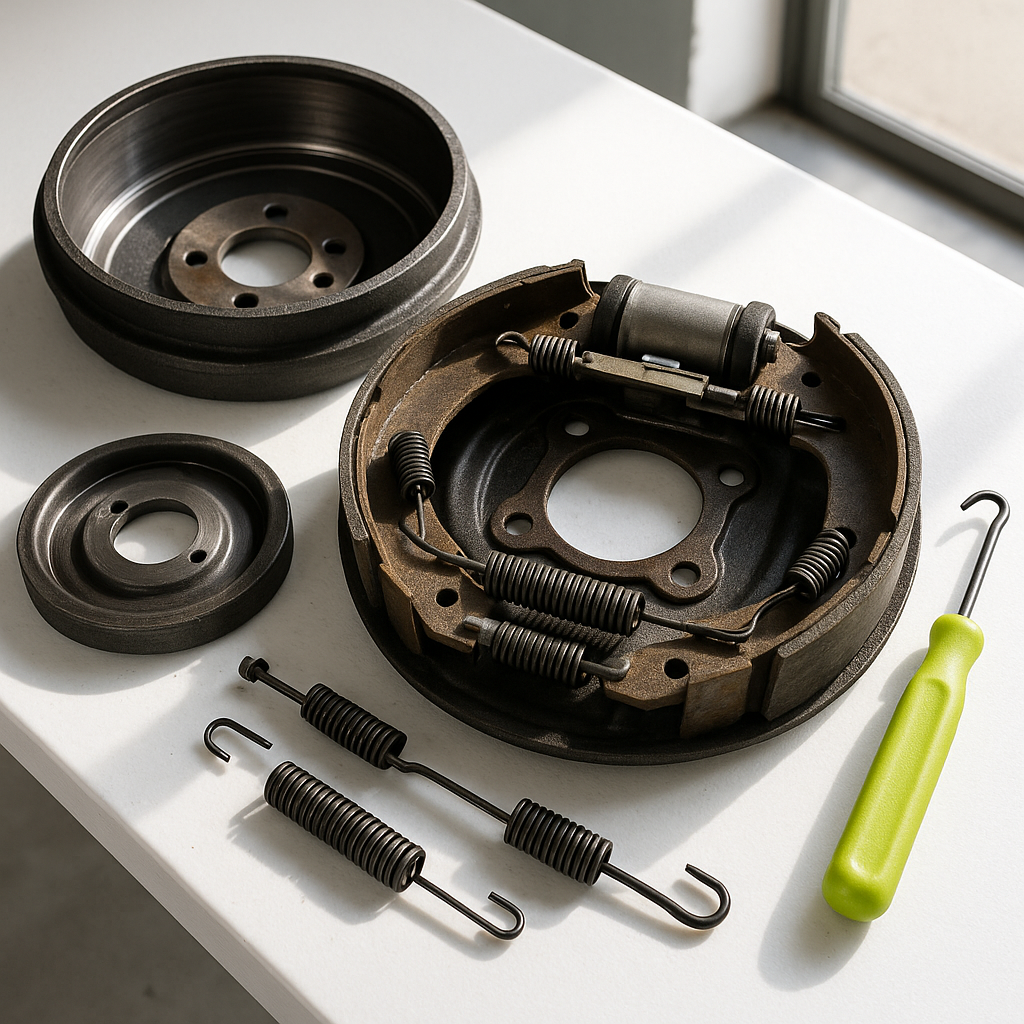
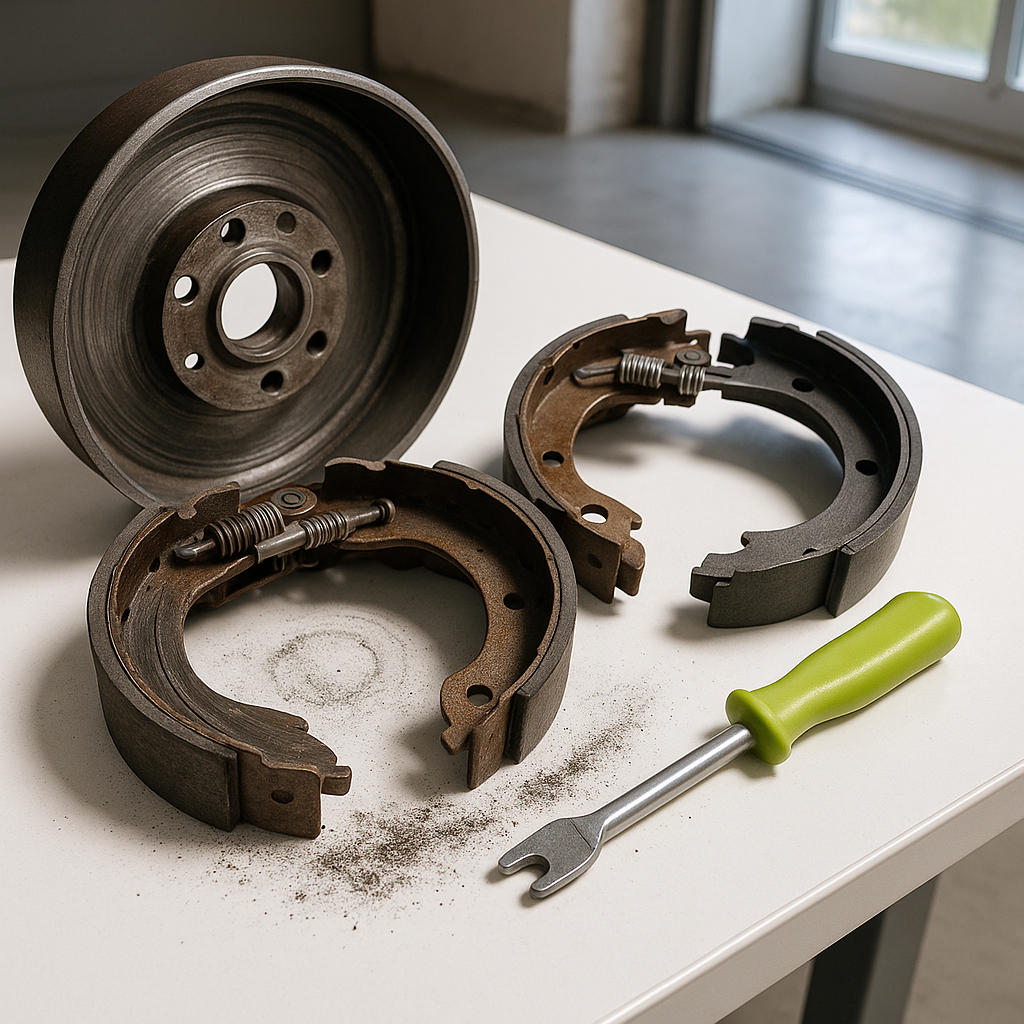
Jack up the cart safely and remove the wheel on the side making the most noise. On most golf carts you'll be looking at drum brakes, so pull the drum if it's accessible. Look at the thickness of the brake shoes — if the friction lining is worn thin or you can see the metal backing plate, that's your answer. Also look for cracks, deep score marks, or heat discoloration on the inside surface of the drum itself. A heavily grooved drum won't stop making noise even with brand-new shoes installed, so be honest about its condition while you have it off. Check for any debris — sand, small rocks, or even dried mud — that may have worked its way inside the drum assembly.
Check for Glazing and Contamination
Brake shoes and pads that have been overheated or exposed to grease or oil develop a hard, shiny glaze on the friction surface. Glazed brakes squeal, grab inconsistently, and don't stop well. If you see a mirror-like sheen on the friction material rather than a dull, slightly rough surface, glazing is likely your culprit. Similarly, any oil contamination — from a leaking axle seal or an over-lubricated wheel bearing — will cause noise and dramatically reduce stopping power. Contaminated shoes can't just be cleaned and reused; they need to be replaced, and the source of the leak needs to be fixed first or you'll be right back in the same situation.
Inspect the Hardware and Adjustment
Drum brake systems on golf carts rely on springs, adjusters, and anchor pins to hold everything in proper alignment. A broken or weak return spring lets a shoe stay in contact with the drum even when the pedal is released, which causes a constant dragging scrape and generates heat. Shake each shoe gently — it should move freely but return immediately when released. Check that the self-adjuster (if your cart has one) isn't seized, because a shoe that can't retract fully will wear unevenly and make noise. Also confirm the brake cable or rod isn't holding tension at rest; if the parking brake cable is kinked or frayed, it can keep a shoe partially engaged even when the lever is fully released.
Consider the Drum Condition
Even if your shoes have life left in them, a drum that's been worn or scored past its usable diameter can cause noise and uneven braking. Run your finger across the inside braking surface — light, circular scoring is normal wear, but deep grooves you can feel catching a fingernail indicate the drum has been worn into a condition where the shoes can't make proper flat contact. A drum that's warped or out-of-round will cause a pulsing grind or thump that's almost impossible to eliminate without replacing or machining the drum. When shoes and drums are replaced together, you eliminate the mismatch between worn surfaces and give the new shoes a consistent surface to bed into properly.
When to Stop Diagnosing and Just Fix It
If you've found metal-on-metal contact, oil contamination, or a drum that's visibly grooved and out of round, diagnosis is essentially done — those components need to come off. Continuing to drive on grinding brakes accelerates damage to the drum and can compromise your ability to stop safely, especially on hills or when carrying passengers. Golf cart brakes are relatively simple mechanical systems compared to a car, but they're also operating at lower speeds with less margin for error when something goes wrong suddenly. Parts are generally affordable and brake jobs on most golf cart drum systems are accessible for a careful DIYer with basic hand tools. If you're uncertain about reassembly or brake adjustment, having a shop do the final installation is a reasonable call — getting the adjustment right is what determines whether the brakes feel right and wear evenly after the job is done.