A solenoid that won't click, a cart that won't move, a burning smell under the seat — these symptoms point fingers at a lot of components, and the solenoid takes the blame more often than it deserves. Before you swap it out, it's worth spending 20 minutes actually troubleshooting the circuit. A new solenoid won't fix a corroded connection, a weak battery pack, or a failed key switch — and those failures will take out a brand-new solenoid just as fast as the old one. Here's how to work through the diagnosis methodically.
Understand What the Solenoid Actually Does
The solenoid is essentially a high-current relay. When you press the accelerator (or turn the key, depending on the cart), a low-amperage signal energizes a coil inside the solenoid. That coil creates a magnetic field that slams a set of heavy internal contacts together, completing the high-current circuit between your battery pack and the motor. You'll know it's working when you hear a solid click. No click means no signal is reaching the coil, or the coil itself is dead. A click with no movement means the main contacts have failed or there's a problem elsewhere in the high-current circuit.
Start With the Battery Pack
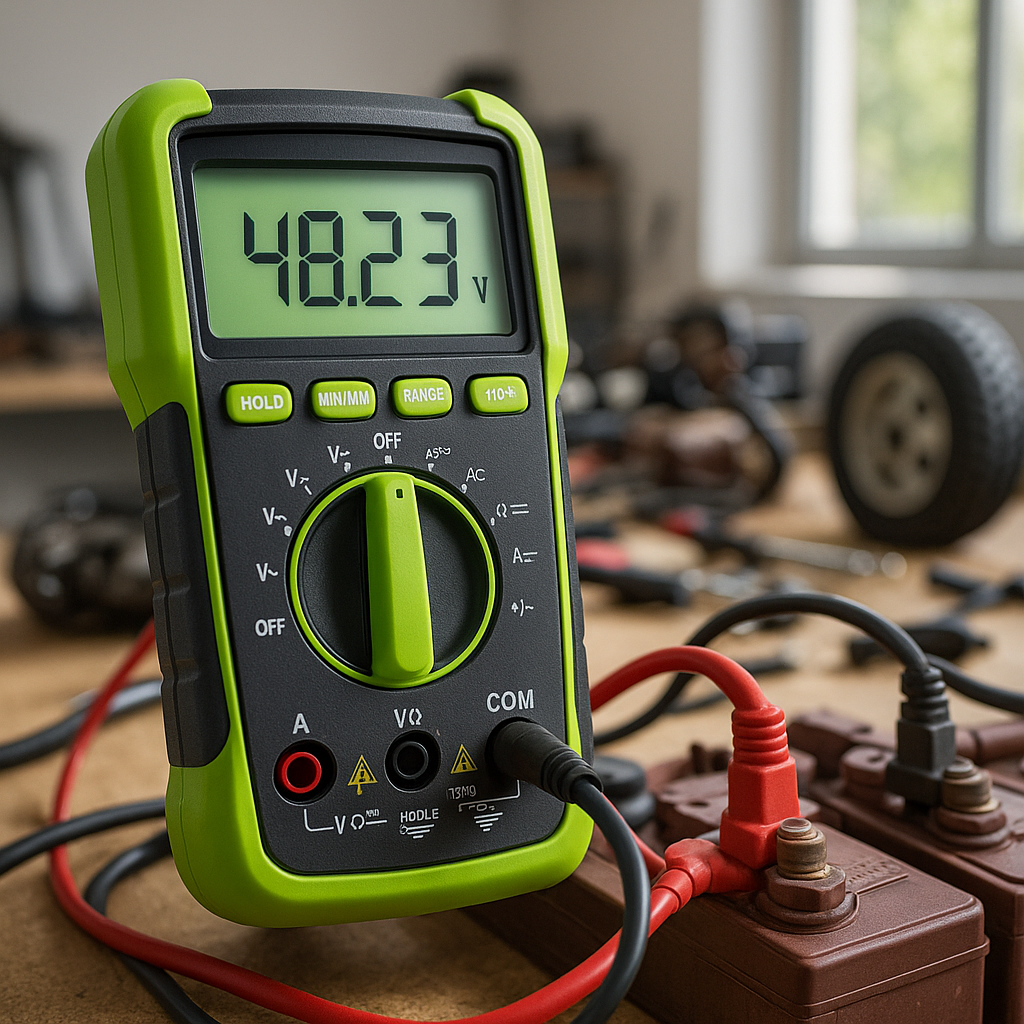
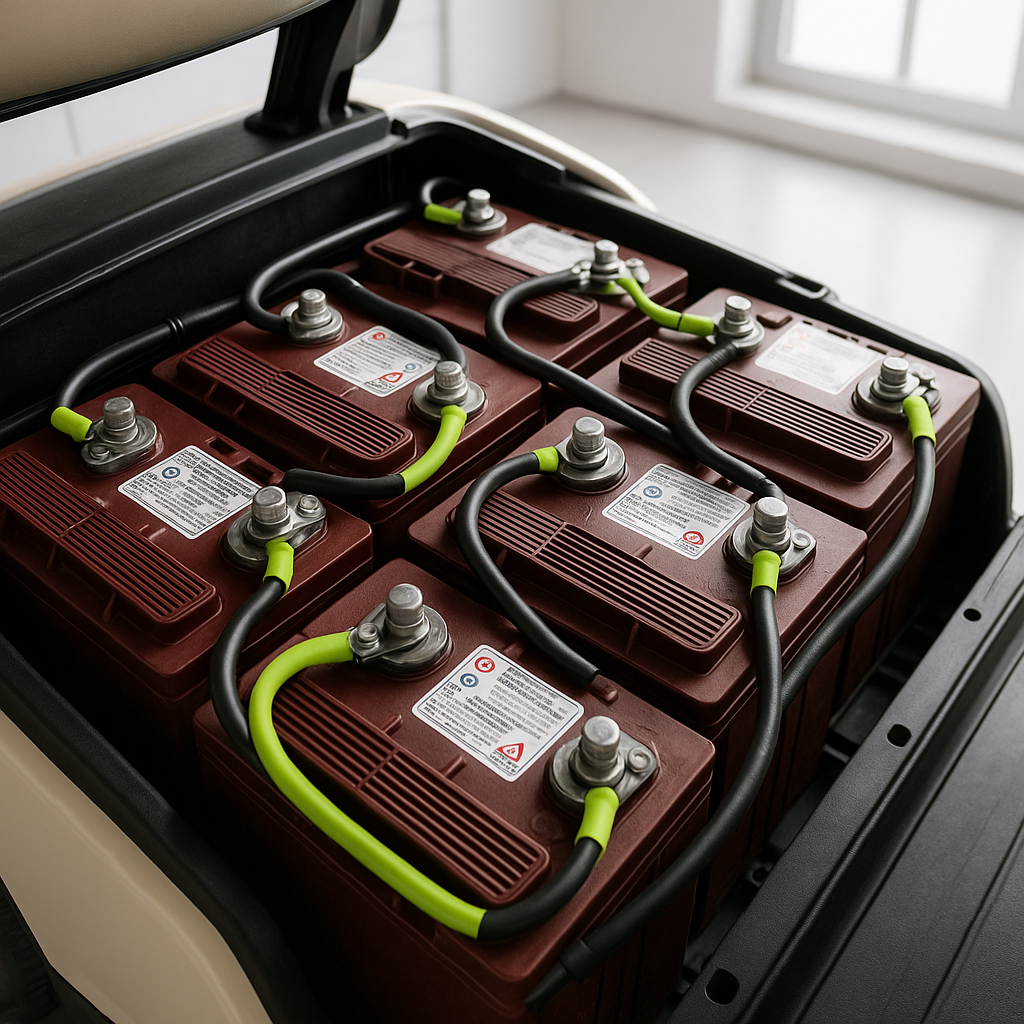
A healthy solenoid won't fire reliably on a weak battery pack. Before touching anything else, check your total pack voltage under load — a reading significantly below your cart's rated voltage means the batteries are the bottleneck, not the solenoid. Also inspect every battery terminal and every cable connection in the pack for corrosion, looseness, or heat damage. A single bad connection creates resistance that drops pack voltage right when the cart needs it most, and that's often what kills solenoids prematurely. Clean connections, tight terminals, and a fully charged pack are non-negotiable before you can trust any solenoid test result.
Test the Low-Voltage (Coil) Circuit First
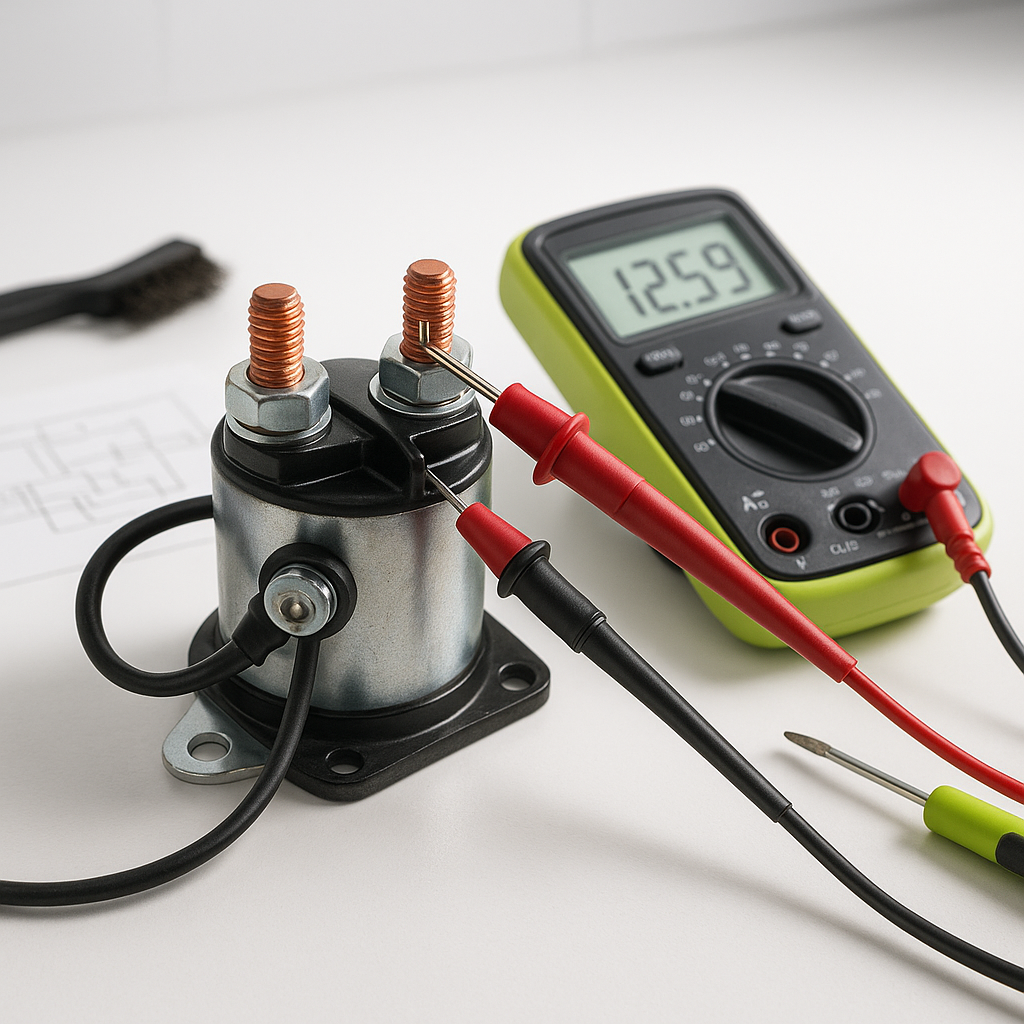
The solenoid has two small terminals — these carry the low-voltage signal that activates the coil. With the cart in the run position and the accelerator depressed (carefully, with the cart safely supported or blocked), use a multimeter set to DC voltage and probe those small terminals. You should see voltage present when the pedal is pressed. If you're getting no voltage at the coil terminals, the problem is upstream: check your key switch, your run/tow switch (make sure it's in Run), your forward/reverse switch, and any micro-switches on the accelerator pedal assembly. A dead solenoid that receives no signal is a symptom, not the disease.
Test the High-Current (Main Contact) Circuit
If you're getting signal at the coil terminals and you hear the solenoid click but the cart still won't move, the internal main contacts may have burned or welded open. With the cart off and batteries disconnected, use a multimeter in continuity or resistance mode across the two large terminals of the solenoid. In a resting state, you should see no continuity. Now — with everything safely reconnected — energize the coil manually by jumping the small terminals to your battery pack's appropriate low-voltage source while keeping the cart stationary. If the solenoid is working, you'll get continuity across the large terminals. No continuity after a solid click means the main contacts are shot and the solenoid needs replacing. If you hear no click and confirmed voltage is reaching the coil, the coil itself is burned out — same conclusion.
Check for the Welded-Contact Failure Mode
One failure mode that catches people off guard: a solenoid whose main contacts have welded shut. This happens after repeated high-current surges — common in carts with failing batteries or undersized wiring. A welded solenoid will actually let the cart run, but it won't shut off when you lift off the accelerator. If your cart creeps or won't stop without turning the key, check for continuity across the large terminals with the solenoid completely de-energized. Continuity at rest means the contacts are welded and the solenoid is dangerous — replace it immediately. Running a cart in this condition can damage the motor controller and poses a real runaway risk.
Inspect the Solenoid Itself Before Condemning It
Pull the solenoid and look at the large terminal posts where the main cables bolt on. Burned, pitted, or discolored terminals indicate repeated arcing — often a sign that the cables were loose or that the solenoid was undersized for the application. If the case is cracked, shows heat discoloration, or smells like burned insulation, replacement is the right call. Also verify you're replacing it with the correct voltage rating for your pack. Installing a solenoid rated for a different voltage than your system is one of the most common DIY mistakes, and it will fail quickly.
When Replacement Is the Right Call
If your testing confirms a dead coil, failed contacts, or welded contacts, replacement is straightforward — but address whatever caused the failure first. Loose cables, chronic battery issues, or a controller that's sending erratic signals will destroy a new solenoid just as efficiently. Replace the solenoid with one rated for your cart's system voltage and current draw, reconnect the large cables snugly (loose connections cause arcing that pits the contacts), and reconnect the small coil wires to the correct terminals. A properly diagnosed and properly installed solenoid should give you years of reliable service.