The throttle cable is one of those components that works quietly in the background until it doesn't. On both gas and electric golf carts, this cable connects your accelerator pedal to the throttle mechanism or speed controller input, translating your foot pressure into actual movement. When it stretches, frays, kinks, or snaps, you'll feel it immediately — sluggish response, a pedal that sticks down, jerky acceleration, or no movement at all. The good news is that inspecting and replacing a throttle cable is well within DIY territory if you're methodical about it.
Signs Your Throttle Cable Needs Attention
The most obvious red flag is a pedal that doesn't spring back up after you let off the gas. That means the cable is either kinked, binding in its housing, or has debris causing friction. A cart that accelerates inconsistently — surging or hesitating even with steady pedal pressure — often has a stretched cable that's lost its precision. If you hear a snapping sound and the cart goes completely dead at the pedal, the cable has likely broken. On gas carts, a stuck-open throttle that keeps the engine revving after you lift your foot is a serious safety issue that demands immediate attention before you drive another foot.
How to Inspect the Cable
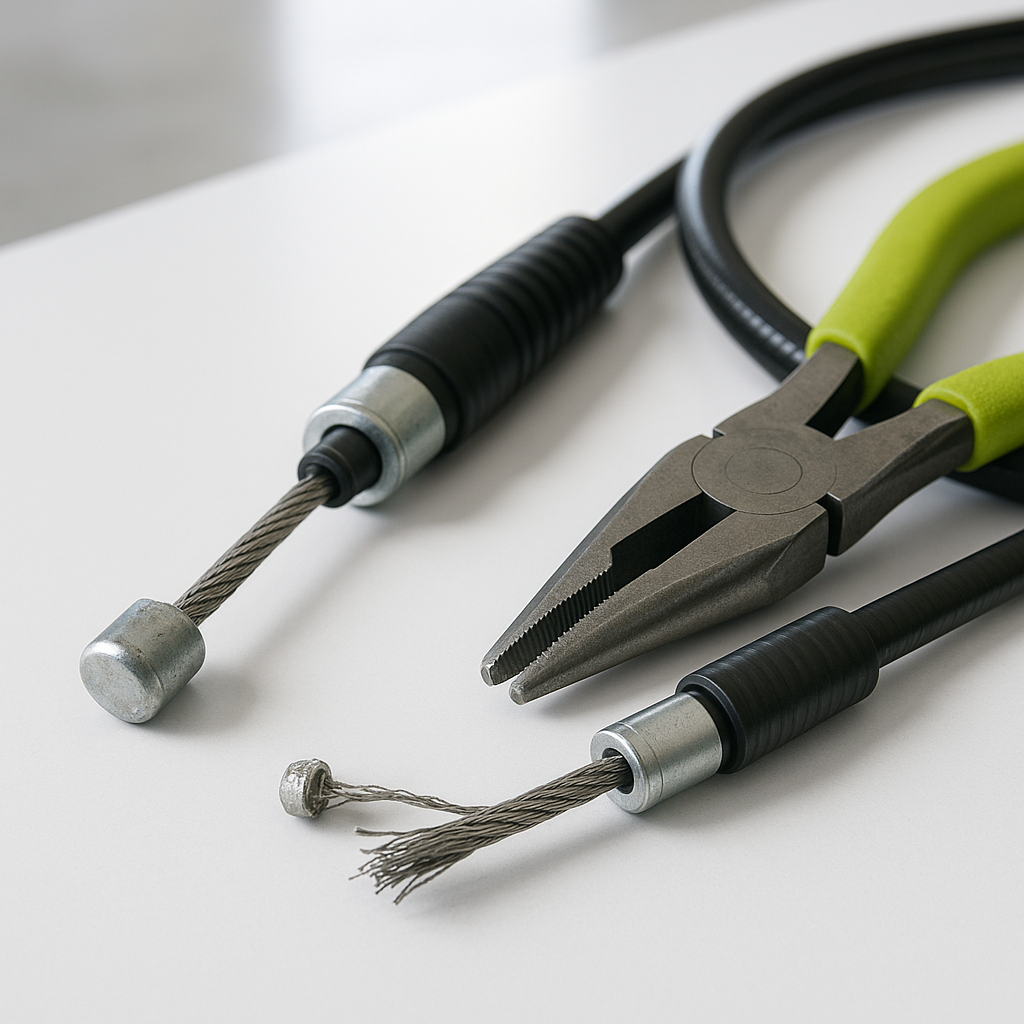
Start with the cart fully off and the key removed. Trace the cable from the accelerator pedal all the way to where it terminates — usually at the carburetor linkage on a gas cart or at the throttle position sensor or micro-switch assembly on an electric cart. Look for visible fraying near the end fittings, which is where cables almost always fail first. Run your hand along the outer housing and feel for kinks, cracks, or sections that have gone stiff. Have a helper slowly press and release the pedal while you watch the far end: the cable should move smoothly and return crisply with no slack or hesitation. Any binding, delay, or incomplete return means the cable needs to come out.
Getting the Right Replacement Cable
Throttle cables are not universal, even among carts that look similar. Cable length, end fitting type, and housing diameter all vary by make, model, and year. Before ordering anything, note your cart's make, model, and model year, and if possible measure the old cable's overall length from end fitting to end fitting. Many manufacturers use specific fitting styles — barrel ends, threaded ends, or hook-style ends — that won't interchange. Using the wrong length will cause either too much slack (poor response) or too much tension (dangerous stuck throttle). When in doubt, bring the old cable to the shop or contact the supplier with your cart's spec tag information.
Removing the Old Cable
Begin at the pedal end. Most throttle cables clip or pin onto the accelerator pedal arm with a small retaining clip or clevis pin — remove that first and let the cable hang free from the pedal. Then move to the far end and disconnect it from the carburetor linkage or throttle sensor. Note how the cable is routed before you pull it — take a photo if it runs through any brackets or guides under the cart body. Slide the cable housing out of any retaining clips along the frame and pull the cable through. Inspect the routing path for any sharp bends or chafed spots that may have caused the failure — if the routing itself is the problem, you'll need to correct it before the new cable goes in.
Installing the New Cable
Feed the new cable through the same path as the old one, starting from the pedal end and working toward the throttle mechanism. Secure the housing in any retaining clips or brackets along the frame. Connect the far end to the carburetor linkage or throttle sensor fitting first, making sure the end fitting is fully seated. Then connect the pedal end. Before buttoning everything up, test the pedal by hand: it should move with light, consistent resistance and return completely to rest on its own when released. If it doesn't spring back, something is still binding — don't ignore it. Adjust cable tension at any adjuster fitting if one is present, but err on the side of a small amount of slack rather than a cable that's pulled tight at rest, which can hold the throttle partially open.
Final Safety Check
Once the cable is in and the pedal action feels right, do a slow test in an open area before using the cart normally. Verify that pressing the pedal produces smooth, proportional acceleration and that releasing it brings the cart back to idle or cuts power cleanly. On gas carts, confirm the engine returns to a normal idle — not a fast idle — as soon as you lift your foot. A throttle cable that sticks open on a gas-powered cart is a genuine runaway risk, so don't skip this step. Also re-inspect the cable routing after your first few uses; a new cable sometimes settles slightly and may need a minor tension adjustment to stay dialed in.