Golf cart tires don't get nearly as much attention as they deserve. Most owners check the batteries, clean the body, and maybe adjust the brakes — but the tires get ignored until something goes visibly wrong. That's a mistake. Underinflated or unevenly worn tires affect ride quality, handling, battery range on electric carts, and even how evenly your brakes wear. A simple pressure check and periodic rotation can add years of life to a set of tires and save you a real replacement cost down the road.
Understanding Golf Cart Tire Pressure
Golf cart tires run at much lower pressures than car tires — typically somewhere in the range of 15 to 25 PSI depending on the tire size, load rating, and whether you're running standard street tires or knobby off-road tires. The correct pressure for your specific tires is usually molded into the sidewall as a maximum, but the right operating pressure is often a few PSI below that maximum. Check your cart manufacturer's owner manual or the tire sidewall for guidance, and never just guess. Running too high causes a harsh, bouncy ride and makes the center of the tread wear prematurely. Running too low increases rolling resistance, generates heat, and can cause sidewall damage or a slow leak you might not notice until the tire is seriously compromised.
What You'll Need
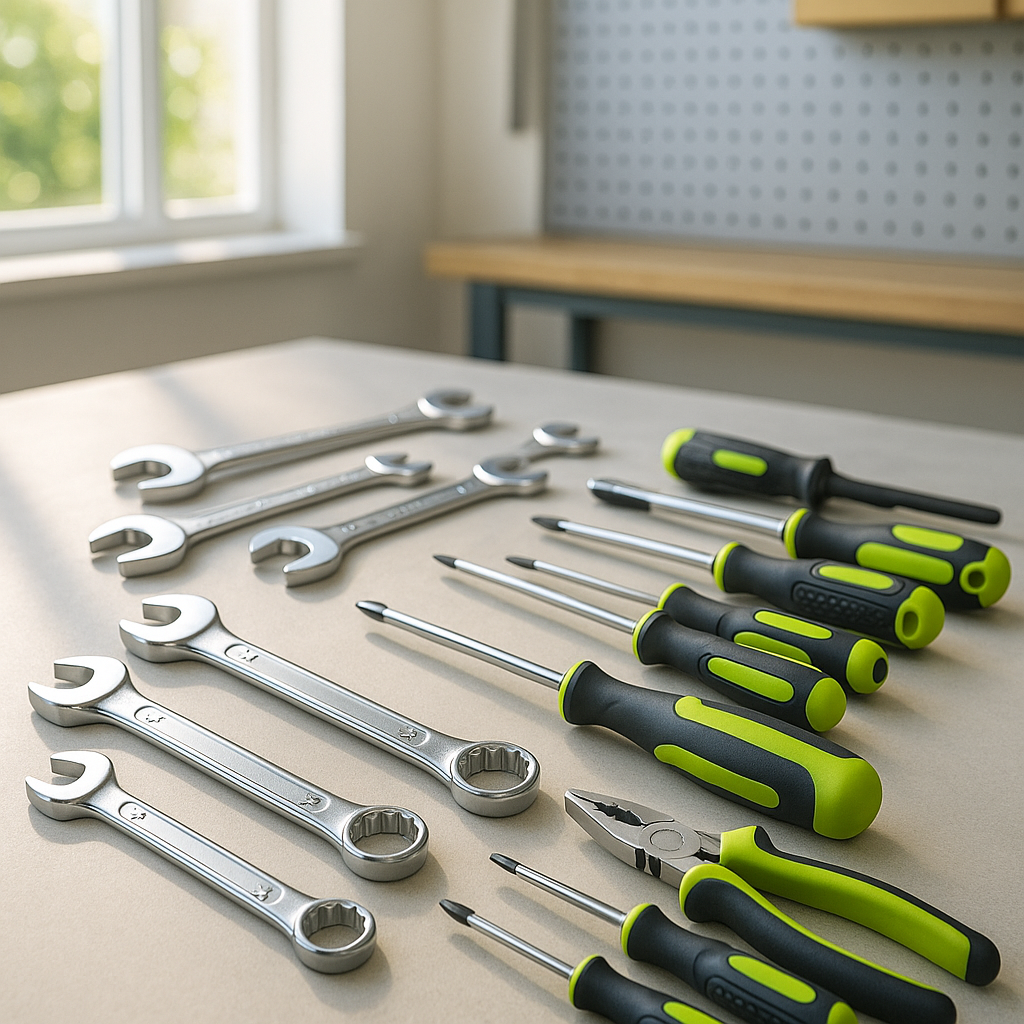
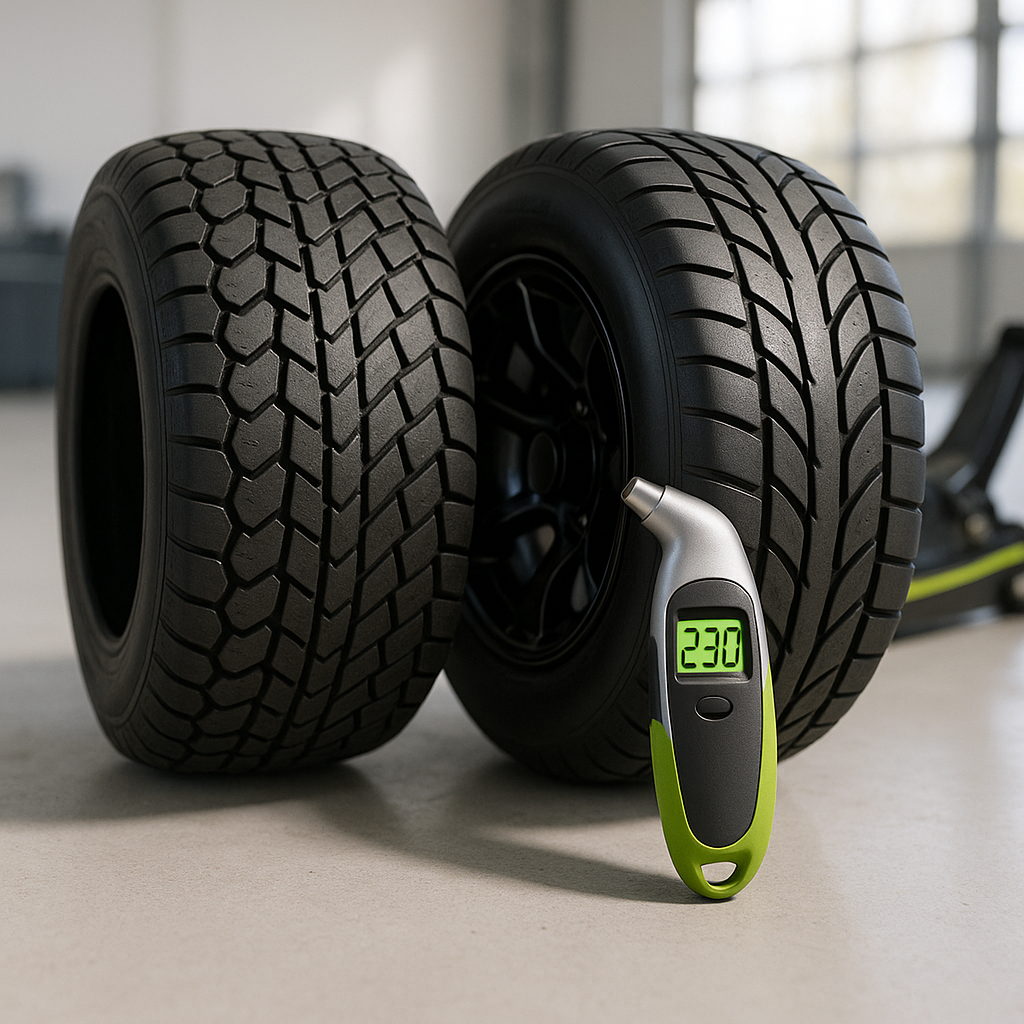
You don't need special equipment for this. A standard automotive tire pressure gauge works fine — a digital one is easier to read but a stick-type gauge is perfectly accurate. A small air compressor or a hand pump handles inflation. If you're rotating tires, you'll need a floor jack rated for the weight of your cart, jack stands, and the appropriate lug wrench or socket for your wheel lugs. Before you start, make sure the cart is parked on a flat, stable surface and — for electric carts — the key is out and the run/tow switch is in tow mode.
Checking and Adjusting Tire Pressure
Check pressure when the tires are cold — meaning the cart hasn't been driven for at least a few hours. Driving warms the air inside the tire and temporarily raises the reading, which gives you a false number. Remove the valve cap, press your gauge firmly onto the valve stem, and note the reading. If you need to add air, do it in short bursts and recheck frequently — it's easy to overshoot on small-volume tires. If you're letting air out, use the small pin on the back of most gauges or a pen tip on the valve stem center. Check all four tires and recheck after any adjustment. Replace valve caps when you're done — they keep dirt and moisture out of the stem and are worth the thirty seconds it takes.
How to Rotate Golf Cart Tires
Golf carts don't rotate tires the same way cars do, but the concept is identical: moving tires to different positions so they wear evenly across all four. Because most golf carts are rear-wheel drive and carry weight toward the rear (especially utility carts), the rear tires often wear faster than the fronts. A front-to-rear rotation — moving the fronts to the rear and the rears to the front, same side — is the most practical approach for most carts. Some owners do a full cross-rotation (front left to rear right and so on), but this only makes sense if your tires are non-directional. Directional tires have a one-way tread pattern marked with an arrow on the sidewall, and those should only move front-to-back on the same side, never crossed.
To rotate: loosen the lug nuts slightly before jacking up the cart — it's much easier with the tire still on the ground. Jack up one corner at a time, support it on a jack stand, remove the wheel, and set it aside. Work around the cart systematically so you don't lose track of which wheel came from where. When reinstalling, snug the lug nuts in a star or cross pattern rather than going around in a circle — this seats the wheel flat against the hub. Tighten to a firm, consistent torque; consult your cart's manual for the specific value since it varies by cart model and lug size.
How Often Should You Do This?
For pressure checks, once a month is a reasonable habit, and always before a long day of use or after the cart has been sitting for an extended period — tires do lose pressure slowly over time even without a leak. For rotations, every six months or roughly every 1,500 to 2,000 miles of use is a good rule of thumb for a cart that sees regular use. If you notice uneven wear developing sooner — one side wearing faster, or the center wearing faster than the edges — that's a sign to rotate sooner and also to investigate the underlying cause (alignment, inflation, or loading habits). Catching wear patterns early is much cheaper than replacing tires that wore out unevenly because they were never moved.
Spotting Problems While You're At It
Any time you've got the wheels off or you're crouched down checking pressure, take an extra two minutes to look at the tires closely. Look for cracking in the sidewalls (especially on carts that sit outdoors in sun and heat), embedded debris like nails or glass, bulges anywhere in the sidewall, and tread depth. Golf cart tires are small enough that a tread wear indicator — or even a simple visual check — makes it easy to tell when tread is getting thin. Also spin each wheel by hand with the cart jacked up and check for any wobble or roughness that could indicate a bearing starting to go. None of this takes long, and it's the kind of proactive check that prevents a flat tire in the middle of a round or a trail ride.