A mirror that's mounted but poorly aimed is barely better than no mirror at all. Most golf cart owners bolt on a side or rearview mirror and call it done, but skip the few minutes it takes to dial in the angle. The result is a reflection of the sky, the roof frame, or their own elbow — not the cart path behind them. Getting your mirrors properly adjusted is a quick process, but there's a right way to do it that most guides skip over.
Start with Your Normal Driving Position
Before you touch a single adjustment knob or bolt, sit in the driver's seat exactly as you would while driving. Feet on the floor, hands relaxed, posture natural. This is critical — mirrors adjusted while you're leaning over the seat or standing beside the cart will be wrong the moment you sit down normally. Have everything you need within reach so you don't shift your position mid-adjustment.
Adjusting a Rearview Mirror
For a center rearview mirror mounted to the windshield frame or roof support, the goal is simple: center the reflection of the rear opening of the cart in the mirror. You should see the full width of what's behind you without having to tilt your head. Tilt the mirror face up or down until the horizon line — the point where the ground meets the background — sits roughly in the middle of the mirror's reflection. If you're riding with passengers regularly, note that extra weight in the rear can settle the cart slightly and shift your sightline, so it's worth re-checking after a loaded ride.
Adjusting Side Mirrors
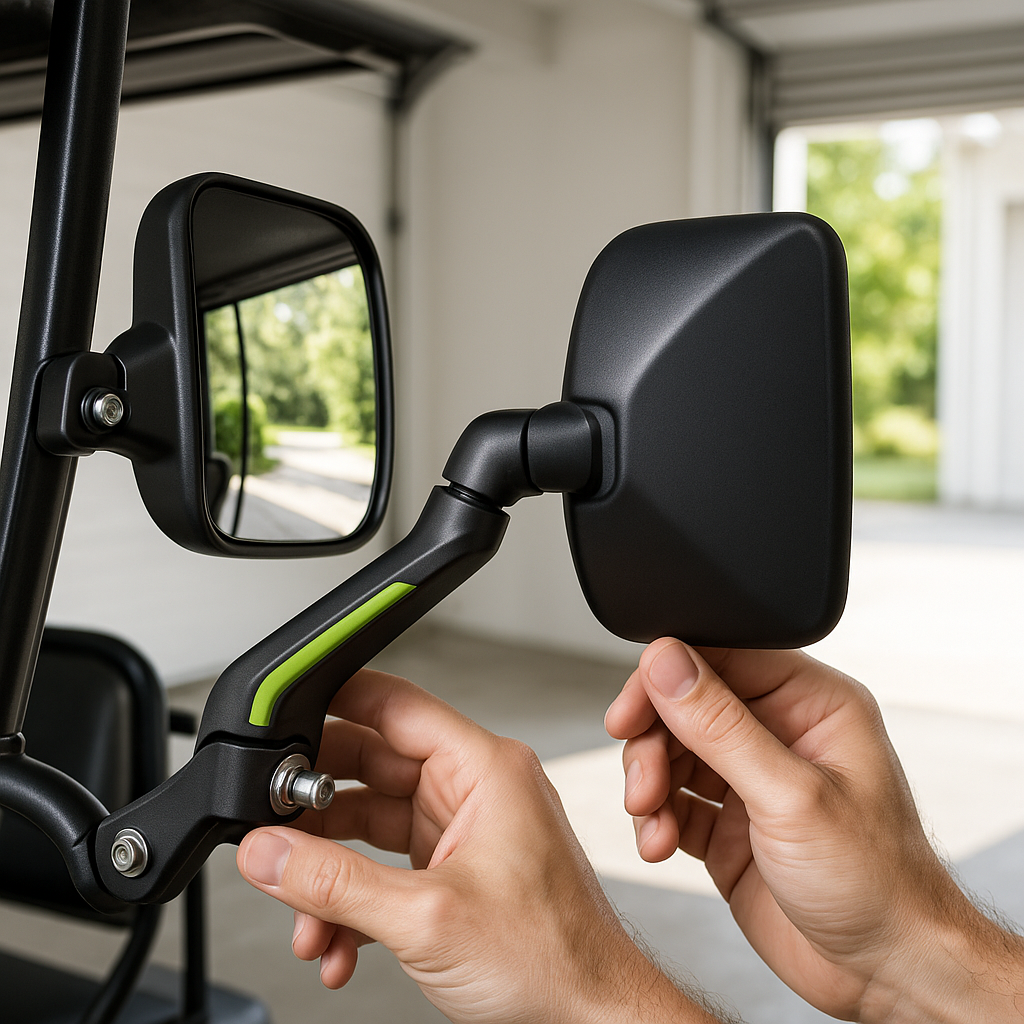
Side mirrors on a golf cart serve the same purpose as on a car: letting you see vehicles, pedestrians, or obstacles approaching from behind and to the side. With your normal driving posture, adjust each side mirror so that you can just barely see the rear corner of the cart body along the inner edge of the mirror. This gives you a consistent reference point. The majority of the mirror face should show open space beside and behind the cart — not the cart itself. If you can see a wide swath of your own cart's side, the mirror is angled too far inward.
Check for Common Problem Angles
Two mistakes show up constantly on golf carts. The first is mirrors angled too low, which happens when someone adjusts them from a standing position — from the driver's seat they end up pointing at the pavement a few feet back. The second is mirrors canted too far outward, which widens the apparent field of view but actually creates a large blind spot directly behind the cart. After your initial adjustment, have someone walk slowly from behind the cart toward the side while you watch in the mirror. You should be able to track them continuously without losing sight until they're roughly even with your shoulder. If they disappear and reappear, re-angle the mirror inward slightly.
Tighten Hardware Without Overdoing It
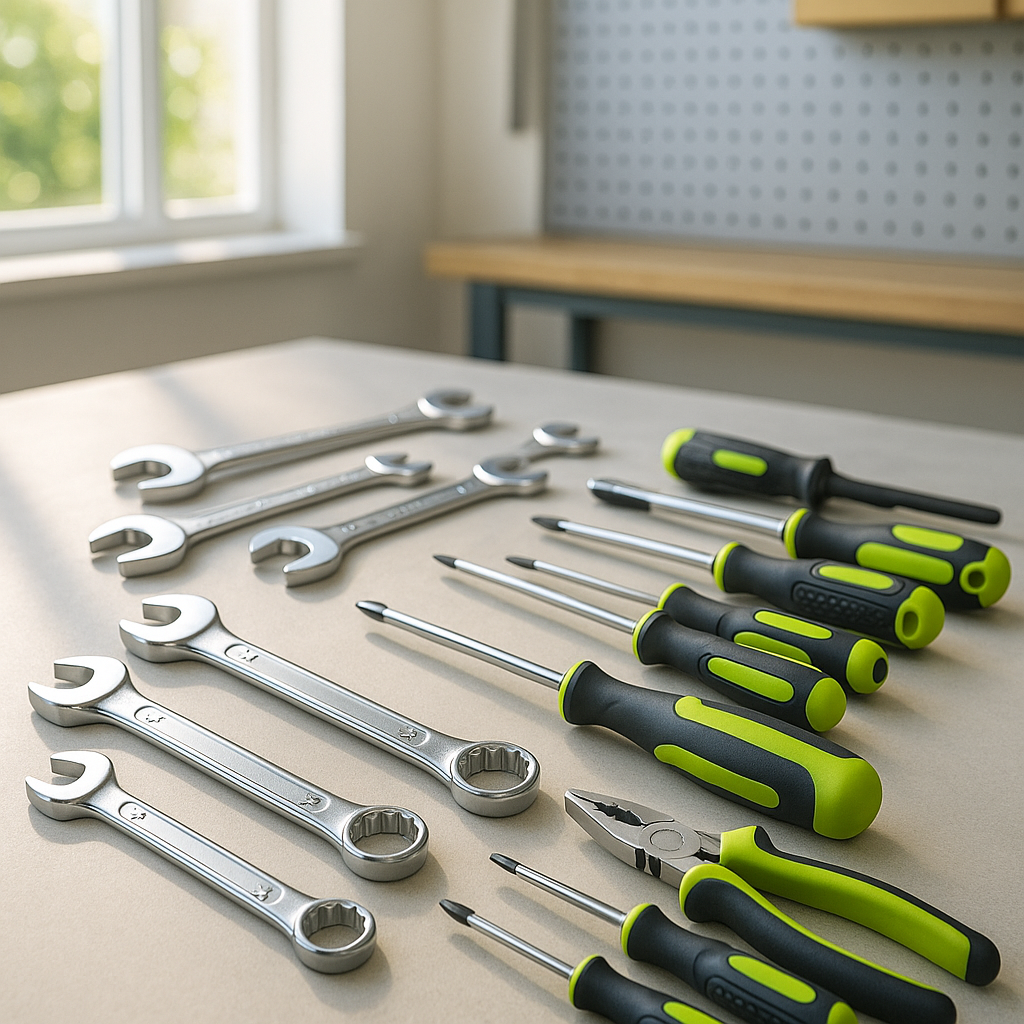
Golf cart mirrors use a variety of mounting hardware — ball-and-socket joints, pivot bolts, or friction clamps depending on the mirror style. Once you've found the right angle, snug the adjustment hardware firmly enough that the mirror holds its position over normal driving vibration, but don't crank down so hard that you crack the mount or strip the threads. A mirror that can still be repositioned by hand with deliberate force is fine; it just shouldn't drift on its own. Check tightness again after the first few rides, as hardware tends to settle slightly when new.
Re-Check After Any Mount or Cart Changes
If you adjust your seat position, add or remove a windshield, swap out a roof or shade canopy, or change the mirror's mounting point for any reason, your mirror angles need to be re-verified from scratch. The same is true if a passenger bumps a mirror during a ride — it happens more often than people expect. Building a quick mirror check into your pre-ride habit, the same way you'd glance at tire pressure or battery charge, takes only seconds and keeps your visibility consistent every time you head out.