Golf cart batteries are one of the most expensive components on your cart, and the number one thing that kills them prematurely isn't rough terrain or age — it's improper charging. Whether you're running a 36V or 48V flooded lead-acid pack or a newer lithium setup, the way you charge your batteries determines how long they last and how reliably they perform. This guide covers the fundamentals every cart owner should know.
Understand Your Battery Type Before You Do Anything
Not all golf cart batteries charge the same way. Traditional flooded lead-acid (FLA) batteries — the kind that require periodic water top-offs — have different charging requirements than sealed AGM or lithium iron phosphate (LiFePO4) batteries. Using the wrong charger type for your battery chemistry is a fast way to cause permanent damage. Before charging, confirm what type of batteries you have, and make sure your charger is designed specifically for that chemistry and matches your pack's voltage.
Step 1: Check the Water Level First (Flooded Lead-Acid Only)
If you have flooded lead-acid batteries, check the water level in each cell before charging — but only if the batteries are significantly discharged. During charging, electrolyte expands, so filling to the top before a charge can cause overflow and corrosion. The plates should be covered; if they're exposed, add only enough distilled water to cover them before charging, then top off to the full line after the charge cycle is complete. Always use distilled water — never tap water.
Step 2: Inspect Cables and Connections
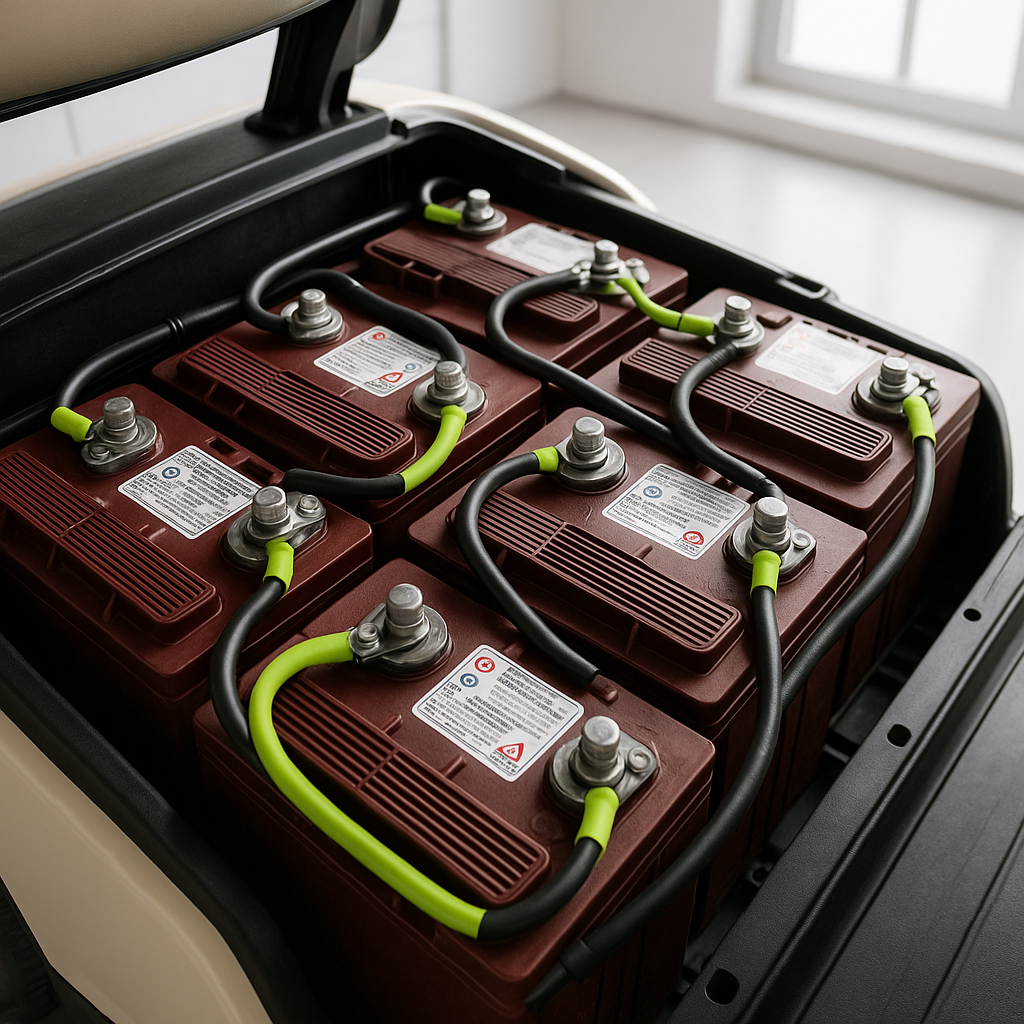
Before plugging in your charger, take a quick look at your battery cables and terminals. Corroded, loose, or damaged connections create resistance that can cause uneven charging across the pack — some batteries will end up undercharged while others get overworked. If you spot green or white buildup on terminals, clean it up before charging. A battery pack is only as healthy as its weakest connection.
Step 3: Plug In Correctly and Let the Charger Finish
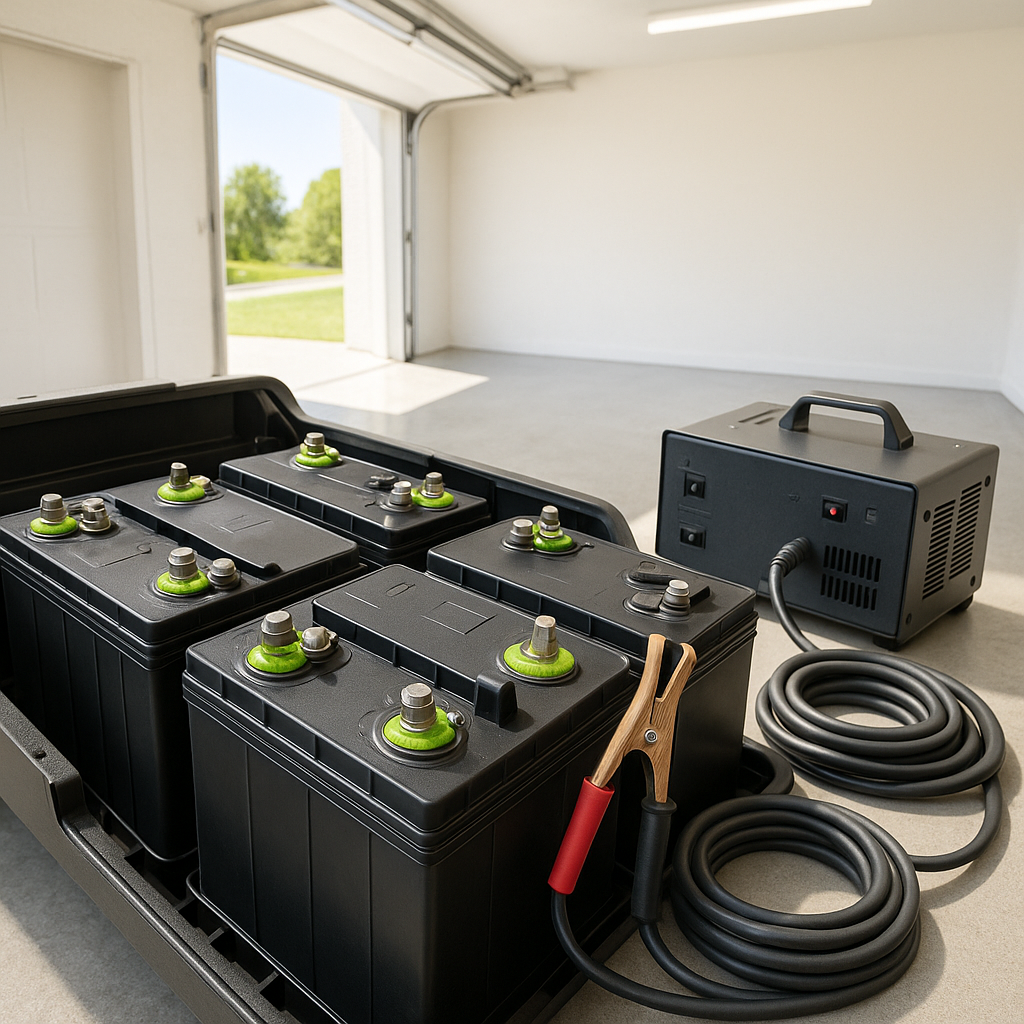
Always connect the charger to the cart's charging port before plugging it into the wall outlet — this minimizes sparking. Let the charger complete its full cycle without interruption. Most modern automatic chargers will shut off on their own when the pack reaches full charge, so there's no need to babysit it. Avoid manually unplugging early; partial charges repeated over time contribute to sulfation in lead-acid batteries, which permanently reduces capacity.
How Often Should You Charge?
For flooded lead-acid and AGM batteries, charge after every use — even if you only ran the cart for 20 minutes. These battery types do not benefit from being stored in a partially discharged state. Deep discharges (running the pack down to nearly empty regularly) are hard on lead-acid batteries and shorten their lifespan significantly. Lithium batteries are more tolerant of partial charges and don't suffer from the same sulfation issues, but consistent charging habits still help maintain overall pack balance.
Storage and Off-Season Charging
If your cart sits unused for weeks or months, you need a plan. Lead-acid batteries will self-discharge over time and can sulfate if left sitting dead. Either connect a maintainer charger designed to keep the pack at a healthy float charge, or do a full charge every three to four weeks during storage. Lithium batteries self-discharge much more slowly, but it's still good practice to store them at a partial charge rather than fully depleted. If you store the cart in a location that gets very cold, be aware that charging frozen or near-frozen lead-acid batteries can cause damage — let them warm up first.
Signs Your Charger or Batteries Have a Problem
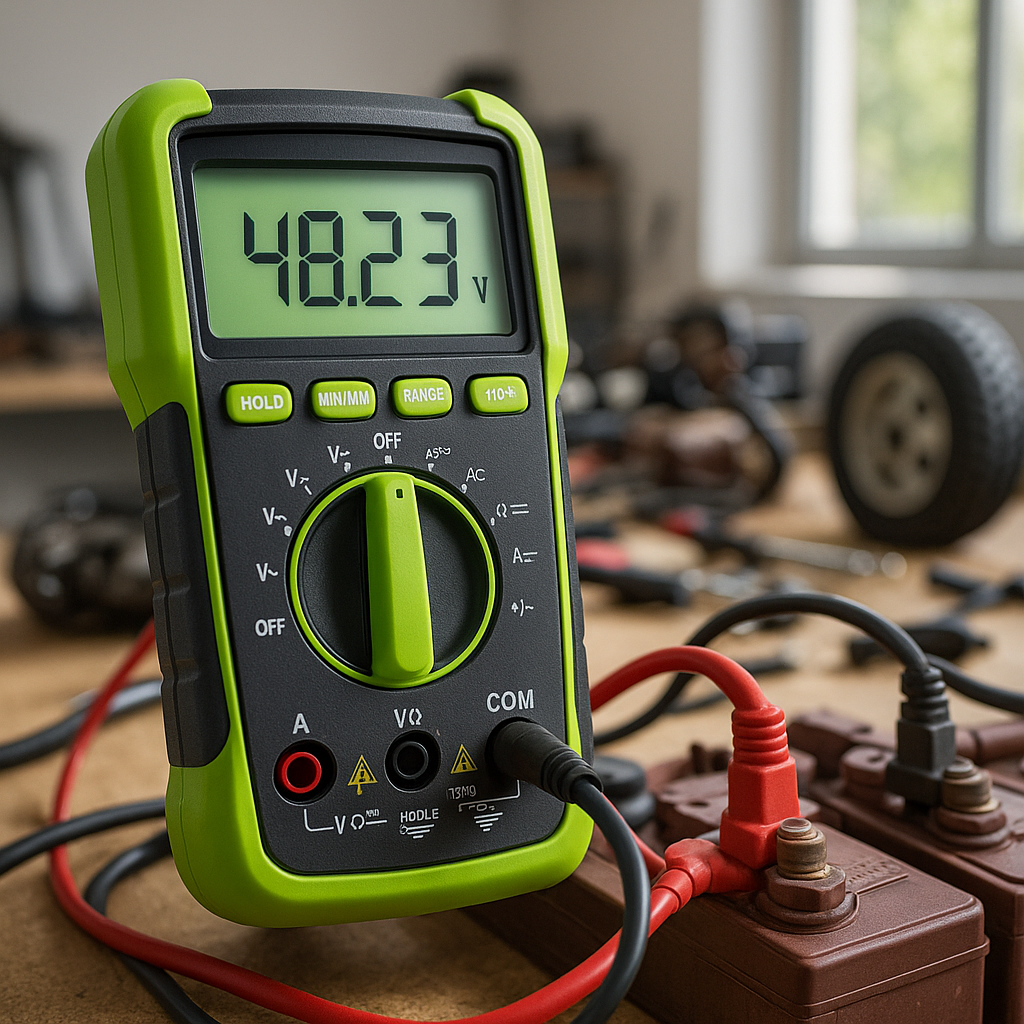
A charger that never shuts off, shuts off immediately, or repeatedly cycles on and off is telling you something. These behaviors usually point to a weak or failing battery in the pack, a bad charger, or a connection issue. One failing battery will drag down the whole pack — that's why it's worth doing a load test or individual battery voltage check if you're seeing reduced range or charging irregularities. Don't ignore warning signs; catching a single bad battery early can save the rest of the pack.