Golf cart batteries are the most expensive consumable on your cart, and the single biggest factor in how long they last isn't the brand you buy — it's how you charge them. Undercharging, overcharging, and leaving a discharged pack sitting for days are all slow killers. This guide covers the fundamentals of proper charging for flooded lead-acid, AGM, and lithium battery packs so you can get the most out of whatever's under your seat.
Understand Your Battery Type First
Before anything else, confirm what type of batteries you're running. Flooded lead-acid (FLA) is still the most common in older and fleet carts — these require a specific charging profile and need periodic water top-offs. AGM (absorbed glass mat) batteries are sealed, maintenance-free, and need a charger that supports their lower acceptance rate. Lithium iron phosphate (LiFePO4) packs are increasingly popular and require a lithium-compatible charger — using an old lead-acid charger on a lithium pack can damage the battery management system or create a safety hazard. Using the wrong charger for your battery chemistry is one of the most common and costly mistakes cart owners make.
Match Your Charger to Your Pack Voltage
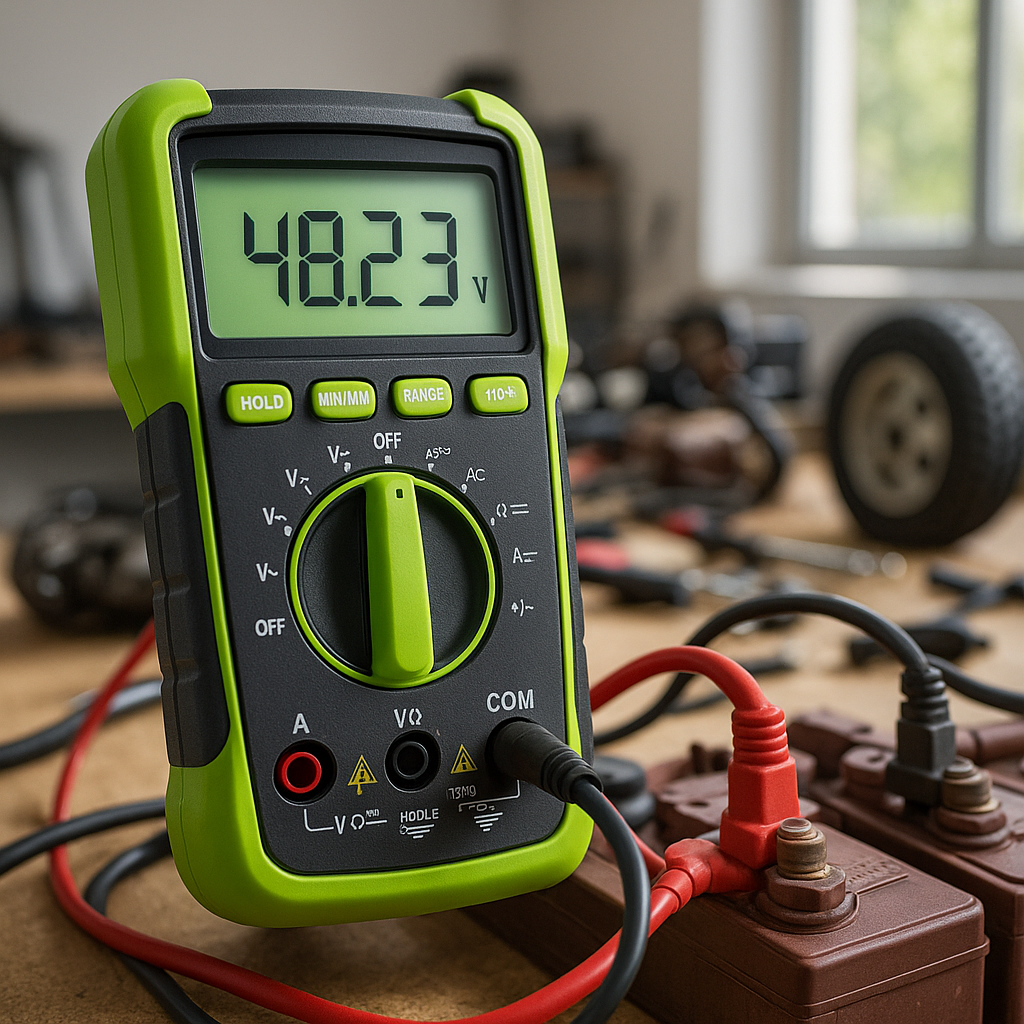
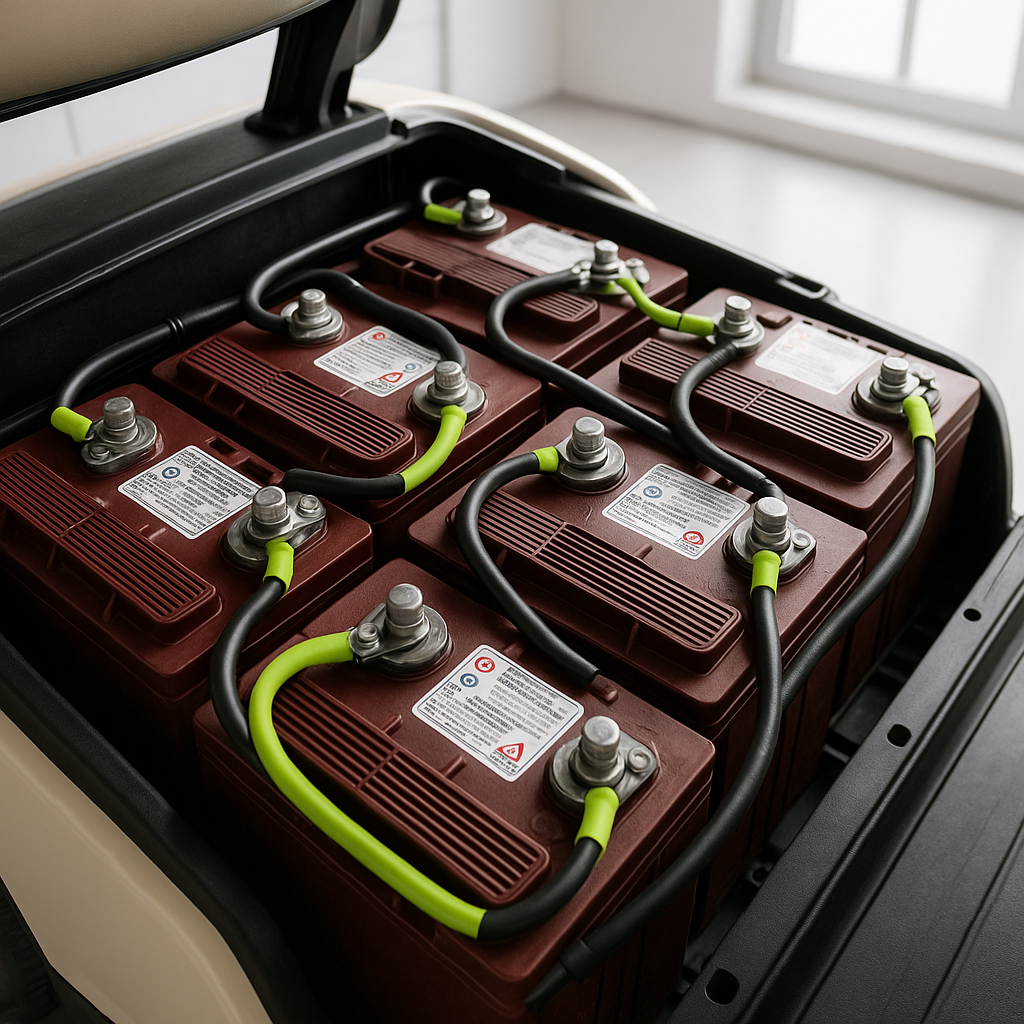
Golf carts run on various pack voltages — commonly 36V, 48V, and 72V systems, though others exist. Your charger must match the total pack voltage, not the voltage of individual batteries. A 48V charger on a 36V pack will overcharge and damage cells; the reverse will leave the pack chronically undercharged. Most modern automatic chargers won't even begin a charge cycle if they detect a voltage mismatch, but older or manual chargers won't protect you. Double-check the label on your charger and compare it to your cart's specs before every use if you're using a non-automatic unit.
When and How Often to Charge
The most reliable rule for lead-acid batteries: charge after every use, regardless of how much you actually drained the pack. Lead-acid chemistry sulfates when left in a discharged or partially discharged state, which permanently reduces capacity over time. Don't wait until the battery meter reads low — plug in when you're done for the day. For lithium packs, the rules are more flexible. LiFePO4 chemistry doesn't suffer from shallow discharge cycles the same way, so you don't need to top off after every short ride, but you still shouldn't let the pack sit deeply discharged for extended periods.
Let the Charger Finish Its Full Cycle
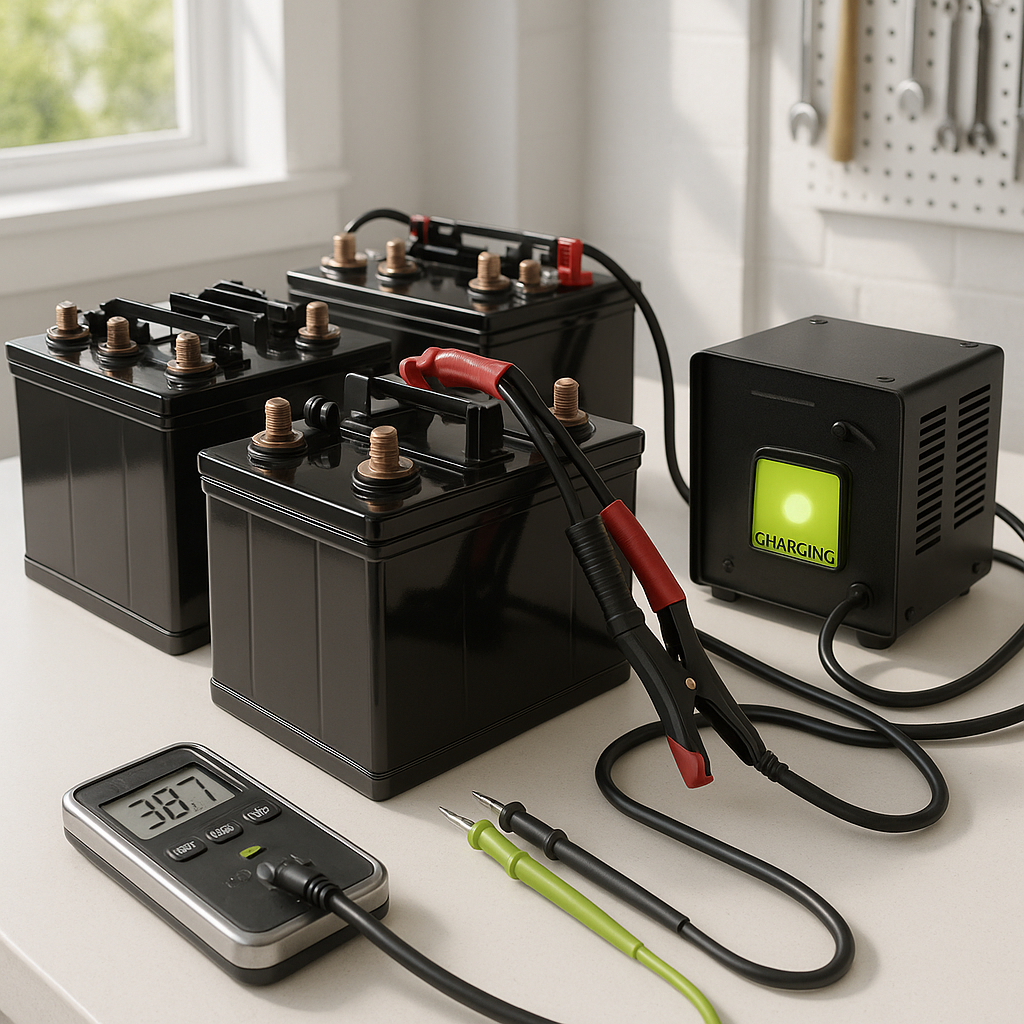
Automatic chargers go through distinct stages — bulk charge, absorption, and float or equalization — and interrupting that cycle early is a common mistake. It might look like the batteries are full after the initial bulk stage, but the absorption phase is where the charger balances charge across cells and firms up the voltage. Cutting a charge short repeatedly leads to cell imbalance and reduced pack life. Let the charger complete and shut off on its own. If your charger runs for an unusually long time or never shuts off automatically, that's a sign worth investigating — it could indicate sulfated cells, a failing charger, or a bad battery in the pack.
Charge in a Ventilated Area
Flooded lead-acid batteries off-gas hydrogen during charging, particularly during the equalization phase. Hydrogen is flammable, and in an enclosed space like a garage with no airflow, concentrations can build up. Always charge in a well-ventilated area, keep sparks and open flames away from the charging zone, and never lean over an open battery bank while a charge is in progress. AGM batteries off-gas significantly less, and sealed lithium packs produce no off-gas under normal conditions, but good ventilation habits are worth keeping regardless of battery type.
Monitor Water Levels on Flooded Batteries (After Charging)
If you're running flooded lead-acid batteries, check electrolyte levels regularly — but always check and add water after a charge cycle, not before. Adding water before charging can cause overflow as the electrolyte expands during the charge. Use only distilled water, never tap water, and fill to just above the plates or to the manufacturer's indicated fill line. Letting cells run dry even once can permanently damage exposed plates. Build a post-charge water check into your regular maintenance routine, especially during hot weather when evaporation accelerates.
Long-Term Storage Charging
If your cart is going into storage for more than a few weeks, don't just leave the batteries at whatever state of charge they happen to be at. For lead-acid packs, store them fully charged and plan to run a maintenance charge every four to six weeks to counteract self-discharge and prevent sulfation. For lithium packs, a partial state of charge — somewhere around 50–80% — is actually better for long-term cell health than storing at 100%. Some lithium battery management systems include a storage mode specifically for this. Either way, disconnecting the charger from a fully charged pack that's been sitting for months and expecting it to perform normally is a recipe for disappointment.