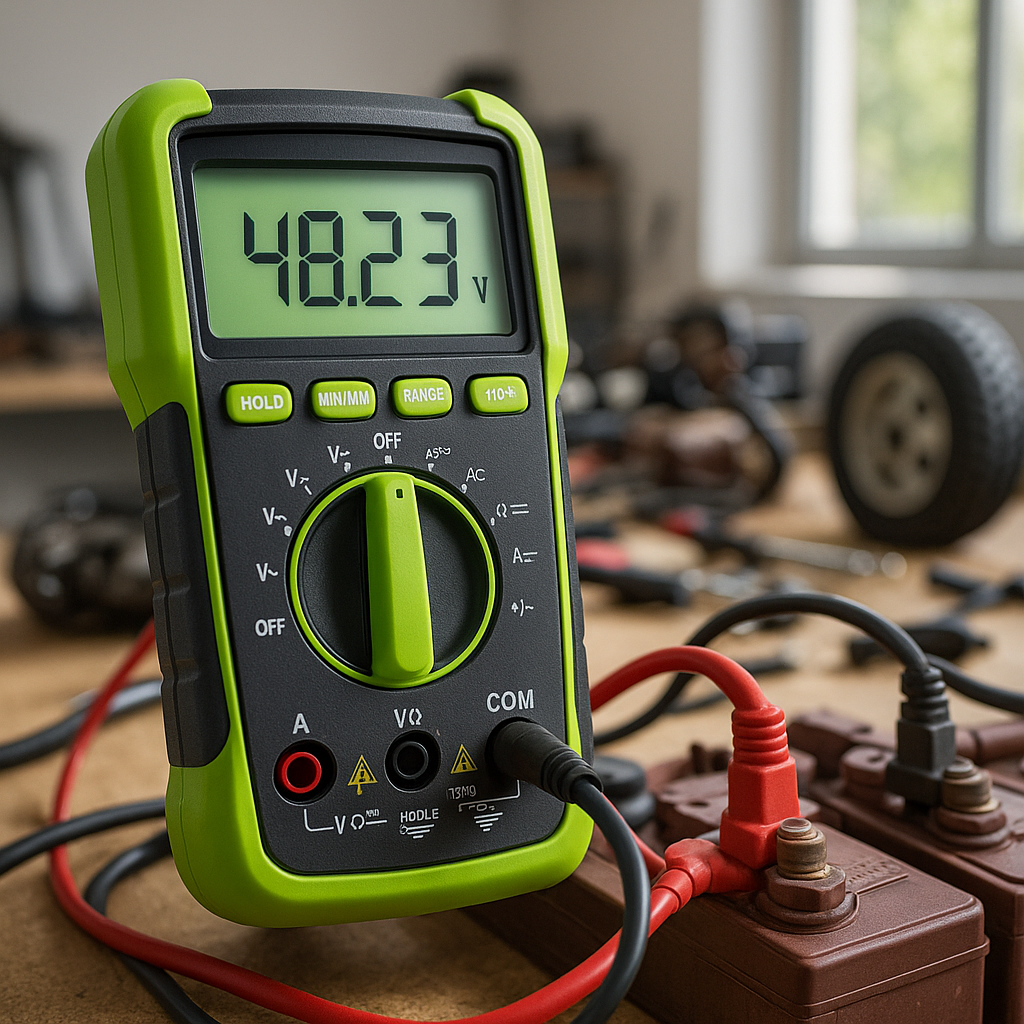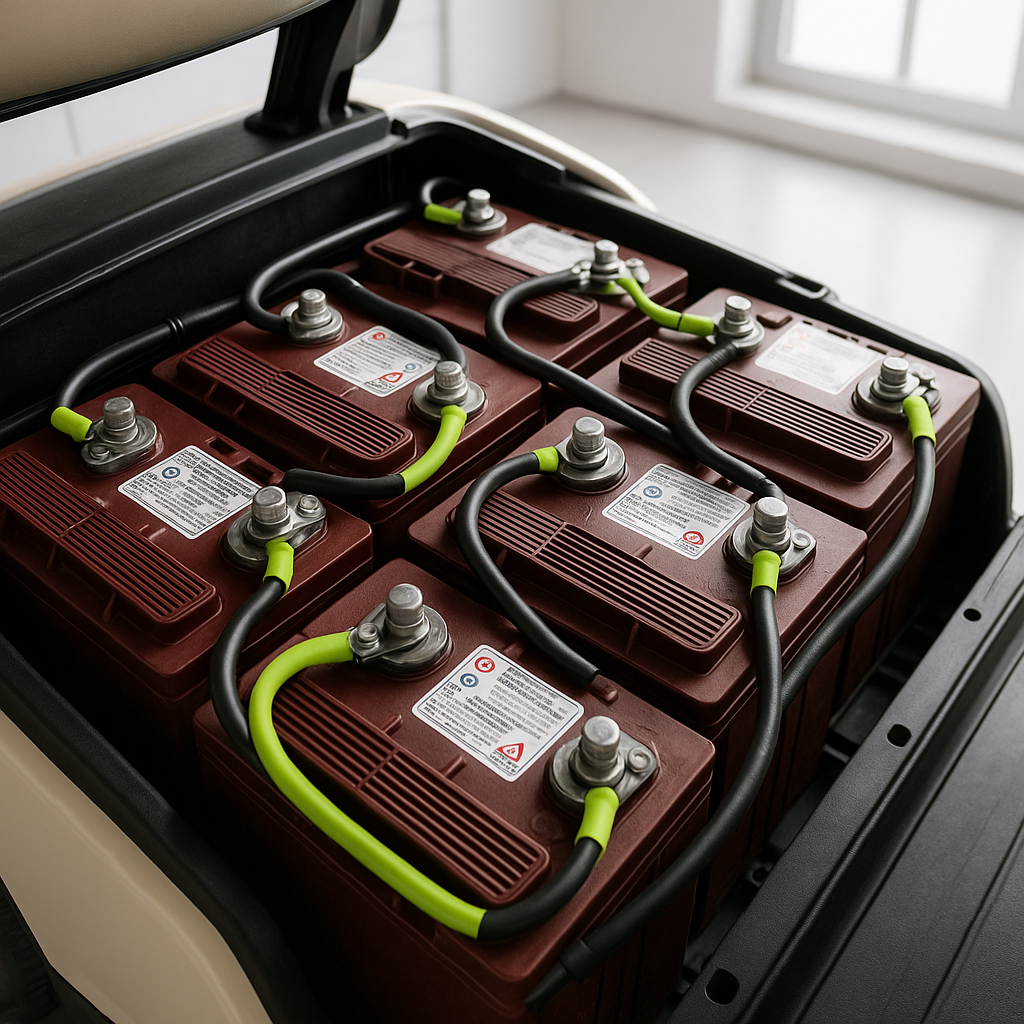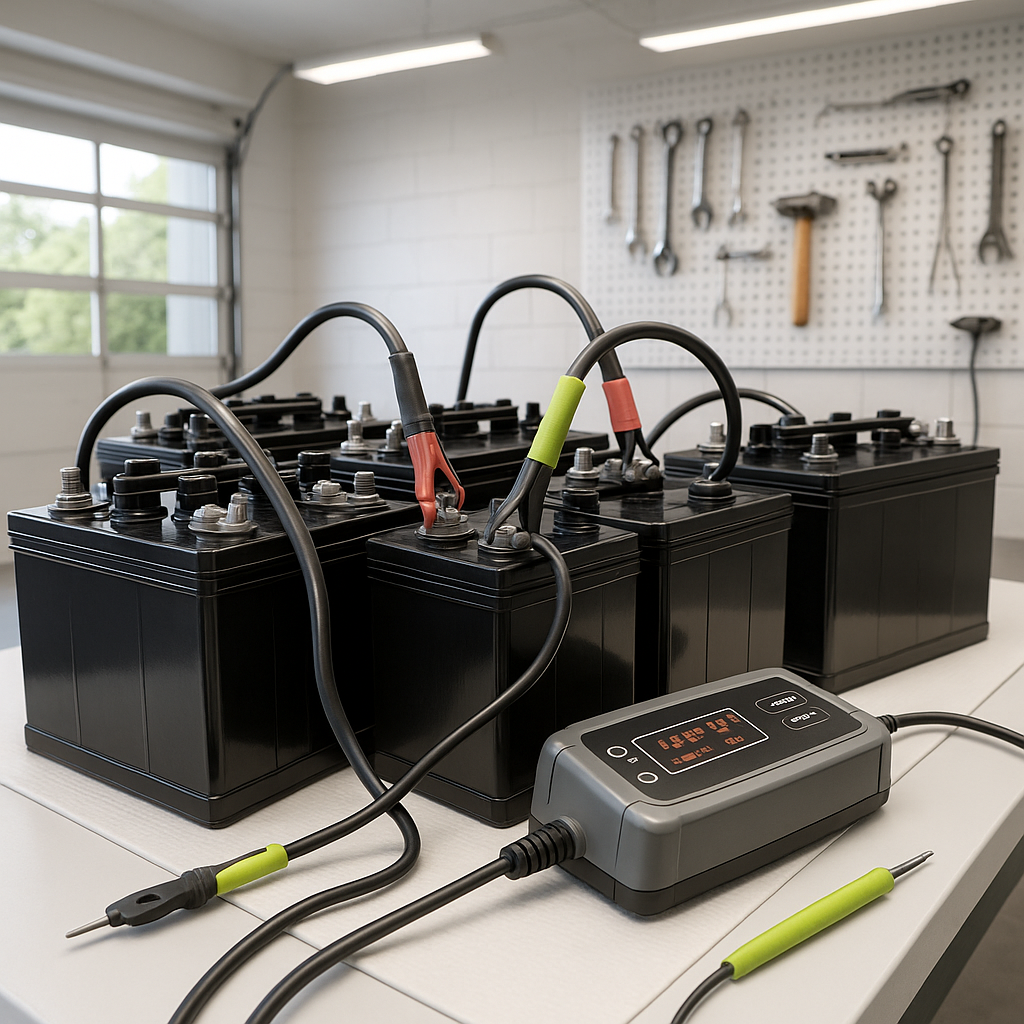
Most golf cart battery problems aren't caused by bad cells or faulty chargers — they're caused by bad charging habits. Undercharging, overcharging, and irregular charge cycles quietly kill batteries long before their time. Whether you're running a 36V or 48V system with flooded lead-acid, AGM, or lithium cells, the fundamentals of proper charging are straightforward once you understand what's actually happening inside the battery during each phase of the process.
Understand Your Battery Type First
The charging requirements for flooded lead-acid batteries (the most common type in older and mid-range carts) are significantly different from AGM or lithium iron phosphate (LiFePO4) packs. Flooded batteries require a multi-stage charger that delivers a bulk charge, an absorption phase, and a float or equalization phase. AGM batteries are more sensitive to overcharging and need a charger designed specifically for them. Lithium packs have their own battery management systems (BMS) built in and won't tolerate chargers designed for lead-acid chemistry at all. Before you plug anything in, confirm your charger matches your battery chemistry — mismatches are one of the fastest ways to permanently damage a pack.
Always Charge After Every Use
This is the rule most golf cart owners ignore and regret later. Lead-acid batteries — flooded or AGM — should be recharged after every use, even if you only ran the cart for 20 minutes. Leaving a partially discharged lead-acid battery to sit accelerates a process called sulfation, where lead sulfate crystals harden on the battery plates and permanently reduce capacity. You don't need to wait until the battery is low to charge it. The guideline is simple: use it, then charge it. Lithium batteries are more tolerant of partial state-of-charge storage, but regular charging is still good practice.
Let the Charger Complete Its Full Cycle
A common mistake is unplugging the charger once the indicator light changes or after a set number of hours, assuming the battery is full. A proper smart charger will complete a multi-stage cycle on its own and shut off automatically when finished. If your charger doesn't auto-shutoff, you need to learn the typical charge time for your battery bank's amp-hour capacity and stick to it — but an auto-shutoff charger is strongly recommended and worth the investment. Cutting a charge cycle short regularly leads to the same gradual capacity loss as sulfation: the battery never reaches a true full state of charge, and its effective capacity shrinks over time.
Charge in a Ventilated Area
Flooded lead-acid batteries off-gas hydrogen during charging, particularly during the absorption and equalization phases. Hydrogen is flammable and accumulates quickly in enclosed spaces. Always charge your cart in a garage with the door open, under a carport, or outdoors. Keep open flames, sparks, and smoking materials well away from the battery compartment during and immediately after charging. This isn't a theoretical risk — battery compartment fires and explosions from hydrogen ignition are documented and preventable. AGM and lithium batteries off-gas significantly less, but ventilation is still a smart habit regardless of chemistry.
Check Water Levels in Flooded Batteries Before Charging
If you're running flooded lead-acid batteries, the electrolyte level matters. Charging a battery with low water exposes the plates and can cause permanent damage during the charge cycle. Check water levels before charging, not after. Add only distilled water — tap water introduces minerals that contaminate the electrolyte. Fill to just above the plates or to the manufacturer's fill line, but don't overfill, as electrolyte expands during charging and can overflow. After a full charge cycle is also a good time to inspect levels, since you'll have a clearer picture of consumption. Batteries that require water very frequently may be overcharging or nearing end of life.
Store Batteries Correctly During Off-Season
If your cart sits unused for weeks or months, storage charging matters. For lead-acid batteries, the goal is to keep them at or near full charge throughout storage — a fully charged lead-acid battery resists freezing and sulfation far better than a discharged one. Many owners use a maintenance charger or trickle charger on a timer to top off batteries every few weeks during storage. For lithium batteries, manufacturers often recommend storing at a partial state of charge (typically around 50–80%) rather than completely full — check the guidance specific to your pack. In either case, store in a cool, dry location and disconnect the main battery cables if the cart won't be used for an extended period.
Good charging habits cost you nothing and can easily double the usable life of your battery pack. The biggest investment you can make in your batteries isn't a fancy charger or an additive — it's consistency. Charge after every use, let the cycle complete, keep the water topped off, and store correctly. Everything else is secondary.