If your golf cart feels sluggish toward the end of a round or your batteries aren't holding a charge like they used to, sulfation and cell imbalance are often the culprits. Equalization is the deliberate process of applying a controlled overcharge to your flooded lead-acid batteries to break down sulfate buildup and bring all cells back to the same state of charge. Done correctly and on a regular schedule, it's one of the most effective maintenance steps you can take to extend battery pack life. Done wrong — or skipped entirely — it's one of the fastest ways to shorten it.
What Equalization Actually Does
Inside each flooded lead-acid cell, lead sulfate crystals gradually form on the plates during normal charge and discharge cycles. Over time, those crystals harden and reduce the plate surface area available for chemical reactions — that's sulfation, and it's the leading cause of premature battery failure. Cells within the same battery, and batteries within the same pack, also tend to drift apart in voltage over time. Equalization addresses both problems by pushing the pack through a long, low-rate overcharge that agitates the electrolyte, reverses soft sulfation, and forces weaker cells to catch up with stronger ones. The result is a more balanced, more capable pack.
Important: Equalization Only Applies to Flooded Lead-Acid Batteries
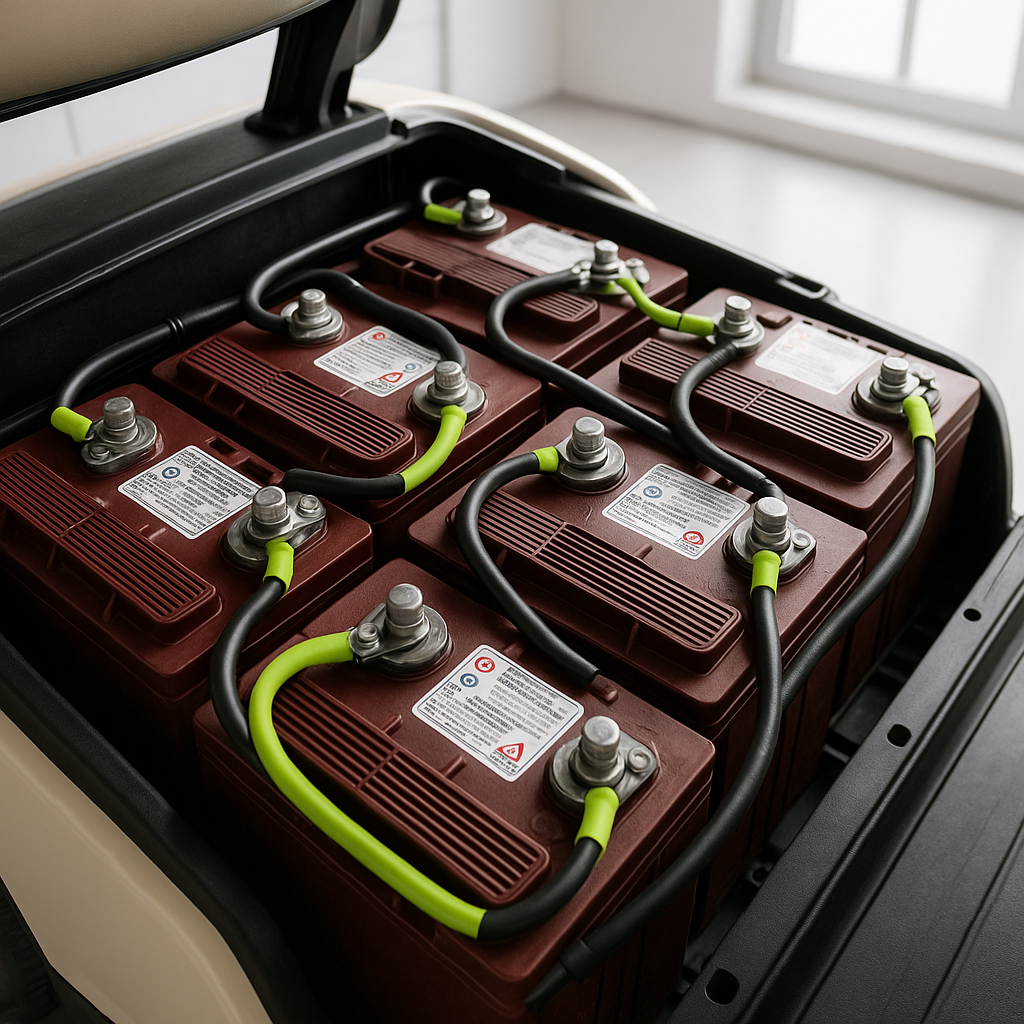
This process is specifically for flooded (wet-cell) lead-acid batteries — the type that have removable caps and require periodic water top-offs. Never attempt to equalize sealed AGM or gel batteries. Those chemistries cannot vent the gases produced during overcharge and will be permanently damaged or could rupture. If you're unsure what type of batteries you have, check the battery label or consult your cart's documentation before proceeding.
What You'll Need Before You Start
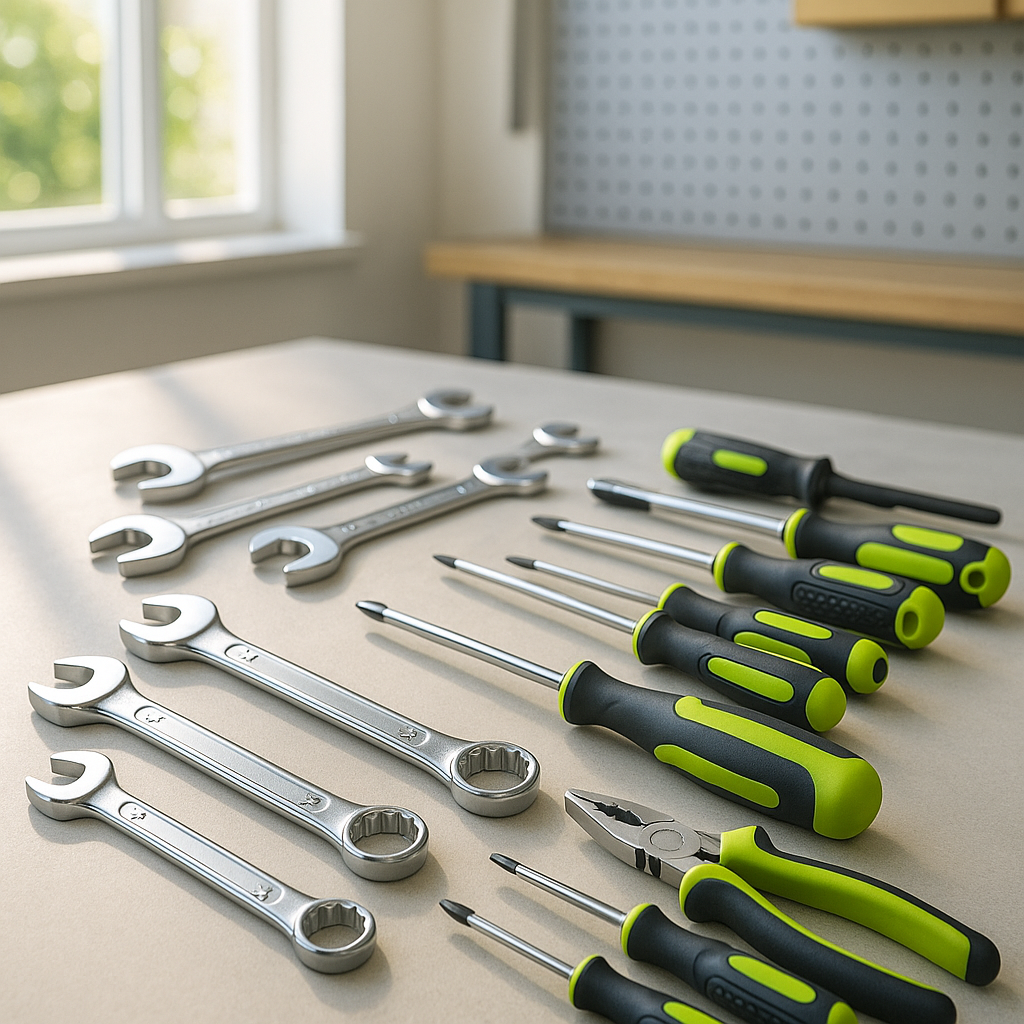
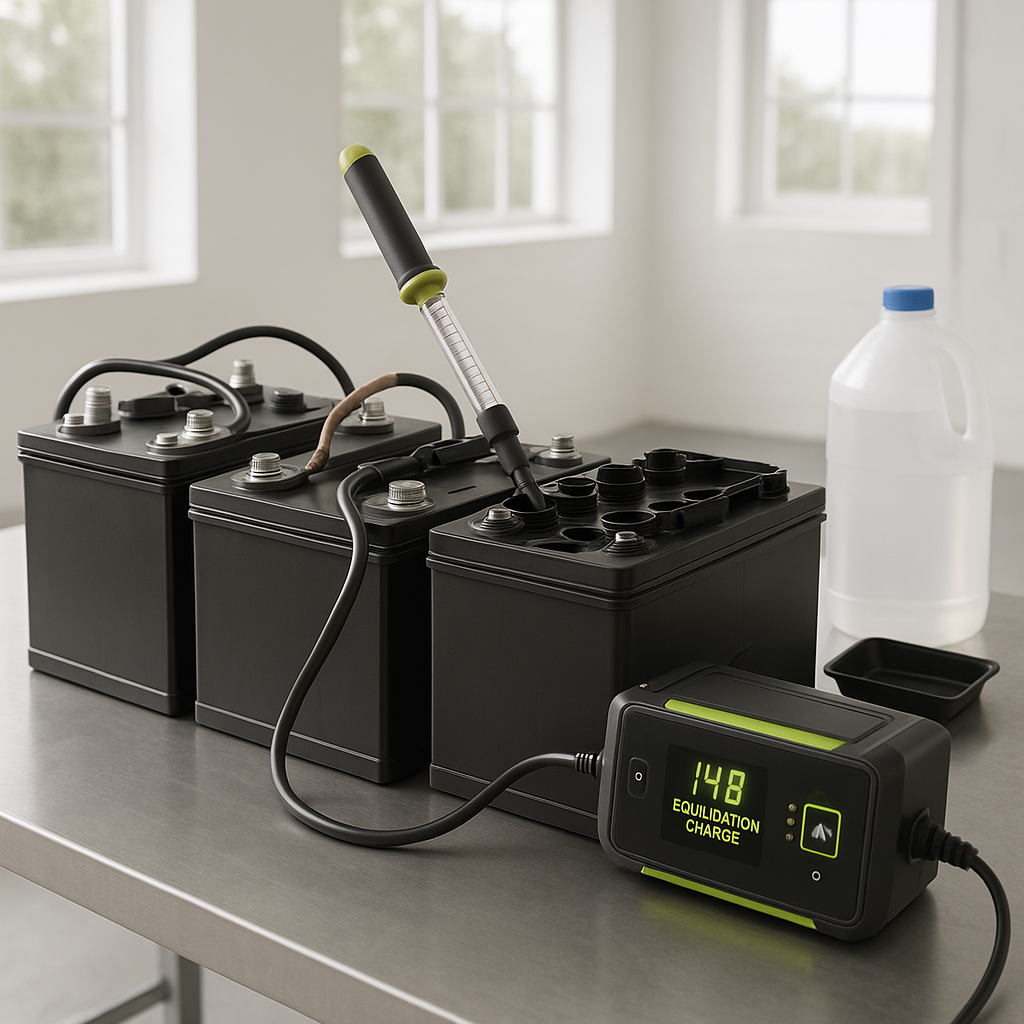
You'll need a charger that has a dedicated equalization mode or manual equalization setting — not all chargers do, so verify yours supports it before beginning. You'll also need distilled water to top off cells beforehand if needed, a hydrometer to check specific gravity readings in each cell, safety glasses, acid-resistant gloves, and good ventilation. Equalization produces hydrogen gas, so always work outdoors or in a well-ventilated area away from any open flames or sparks.
Step-by-Step: How to Equalize
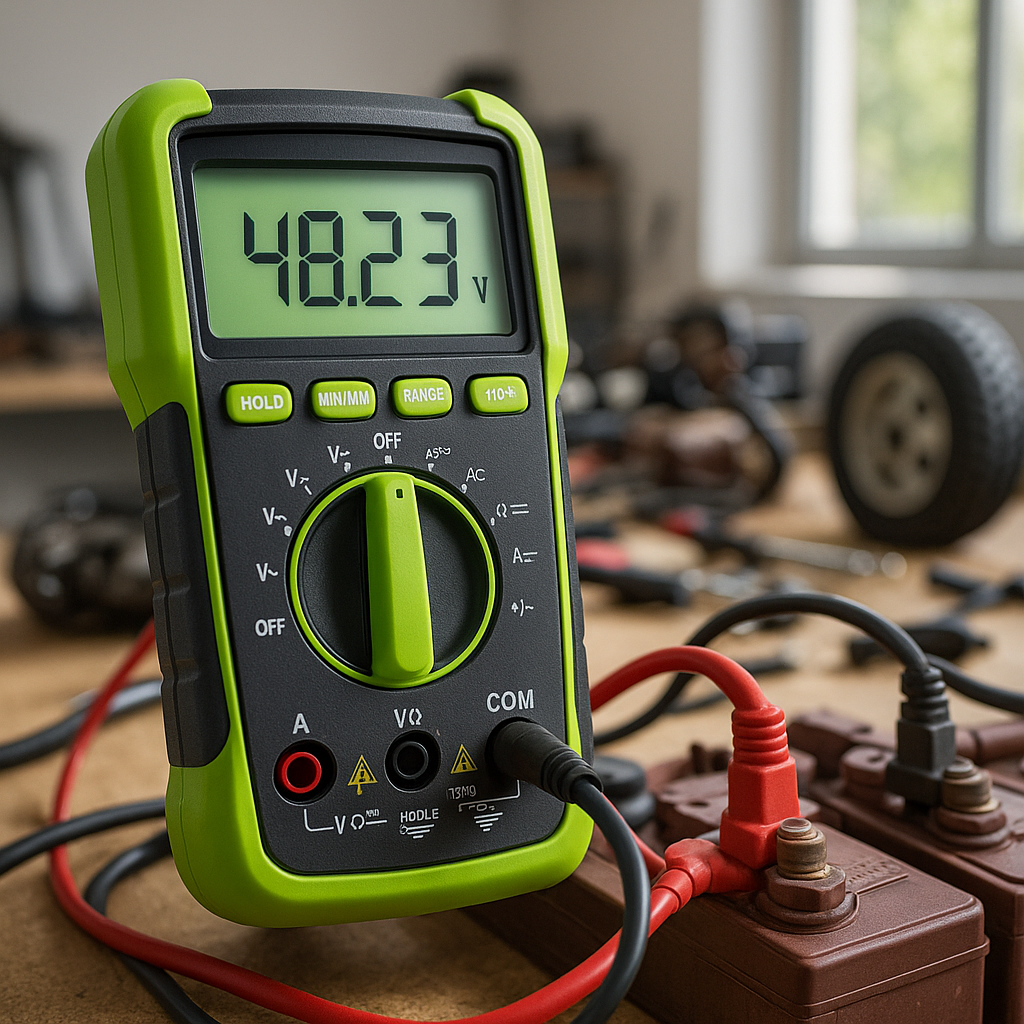
Start by performing a normal, complete charge cycle first — equalization should always begin with a fully charged pack, not a depleted one. Once charging is complete, check the water level in each cell and top off with distilled water if any plates are exposed, but don't overfill. Put your safety gear on. Use a hydrometer to record the specific gravity of every cell in every battery — this gives you a baseline and helps you identify the weakest cells. Then activate the equalization mode on your charger and allow it to run the full cycle without interruption. A proper equalization cycle typically takes several hours. You'll likely see the electrolyte bubble and gas — that's normal and expected. When the cycle finishes, check specific gravity again. Readings across all cells should be much closer together than they were before. Top off water levels once more if needed, as the process can drive some out through gassing.
How Often Should You Equalize?
For most golf cart owners, equalizing once a month during the active riding season is a reasonable general guideline. If you store your cart for the winter, equalize before putting it away and again when you bring it back into service. Carts that see heavy daily use or that live in hot climates may benefit from more frequent cycles. If you notice a significant difference in specific gravity between cells — typically more than about 0.030 points — that's a sign equalization is overdue regardless of your schedule. Severely sulfated batteries that have been neglected for a long time may not fully recover from a single equalization; some improvement is likely, but badly degraded batteries may ultimately need replacement.
Common Mistakes to Avoid
The most common mistakes are equalizing batteries that don't need it (over-equalizing can accelerate water loss and plate corrosion), skipping the pre-check on water levels (running cells dry during the process causes serious damage), and using a standard charger without an equalization mode (which won't apply the right voltage profile). Also avoid equalizing in enclosed spaces — hydrogen gas accumulation is a real safety hazard. And never walk away and forget about it; check in periodically and make sure your charger ends the cycle properly.
Equalization isn't glamorous maintenance, but it's genuinely one of the highest-return habits a golf cart owner can build. A well-maintained, regularly equalized battery pack will outlast a neglected one by years — and keep your cart running strong all season long.