Side mirrors are one of the most practical upgrades you can make to a golf cart, whether you're navigating a crowded campground, a neighborhood street, or a busy golf course path. Most stock carts come with either no mirrors at all or a single center rearview mirror, leaving significant blind spots on both sides. Installing a pair of side mirrors is a straightforward DIY job that takes less than an hour and requires only basic hand tools. Here's how to do it right.
Choose the Right Mirror Style for Your Cart
Before you buy anything, take a look at your cart's roof support struts, windshield frame, and front uprights. Side mirrors for golf carts typically clamp onto round or square tubing and are designed to fit a range of tube diameters — but not all clamps fit all tubing sizes. Measure the diameter or width of the uprights or frame rail you plan to mount to before ordering. You'll also want to decide between flat mirrors (better for close-quarter maneuvering) and wide-angle or convex mirrors (better for general awareness at speed). Convex mirrors show a wider field of view but compress distance, so objects appear farther away than they are — worth knowing before you rely on them in traffic.
Gather Your Tools
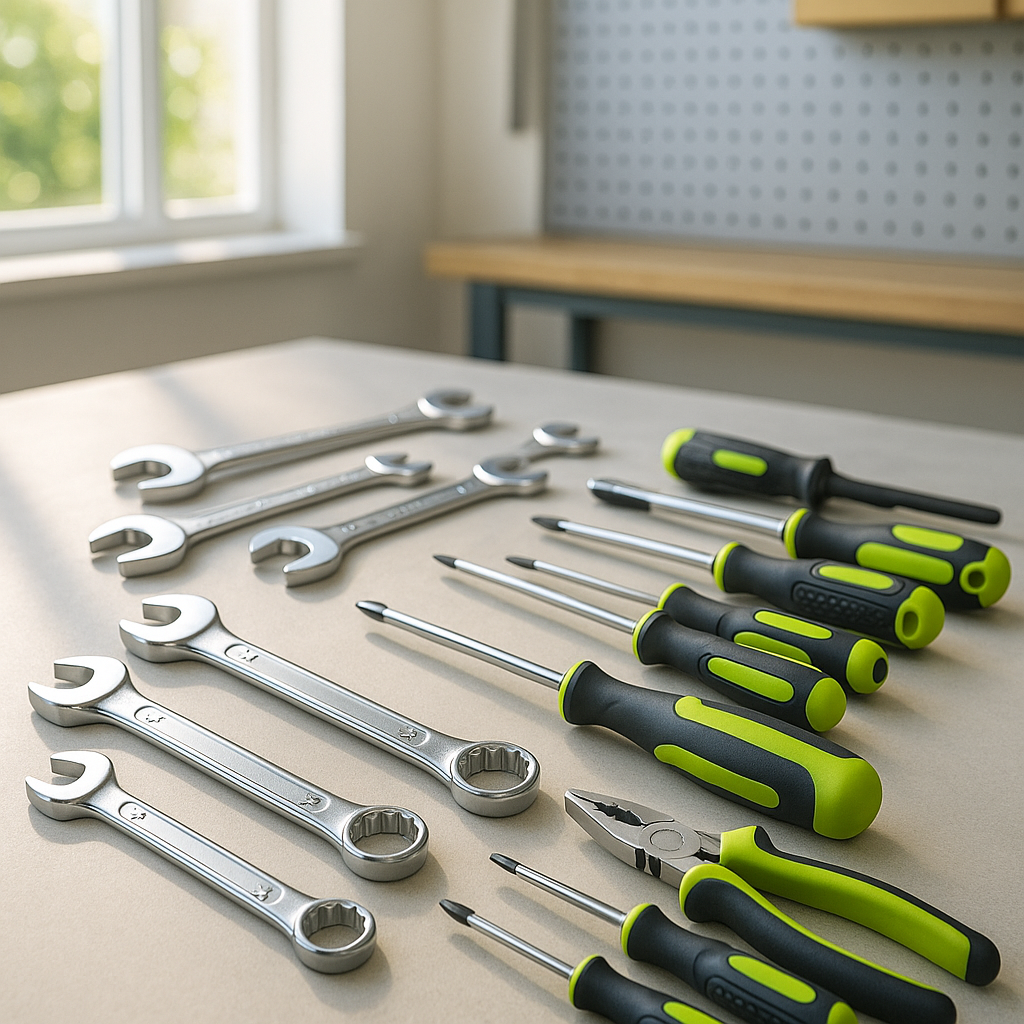
Most side mirror kits use a simple clamp-and-bolt mounting system. You'll typically need a screwdriver (flathead or Phillips, depending on the hardware included), an adjustable wrench or the appropriate socket size, and possibly a rubber mallet if you're working with a tight clamp. If you're drilling into a roll bar or custom frame, you'll also need a drill with an appropriate bit. Have a helper available if you're mounting to a location that requires holding the mirror in position while you tighten — it makes alignment much easier.
Pick Your Mounting Location
The most common mounting points are the front windshield support struts on either side of the cart. This puts the mirrors at roughly door-mirror height on a car, which most drivers find intuitive. Some people prefer mounting to the roof support struts further back, but that position often creates more vibration at speed and can put the mirror partially out of your sightline. Avoid mounting anywhere that forces you to look sharply to the side — you want to be able to glance at the mirror with a small head turn, not crane your neck. Hold the mirror up in a few spots and sit in the driver's seat to check sightlines before you commit.
Install the Clamp
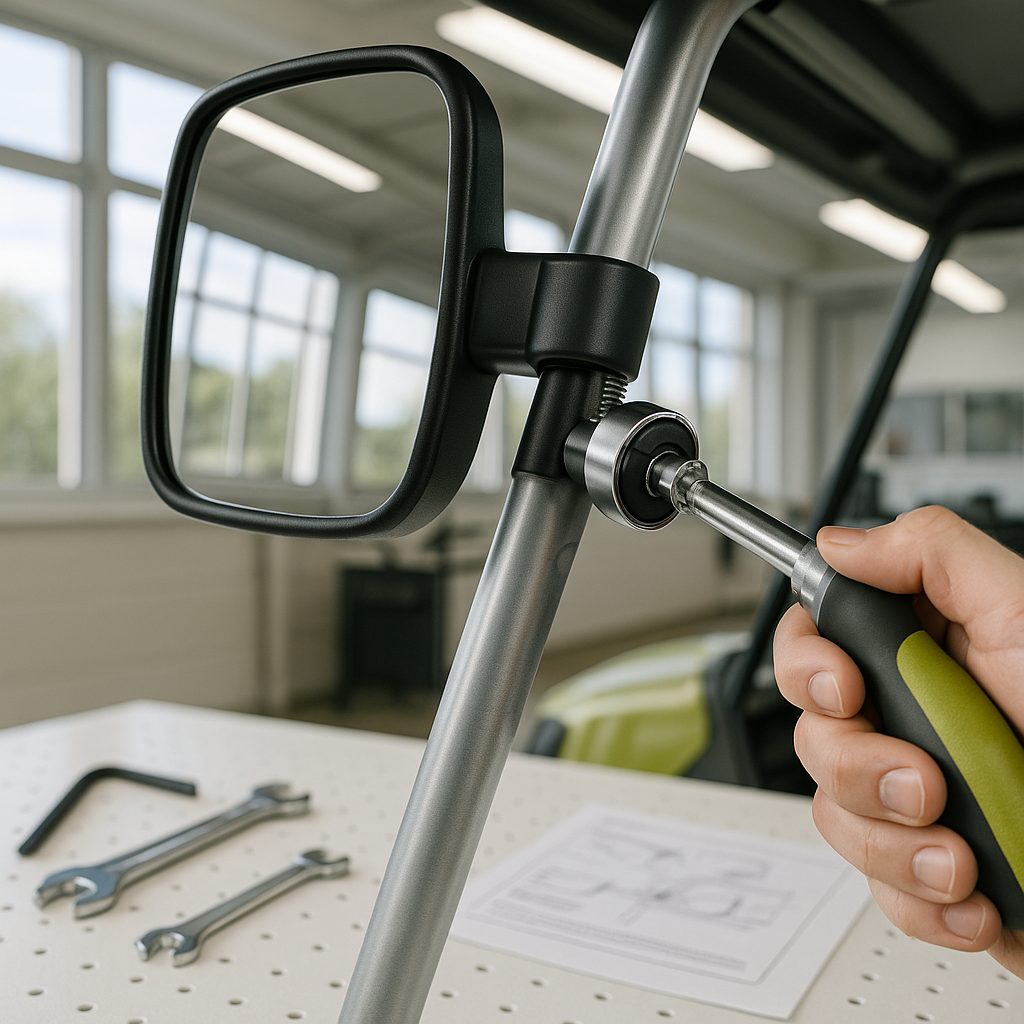
Loosen the clamp hardware fully before positioning it on the tubing. Slide the clamp around the mounting point and hand-tighten it just enough to hold the mirror bracket in place without locking it down. This lets you make final position adjustments before you fully commit. If the clamp includes a rubber insert or protective pad — most quality units do — make sure it's seated correctly against the frame. This protects the tubing finish and prevents the clamp from spinning over time. Once the position looks right from the driver's seat, tighten the clamp hardware firmly but not excessively — over-tightening a clamp on aluminum tubing can deform it.
Adjust and Lock the Mirror Head
Most golf cart side mirrors have a ball-and-socket or pivoting joint that lets you angle the mirror face independently of the mount. With the clamp secured, sit in the driver's seat and adjust the mirror head so you can see clearly behind and to the side of the cart with a natural glance. A good starting point: angle the mirror so you can see the rear edge of the cart body in the inner portion of the mirror frame — this gives you a reference point for judging distances. Once you have the angle dialed in, tighten the mirror head adjustment hardware to lock it in position. Check that it holds under light hand pressure before driving.
Repeat for the Passenger Side
Install the second mirror on the opposite side using the same process. Try to match the height and fore-aft position of the first mirror as closely as possible — mismatched mirror positions can be disorienting. Sit in the driver's seat after both mirrors are installed and do a final check on both sides before taking the cart anywhere. It's also worth doing a short slow-speed test drive to make sure neither mirror vibrates loose or shifts angle on rough ground. If a mirror vibrates noticeably, the clamp likely needs another half-turn of tightening, or the rubber insert may need to be repositioned.
A Note on Safety and Legal Compliance
If you drive your golf cart on public roads — even in low-speed vehicle zones or golf cart communities — check your local regulations. Some jurisdictions require mirrors as part of street-legal certification, and they may specify minimum mirror size or placement. Even where it's not legally required, treating your mirrors as a genuine safety feature rather than an afterthought is the right call. Check mirror tightness periodically, especially after driving on rough terrain, and clean the mirror faces regularly to maintain clear visibility.