If your golf cart feels sluggish, loses range earlier than it used to, or struggles on hills, the problem might not be your motor or controller — it might be one or more batteries that look fine on a resting voltage check but collapse under load. Load testing is the only reliable way to expose a weak or failing battery before it takes down your whole pack. This guide walks you through the process using general, well-established methods any golf cart owner can follow.
Why a Resting Voltage Reading Isn't Enough
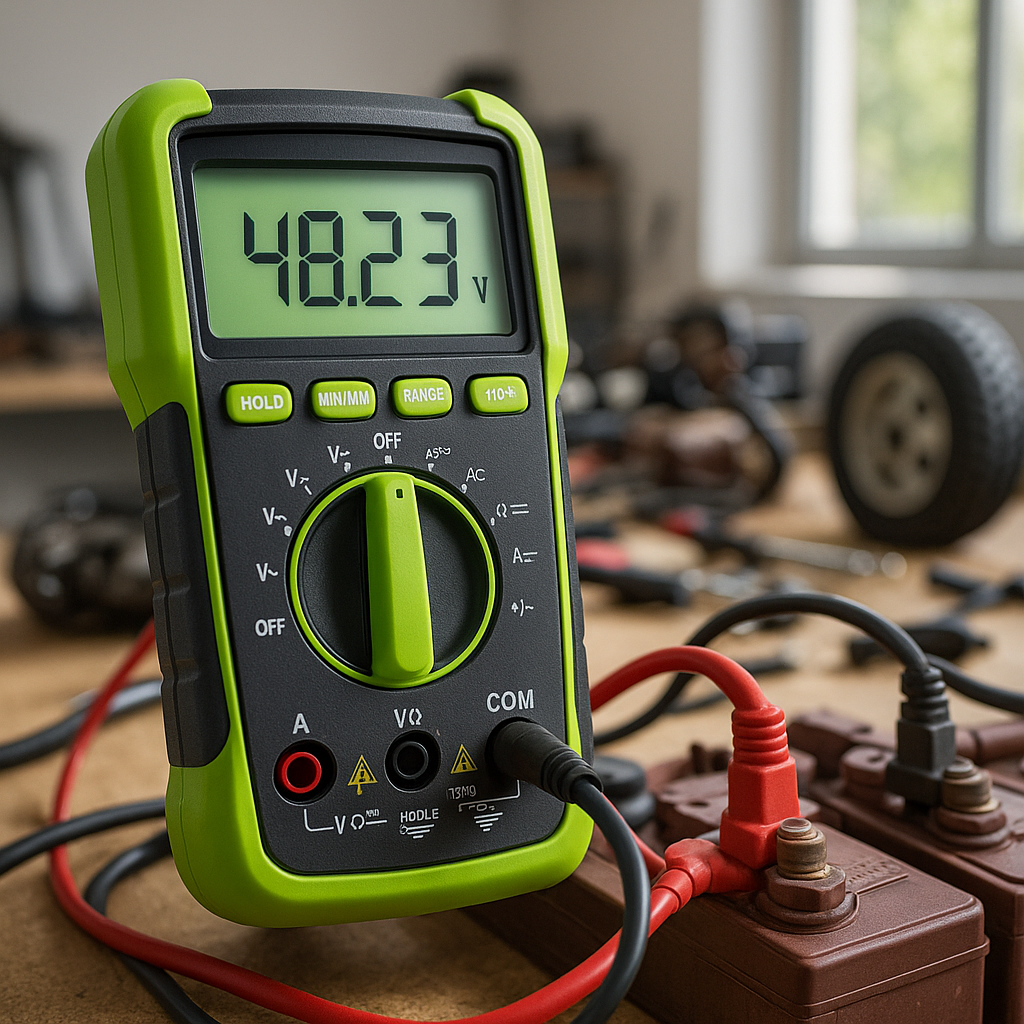
A battery sitting idle can show a perfectly healthy voltage and still be useless under real operating conditions. A battery with a dead or sulfated cell will hold surface charge when at rest but drop sharply the moment you ask it to deliver current. That voltage sag is exactly what a load test is designed to reveal. Checking resting voltage is a good first step, but it's not a diagnosis — it's just a starting point.
What You'll Need
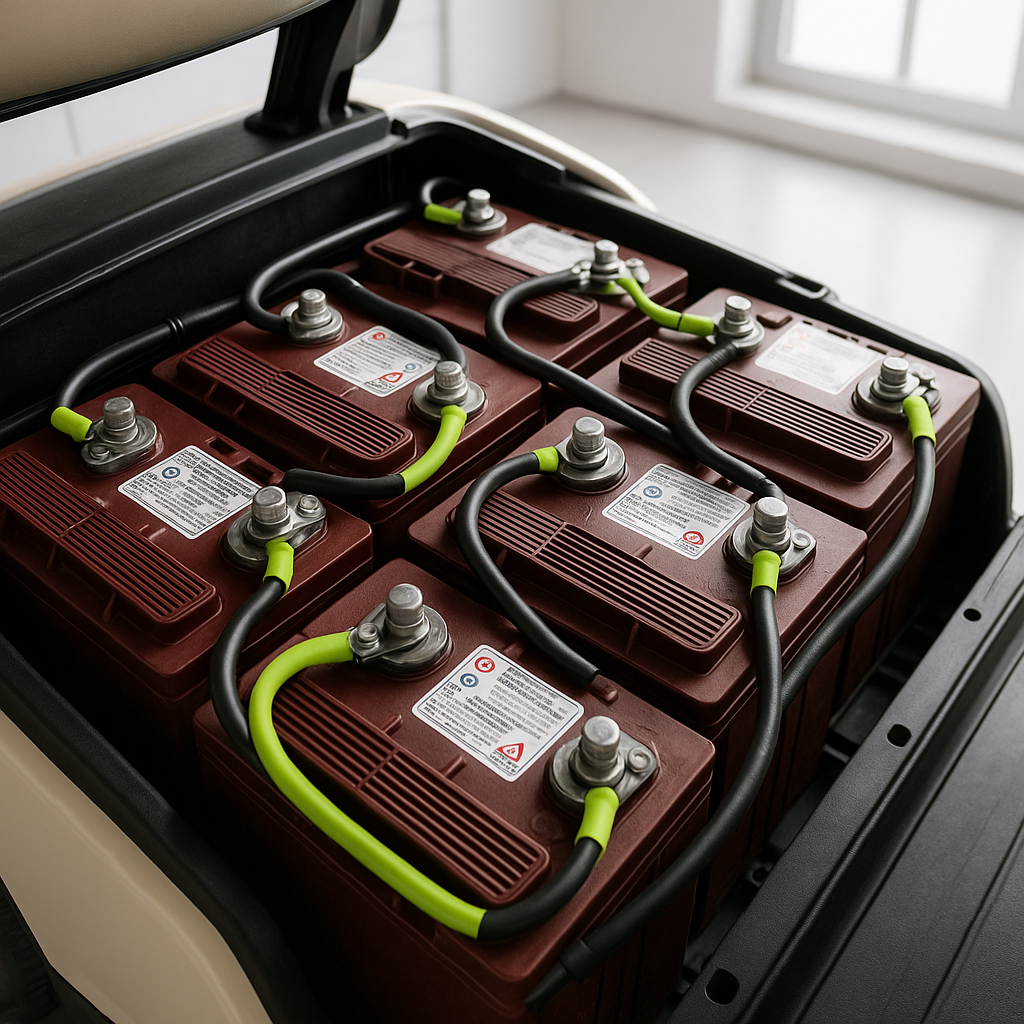
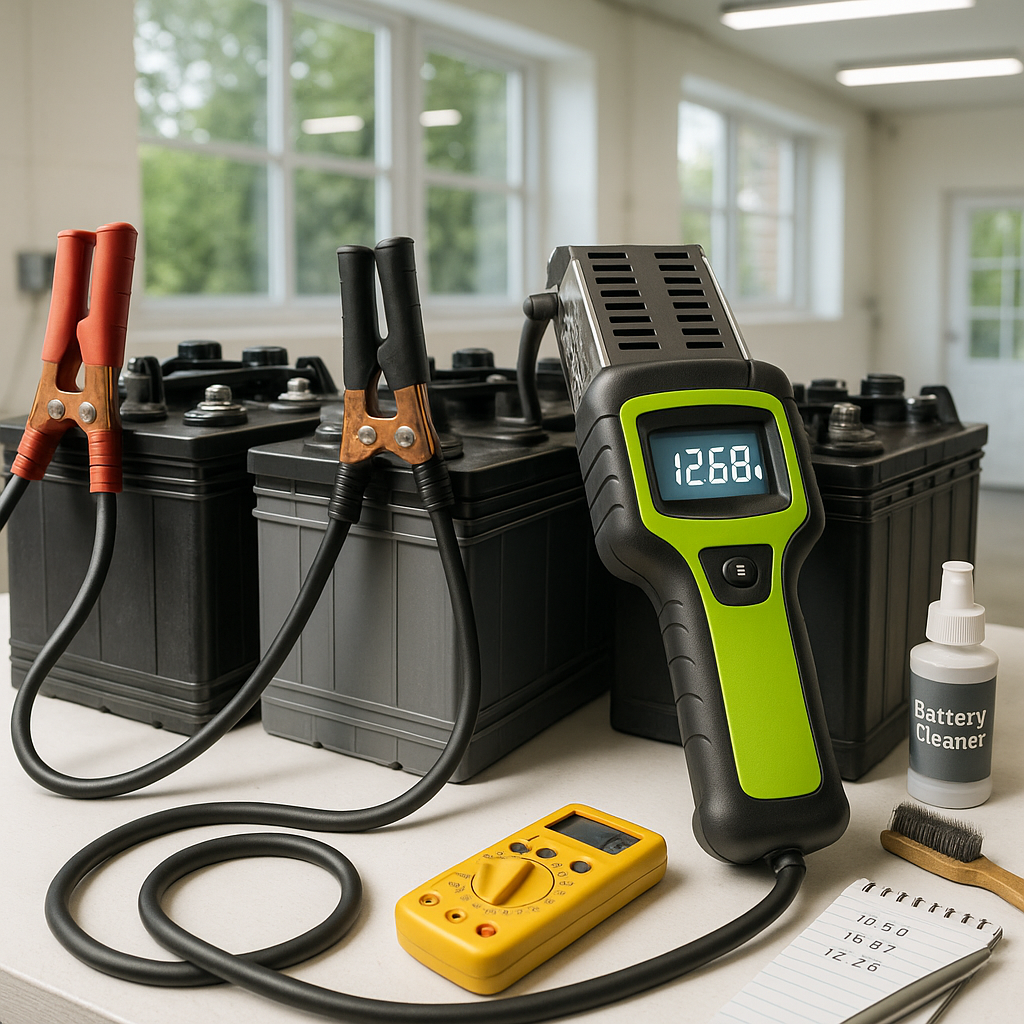
To load test properly, you need a battery load tester — a dedicated tool that draws a controlled, significant current from the battery while you monitor the voltage response. A basic digital multimeter used alone cannot simulate real load conditions. Carbon pile load testers are the traditional choice and are widely used by golf cart technicians; digital battery analyzers are a more modern option and can be easier to read. Either way, make sure the tester you use is rated for the voltage of your individual batteries, not your total pack voltage. Most golf cart packs use 6-volt or 8-volt batteries in series, so you'll be testing each battery individually at its own voltage rating.
Safety First
Lead-acid batteries produce hydrogen gas, especially during and after charging. Before you begin, make sure you're working in a ventilated area and that the cart has been sitting — not freshly charged — for at least an hour. Wear safety glasses and acid-resistant gloves. Keep sparks and open flames well away from the battery compartment. If any battery is visibly cracked, leaking, or has a swollen case, do not attempt to load test it — remove it from service immediately.
Step-by-Step: How to Load Test Each Battery
Start by fully charging your battery pack and then letting it rest for a few hours — this ensures you're testing each battery at its true full capacity, not immediately after a surface charge. Once rested, open the battery compartment and visually inspect all batteries before you touch anything. Clean any corrosion off terminals if needed. Then, one battery at a time, connect your load tester following the manufacturer's instructions for that tool — typically red clamp to positive terminal, black to negative. Apply the load for the duration specified by your tester (commonly around 15 seconds) while watching the voltage reading. A healthy battery will hold close to its rated voltage under load with only a modest drop. A battery that drops sharply or whose voltage continues falling during the test is a sign of significant internal weakness. Record your readings for every battery in the pack before drawing conclusions.
Interpreting Your Results
No single number applies universally, since acceptable voltage under load varies by battery age, temperature, and the specific load tester being used — always refer to the guidance that comes with your tester. That said, the general principle is consistent: a battery that holds relatively steady voltage under load is healthy, and one that drops dramatically is suspect. If one battery in your pack fails while the others pass, that single weak battery is dragging down your entire system. In a series pack, the weakest battery limits the performance of every other battery — replacing just the failed unit is a reasonable short-term fix, but be aware that mixing a new battery with significantly older ones is not ideal for long-term pack health.
How Often Should You Load Test?
For most golf cart owners using flooded lead-acid batteries, load testing once per season — typically at the start of your heavy-use period — is a sensible practice. If you notice performance changes mid-season, test immediately rather than waiting. AGM and lithium battery packs have their own testing considerations and generally require different diagnostic tools, so check the guidance specific to your battery chemistry if you've upgraded away from traditional flooded lead-acid.
Load testing takes maybe 20–30 minutes to run through a full pack and can save you from an expensive breakdown or the frustration of replacing parts that weren't the actual problem. It's one of the most underused diagnostic steps in golf cart maintenance, and once you've done it, you'll wonder how you managed without it.