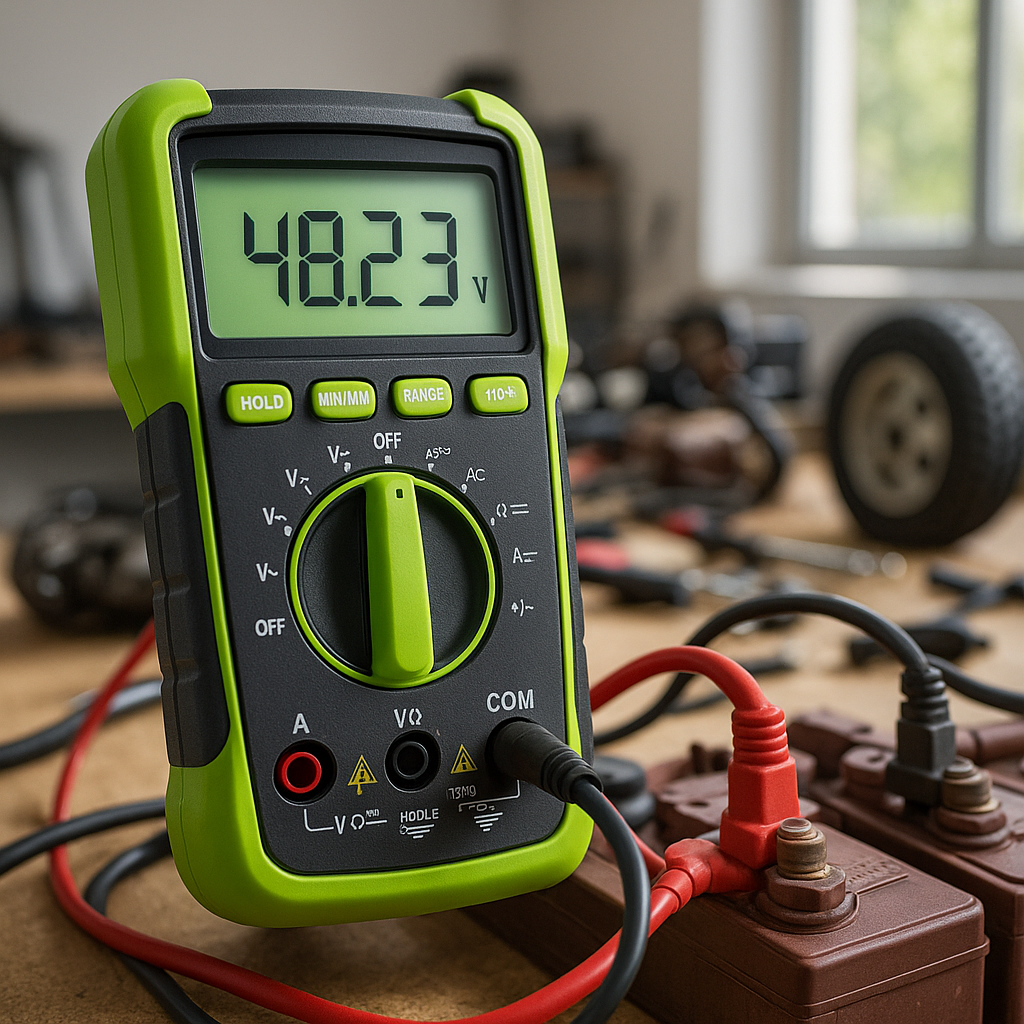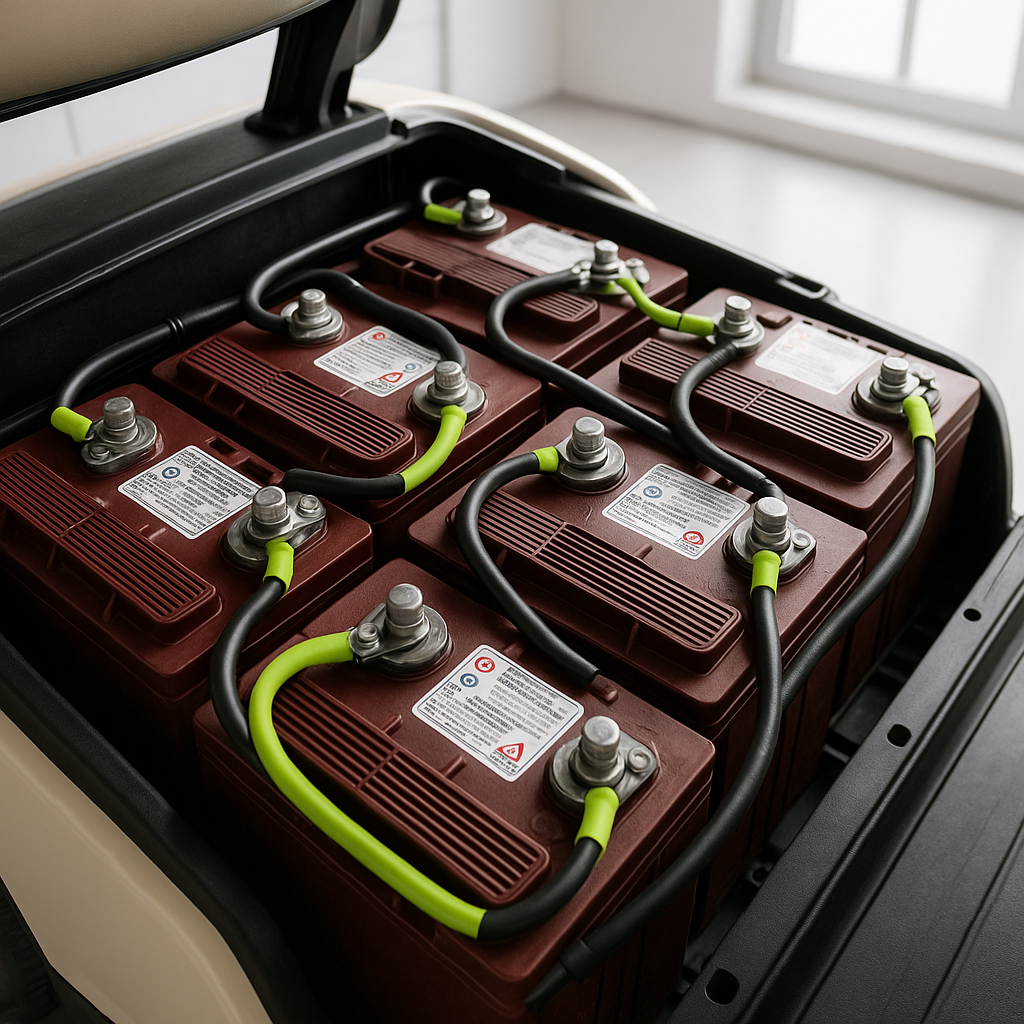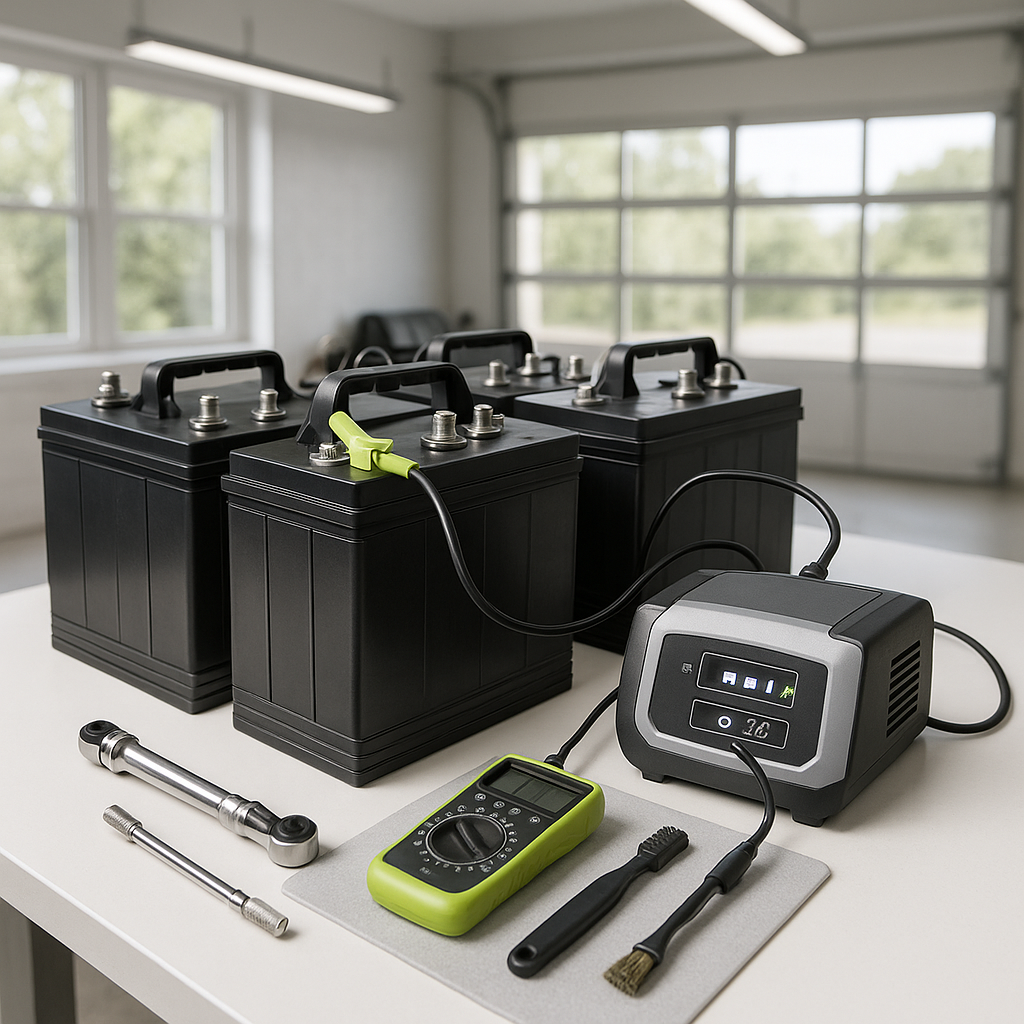
Golf cart batteries are one of the most expensive components you'll ever replace, and the number one thing that kills them early isn't use — it's improper charging. Whether you're running a 36-volt or 48-volt system, flooded lead-acid or AGM, the principles of charging correctly are well-established and worth understanding before you plug in tonight.
Understand Your Battery and Charger Compatibility
Before anything else, confirm your charger is matched to your battery bank's voltage and chemistry. A charger designed for flooded lead-acid batteries will use a different charging profile than one built for AGM or lithium batteries. Using the wrong charger for your chemistry can undercharge, overcharge, or in the worst cases, damage cells permanently. Check your battery manufacturer's documentation and make sure your charger output voltage matches your pack's total nominal voltage. If you've upgraded from flooded to lithium batteries, your old charger almost certainly needs to go with them.
Always Charge After Every Use
One of the most common and damaging habits is waiting until batteries are deeply discharged before charging. Lead-acid batteries — which still make up the vast majority of golf cart battery banks — suffer from a phenomenon called sulfation when left in a discharged or partially discharged state. Sulfate crystals form on the lead plates and reduce capacity over time, often permanently. The rule of thumb is simple: plug in after every use, even if you only ran the cart for twenty minutes. Don't let batteries sit discharged overnight, and never let them sit for days or weeks without a charge.
Don't Interrupt the Charge Cycle
A quality automatic charger will complete a full charge cycle and shut off on its own — let it. Pulling the plug early to "save time" means your batteries never fully charge, which over many cycles leads to capacity loss. Similarly, don't repeatedly top off a battery that's already at full charge with a manual charger that doesn't auto-shutoff; overcharging generates excess heat and can boil the electrolyte in flooded batteries. An automatic charger with a proper three-stage or multi-stage charging profile handles this for you by tapering the charge rate as cells approach full capacity.
Check Water Levels in Flooded Batteries Regularly
If you're running flooded lead-acid (wet cell) batteries — the kind with removable caps — water level maintenance is part of the charging routine. Charging causes water in the electrolyte to break down and evaporate slowly over time. Check levels roughly once a month or per manufacturer guidance, and top off with distilled water only, never tap water. The timing matters here too: check and add water after a full charge, not before. Adding water to a discharged battery and then charging can cause overflow as the electrolyte expands. Keep levels just above the plates but below the fill line indicators.
Store and Charge in a Safe Environment
Charging generates hydrogen gas, particularly in flooded lead-acid batteries during the final stage of a charge cycle. Always charge in a well-ventilated area away from open flames, sparks, or anything that could ignite gas. Never charge in a fully enclosed, sealed space. Keep the area around your batteries clear of flammable materials, and inspect your charger cord and connectors periodically for cracking, corrosion, or heat damage — a damaged cord is a fire and shock risk that's easy to overlook.
Long-Term Storage Charging
If you're putting your cart away for a season, don't just leave the batteries sitting on a full charge or — worse — a partial charge and walk away. Batteries self-discharge over time, and a battery left to fully discharge in storage can sulfate badly or freeze in cold climates if electrolyte levels are low. The best approach is to fully charge before storage, then use a maintenance charger (sometimes called a trickle charger or float charger) designed for long-term storage mode. Some modern automatic chargers have a storage or maintenance mode built in. Disconnect any accessories that might draw parasitic current while the cart sits unused.
Getting the charging routine right isn't complicated, but it does require consistency. Treat your batteries like the several-hundred-dollar investment they are, and a quality set of properly maintained golf cart batteries can last significantly longer than a neglected set that cost the same amount on day one.