Golf cart tires wear unevenly, just like car tires do — and for similar reasons. The front tires handle all the steering load, while the rear tires deal with drive torque on electric and gas carts alike. Skip rotation for too long and you'll chew through one set of tires while the other pair still has plenty of life left. Adding a quick balance check into the same session prevents the vibration and shimmy that makes a cart feel loose at speed. Neither job requires a lift rack or specialty equipment. A basic floor jack, some jack stands, and about an hour of your afternoon will get it done.
What You'll Need Before You Start
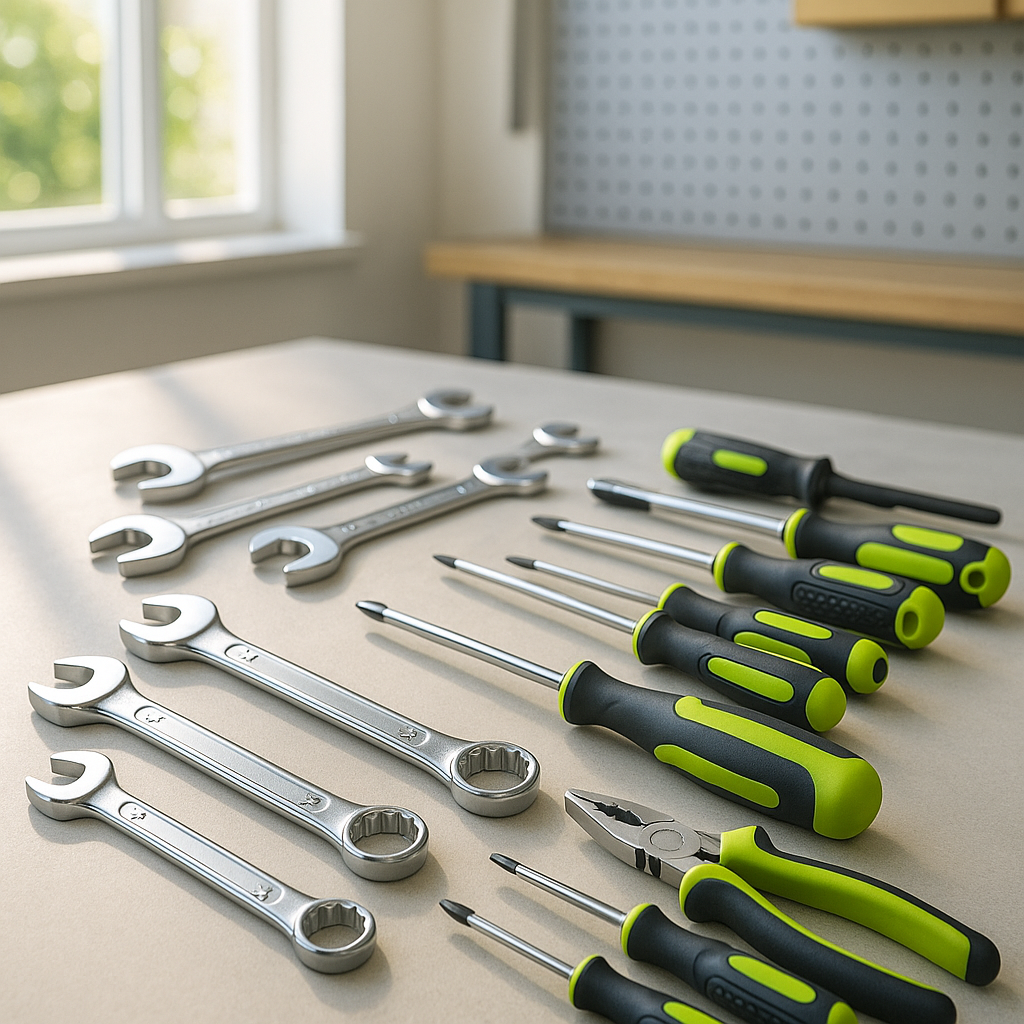
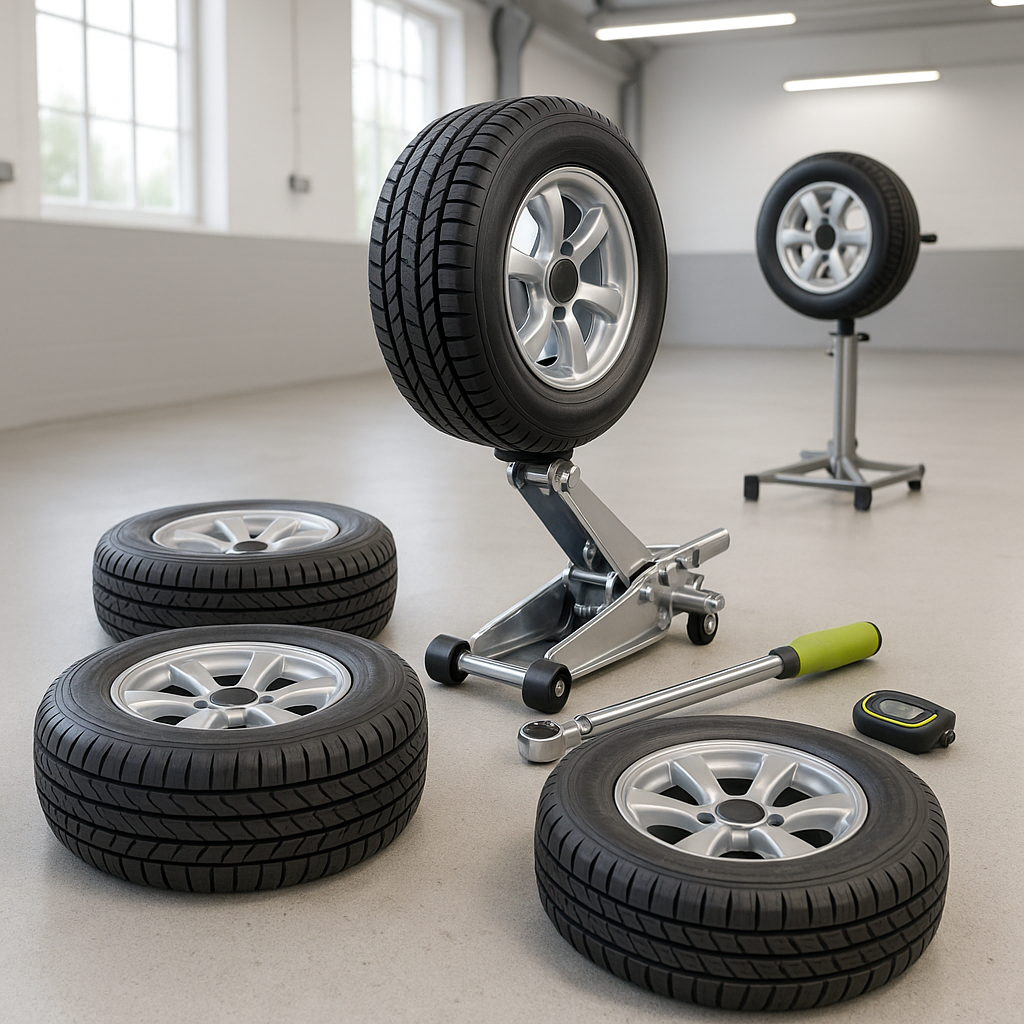
You don't need much: a floor jack rated for your cart's weight, a pair of jack stands, a lug wrench or socket that fits your wheel nuts, and a torque wrench for reinstalling wheels to the right spec. A rubber mallet is handy for stubborn wheels. If you're going to balance the tires yourself, you'll also need a static balancing stand — a simple cone-and-bubble setup works fine for golf cart wheel speeds. Alternatively, any local tire shop can spin-balance a golf cart wheel on a standard balancer for a few dollars per tire. If you're not sure what your lug nut torque spec is, check your cart's owner manual or the manufacturer's service documentation — over-tightening is a common cause of warped hubs.
Safety First: Support the Cart Properly
Before you put any part of the cart in the air, make sure it's on a flat, solid surface — concrete is ideal. Set the parking brake and chock the wheels that will stay on the ground. Never rely on a floor jack alone to hold the cart while you work under or around it. Position jack stands under the frame rails at solid, designated lift points. On most carts the frame rails just inboard of the wheel wells are safe lift points, but if you're unsure, the owner's manual will show you. Let the jack stands take the weight before you remove any wheels.
The Rotation Pattern
For most four-wheel golf carts, a simple forward cross-rotation works well: right rear moves to left front, left rear moves to right front, and the fronts move straight back to the same side. This pattern works for non-directional tires, which covers the vast majority of golf cart tires. If your tires are directional — meaning the tread pattern is designed to spin in only one direction, usually indicated by an arrow on the sidewall — you can only rotate front-to-back on the same side. Mixing directional tires across sides will make them run backwards and kill their performance and wet-weather grip.
Checking and Correcting Balance
Once the wheels are off, it's a good time to inspect each one before remounting. Look for uneven wear patterns: cupping or scalloping across the tread usually points to a suspension or balance issue; wear concentrated on one edge usually means a pressure or alignment problem. If a tire has heavy one-sided wear, rotation will help equalize things going forward, but sort out the root cause too or you'll just repeat the problem. For balancing, a static stand will show you where the heavy spot is — the wheel will settle with the heaviest point at the bottom. Stick-on wheel weights applied opposite the heavy spot bring it into balance. If vibration has been an issue at higher speeds, getting a proper spin balance at a shop is worth the small cost.
Remounting and Torquing Down
When you put wheels back on, hand-tighten the lug nuts in a star or cross pattern first — this keeps the wheel seated evenly against the hub. Then torque them down in the same star pattern to whatever the manufacturer specifies. A common mistake is tightening in a circle, which can leave the wheel slightly cocked on the hub and cause the vibration you were just trying to fix. Once everything is torqued, lower the cart off the stands and do a final check on all four wheels by pushing and pulling on each tire to confirm there's no looseness or play.
How Often Should You Rotate?
A reasonable rule of thumb for most golf cart use is to rotate every season or every 1,000–1,500 miles, whichever comes first. If your cart sees heavy use on hilly terrain, hauls passengers or cargo regularly, or runs on rough surfaces, rotate more frequently. Carts that live on flat, smooth paths can stretch the interval a bit longer. Either way, get in the habit of eyeballing your tires every time you charge or fuel up — catching uneven wear early, before it gets severe, means you can correct it with a simple rotation rather than replacing a tire that wore out prematurely.