A dead solenoid is one of the most common reasons a golf cart won't move, but it's also one of the most misdiagnosed. Because the symptom — cart clicks but won't go, or nothing happens at all — overlaps with bad batteries, a faulty controller, or a worn forward/reverse switch, plenty of owners replace the solenoid and find the same problem waiting for them. A few minutes of testing before you order parts saves you that headache.
Understand What the Solenoid Actually Does
The solenoid is an electromagnetic switch. When you press the accelerator (or turn the key on some carts), low-voltage current from the control circuit energizes a coil inside the solenoid. That coil pulls a set of heavy copper contacts together, completing the high-current circuit between your battery pack and the motor or controller. When it's healthy, you'll hear a firm, audible click every time you engage the pedal. When it's failing, you might hear a weak or intermittent click, a rapid chattering sound, or complete silence.
Safety First — Disconnect and Discharge
Before probing anything, put the cart in neutral or tow mode, turn the key off, and disconnect the negative cable from your main battery. Golf cart solenoids sit in the middle of a high-voltage DC circuit, and even on a 36V or 48V system, the current available is enough to cause serious burns or arc damage. Use insulated tools, wear safety glasses, and don't assume the system is safe just because the key is out. If your cart has a main disconnect plug, pull it.
The Visual Inspection
Start with your eyes. Remove the solenoid cover or access panel and look at the solenoid body itself. Burned or melted plastic around the terminals, corrosion buildup on the large copper posts, loose or frayed wires, and visible pitting on the contact posts are all signs of trouble. A solenoid that's been running hot will often show discoloration or a burnt smell. Check that all four terminals — two small signal wires and two large power cables — are tight and clean. Corrosion at the small terminals alone can mimic a bad solenoid by preventing the coil from energizing properly.
Testing the Coil Circuit (Low-Voltage Side)
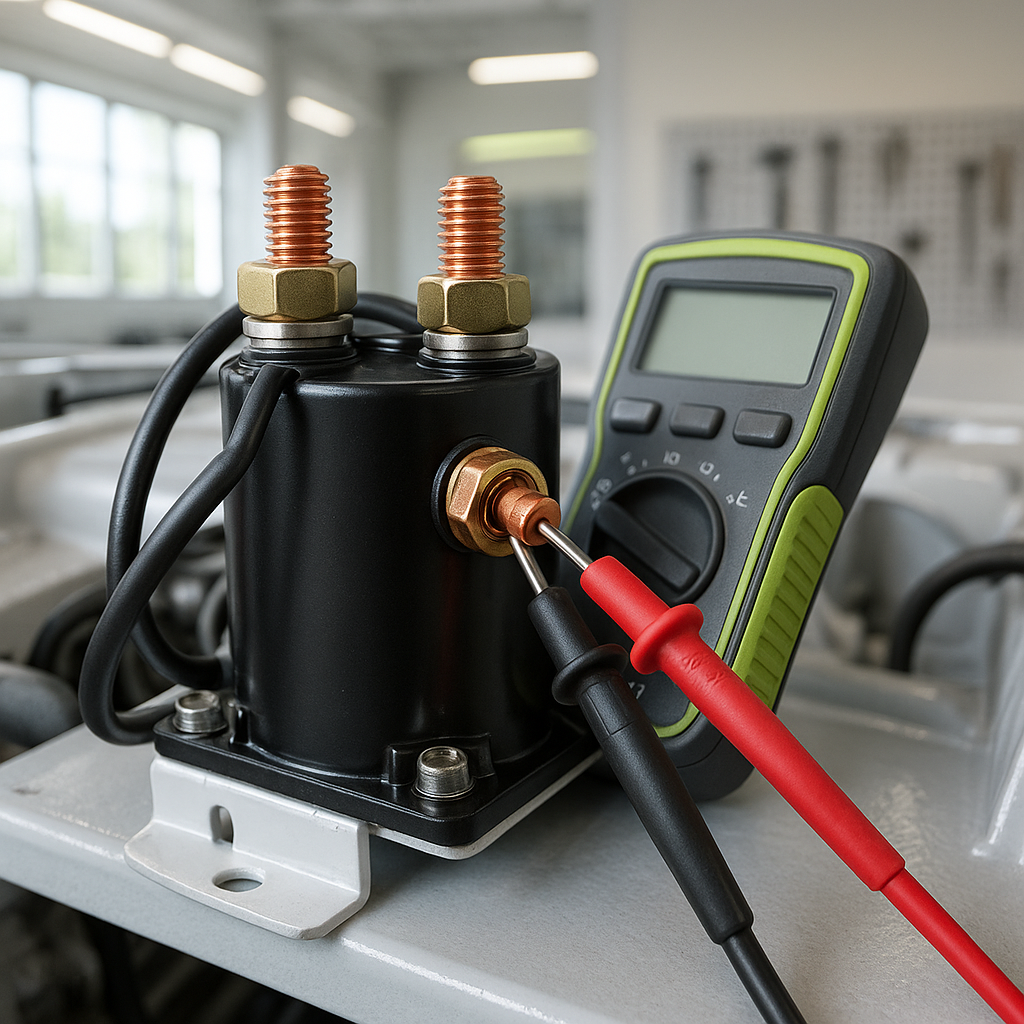
With your multimeter set to DC voltage, reconnect power carefully and have a helper press the accelerator while you probe the two small terminals on the solenoid. You should see your system's control voltage appear at those terminals when the pedal is engaged. If voltage is present but you hear no click, the solenoid coil is almost certainly bad. If there's no voltage at the small terminals, the problem is upstream — look at your key switch, accelerator micro-switch, forward/reverse switch, or controller output before condemning the solenoid. You can also test coil resistance with the system disconnected: set your meter to ohms and probe the two small terminals. A completely open reading (no continuity) confirms a burned coil.
Testing the Main Contacts (High-Voltage Side)
This is where you find out if the contacts inside are welded shut or burned open. With the system safely disconnected, use your multimeter in continuity or resistance mode and probe the two large terminals. At rest, with the solenoid unenergized, you should see no continuity — an open circuit. If you read continuity (or near-zero resistance) with the solenoid at rest, the contacts are welded closed, which is a common failure mode and a real safety hazard. Reconnect power carefully and have a helper engage the pedal: now you should get continuity across the large terminals. No continuity when energized, despite a good click, means the contacts are burned and no longer making a solid connection.
Interpreting Your Results
If the coil circuit gets proper voltage but the solenoid doesn't click, the coil is bad — replace the solenoid. If the coil clicks but the contacts fail the continuity test (open when they should be closed, or closed when they should be open), replace the solenoid. If the coil never receives signal voltage, repair the control circuit first. And if all tests pass but the cart still won't move, shift your diagnosis toward the motor, controller, or battery pack — you've just confirmed the solenoid isn't your problem, which is equally useful information.
One More Check: Battery Voltage Under Load
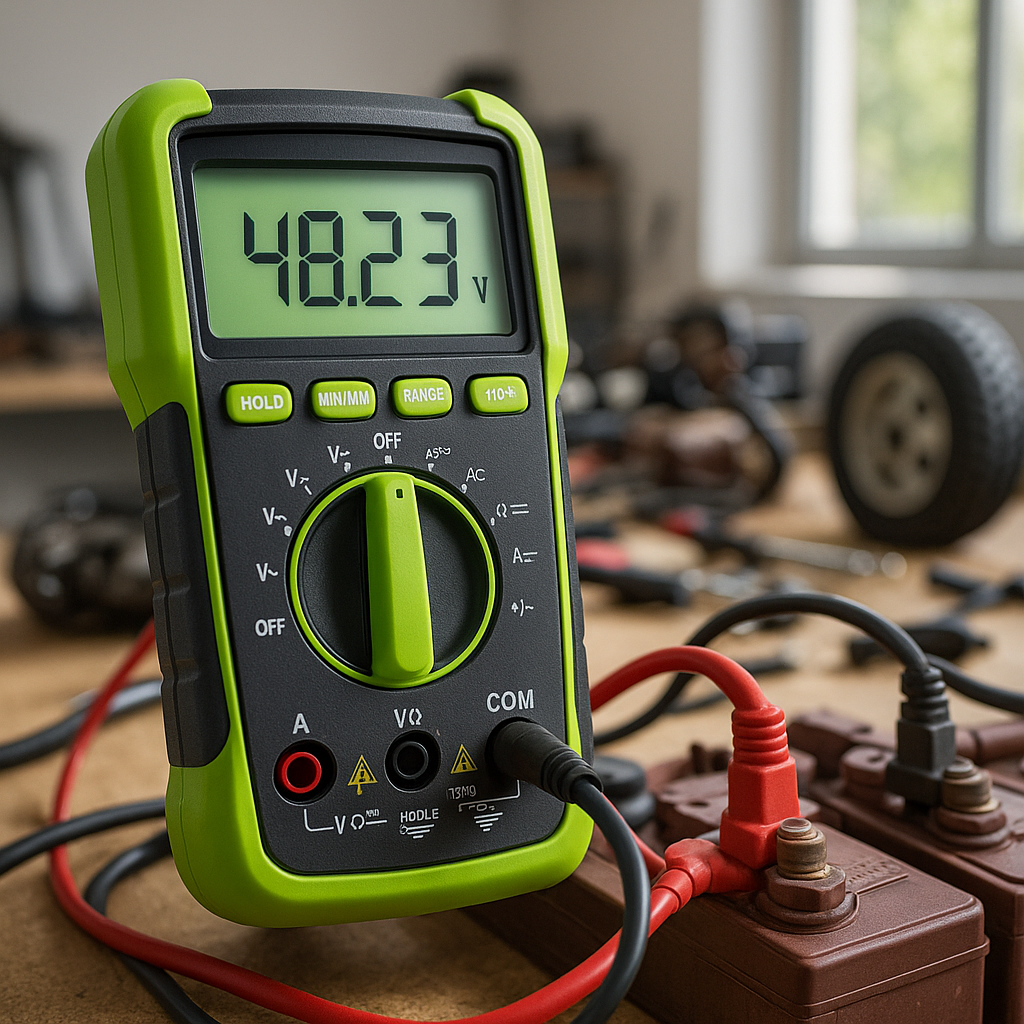
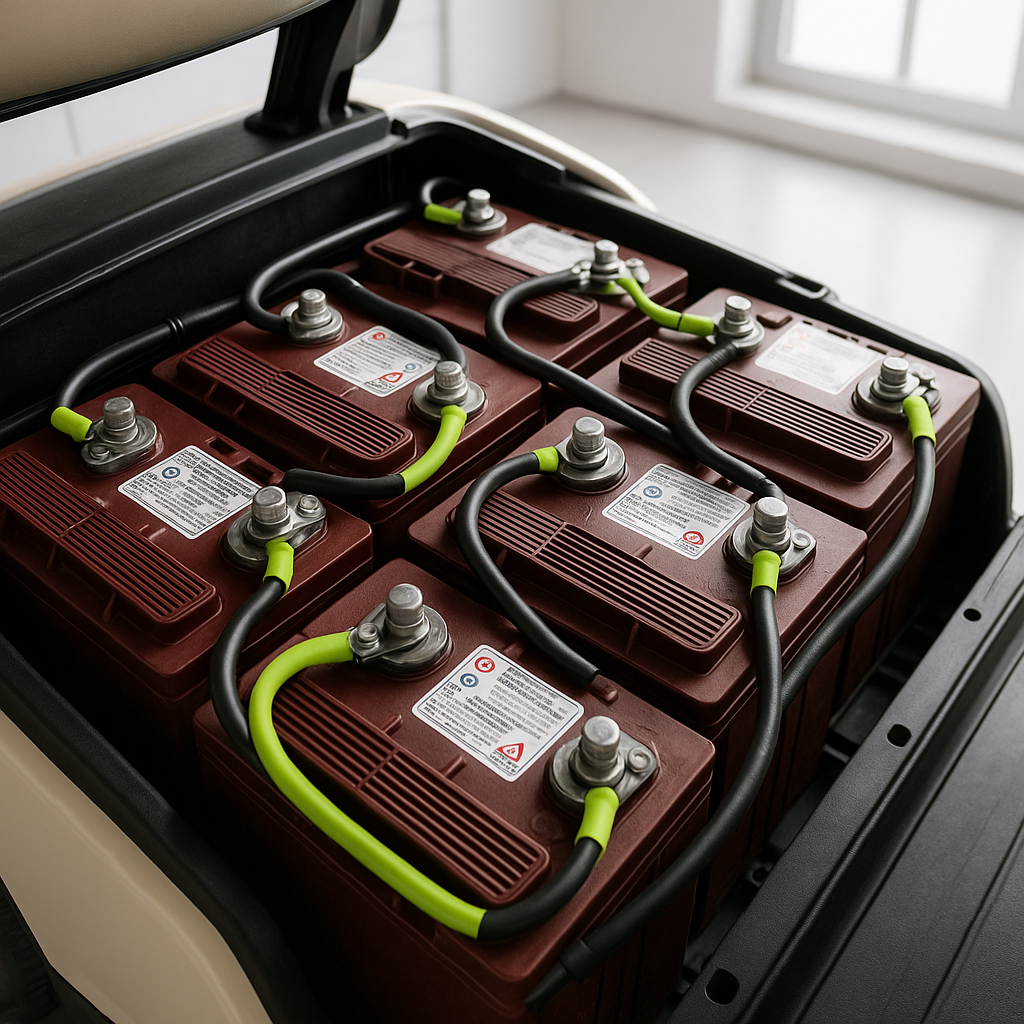
A weak battery pack that drops significantly under load can cause the solenoid coil to lose enough voltage to release mid-operation, which shows up as a cart that starts moving and then cuts out. If your solenoid passes every bench test but the cart behaves erratically, check your pack voltage under actual load with a load tester or even a simple multimeter while driving. A pack that sags badly is stealing current from the coil and making an otherwise good solenoid act like a bad one. Fix the batteries, and the solenoid behavior will correct itself.