If your golf cart is sluggish, losing range, or not starting at all, the battery pack is the first place to look. Testing each battery individually with a digital multimeter is the fastest and most reliable way to identify whether you have one bad cell dragging down the whole pack — or a pack that's simply due for replacement. You don't need to be an electrician to do this. You just need a multimeter, a basic understanding of what the numbers mean, and a few minutes per battery.
What You'll Need
A digital multimeter with a DC voltage setting is the only essential tool. Analog meters can work in a pinch, but a digital readout is much easier to read accurately. You'll also want a pair of safety glasses and rubber gloves — flooded lead-acid batteries produce hydrogen gas and contain sulfuric acid. Always work in a well-ventilated area and keep open flames or sparks well away from the battery compartment. Baking soda and water nearby is a good precaution in case of any acid contact.
Step 1: Charge the Pack First
This is the step most people skip, and it's the one that causes the most confusion. Testing batteries in a discharged state gives you misleading numbers. Always run the pack through a full charge cycle before testing. Once charging is complete, let the batteries rest for at least an hour — ideally a few hours — before you start measuring. This allows the surface charge to dissipate and gives you a true resting voltage reading. Skipping this rest period can make weak batteries appear healthier than they are.
Step 2: Set Your Multimeter and Test Each Battery
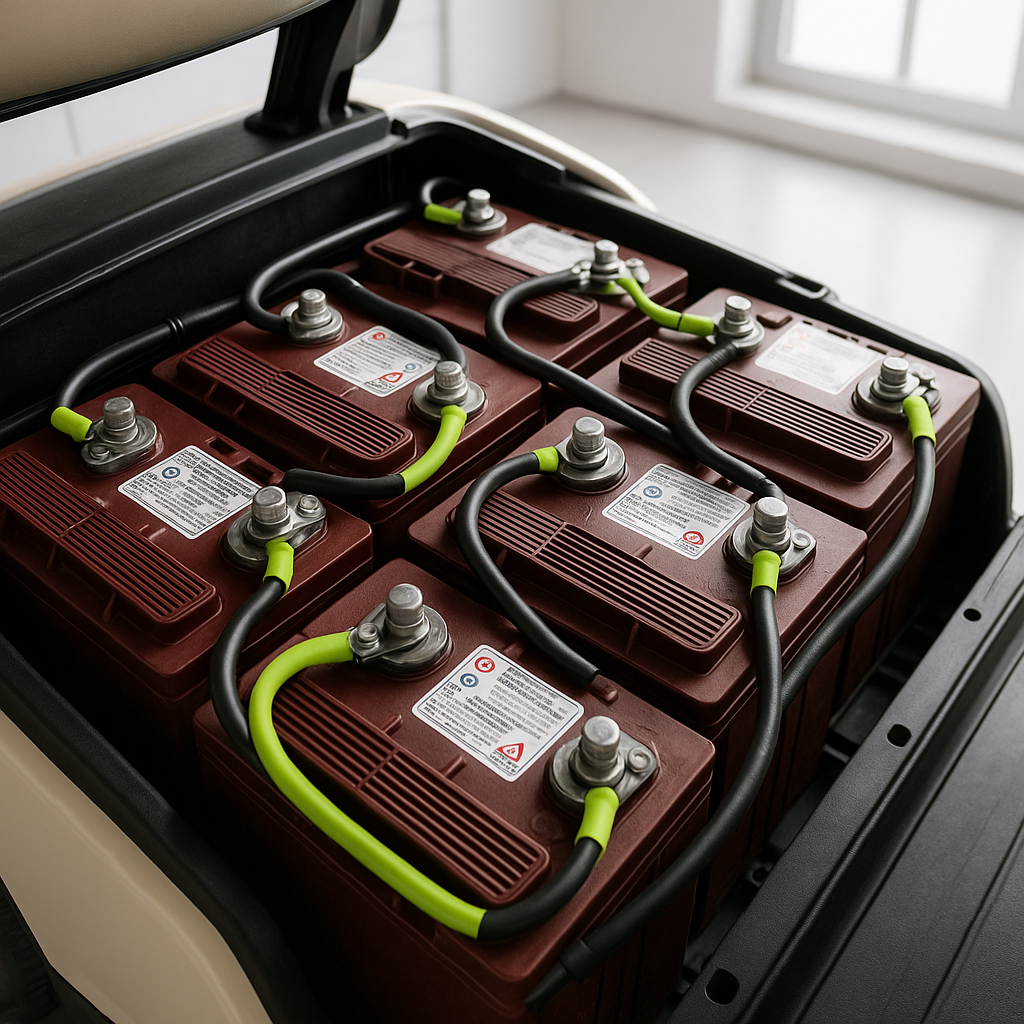
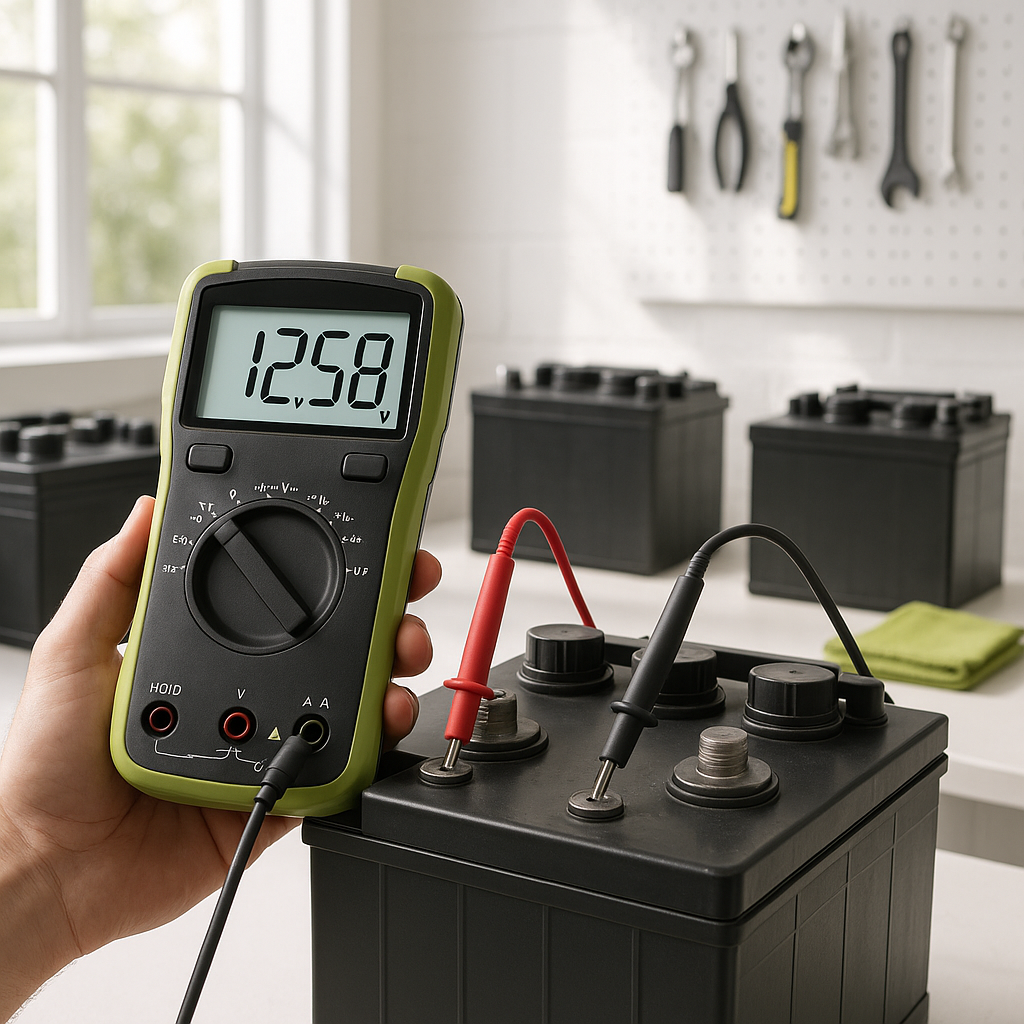
Set your multimeter to DC voltage and to a range that's higher than the voltage of a single battery in your pack. For a 36-volt cart, you'll typically have six 6-volt batteries. For a 48-volt cart, you'll have either six 8-volt batteries or eight 6-volt batteries, depending on the configuration. Connect the red (positive) probe to the positive terminal and the black (negative) probe to the negative terminal of each individual battery. Write down every reading. A fully charged, healthy 6-volt battery will typically read around 6.3 volts or slightly above at rest. An 8-volt battery will typically read around 8.4 volts or slightly above. Any battery reading significantly below its nominal voltage after a full charge and rest period is suspect.
Step 3: Interpret the Readings
One battery with a noticeably lower resting voltage than the others is almost always your culprit. A bad cell within that battery will pull its voltage down and reduce the overall pack voltage under load. If all batteries read similarly low, the whole pack may be aging out together — common in packs that are several years old or that have been repeatedly deep-discharged or left sitting uncharged for extended periods. If all readings look reasonable but the cart still underperforms, a load test (which applies a controlled current draw while measuring voltage drop) will give you more definitive answers than a static resting voltage test. Some auto parts stores offer free load testing, or you can purchase an inexpensive battery load tester for home use.
Step 4: Test the Full Pack Voltage
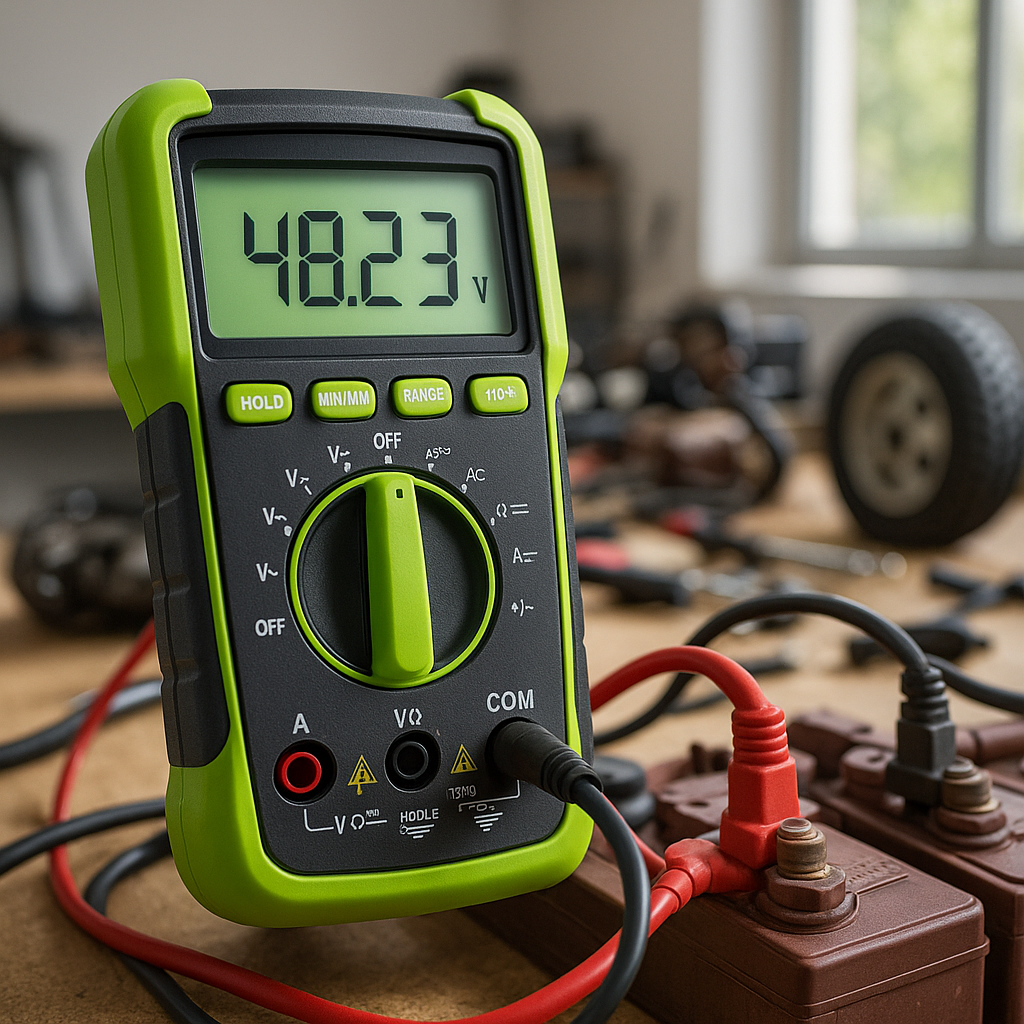
After testing each battery individually, check the total pack voltage by placing your probes on the main positive and negative terminals of the entire battery bank. A 36-volt pack in good condition after a full charge should read noticeably above 36 volts. A 48-volt pack should read noticeably above 48 volts. If your total pack voltage adds up correctly when you sum the individual battery readings but the cart still runs poorly, your wiring, connections, or charging system may be contributing to the problem rather than the batteries themselves.
When to Replace vs. When to Keep Testing
One low battery in an otherwise healthy pack is worth replacing — but keep in mind that mixing a new battery with older ones has tradeoffs. The new battery will work harder to compensate for its older neighbors, which can shorten its lifespan. If most of your batteries are the same age and several are testing weak, replacing the full pack at once almost always makes more economic sense in the long run. Flooded lead-acid golf cart batteries typically last three to five years with proper maintenance. AGM and lithium packs often last longer but have different testing characteristics — a multimeter resting voltage test is less definitive for lithium chemistries, which tend to hold a stable voltage until they're quite depleted.
Testing your batteries twice a year — once before the season and once at the end — gives you early warning before a weak battery becomes a dead one stranded on the course. It takes less than fifteen minutes and costs nothing beyond the price of a multimeter. That's about as good a return on investment as golf cart maintenance gets.