If you own a golf cart with flooded lead-acid batteries, adding water isn't optional — it's one of the most important maintenance tasks you'll ever do. Skimp on it and you'll cook your plates, lose capacity, and shorten your battery life dramatically. Do it correctly and consistently, and a quality battery pack can serve you for years. This guide covers everything you need to know about watering your golf cart batteries the right way.
Why Lead-Acid Batteries Need Water
Flooded lead-acid batteries contain a liquid electrolyte — a mixture of water and sulfuric acid. Every time you charge the battery, a process called electrolysis causes some of that water to evaporate and vent out as hydrogen and oxygen gas. Over time, the water level drops, and if the liquid falls below the tops of the lead plates inside the cell, those plates are exposed to air, oxidize, and suffer permanent damage. No amount of watering after the fact will reverse plate damage — which is why staying on top of water levels matters so much.
What Kind of Water to Use
Only use distilled or deionized water. Tap water contains minerals and chlorine that contaminate the electrolyte, accelerate sulfation, and degrade battery performance over time. This is a non-negotiable step. Distilled water is inexpensive and widely available at any grocery or hardware store. Never use sparkling water, filtered pitcher water, or well water — distilled only.
When to Check and Add Water
Timing matters here. You should always check water levels after a full charge, not before. During charging, the electrolyte expands slightly. If you top off a discharged battery to the maximum fill line and then charge it, the expanding electrolyte can overflow, spill acid onto your battery tray, and cause corrosion. Check levels after a complete charge cycle, and add water only if the plates are exposed or the level is clearly low. After charging, the correct fill level is typically about a quarter to a half inch below the bottom of the vent well — but always follow the guidance marked on or inside your specific battery's fill cap rather than guessing.
Step-by-Step: How to Water Your Batteries
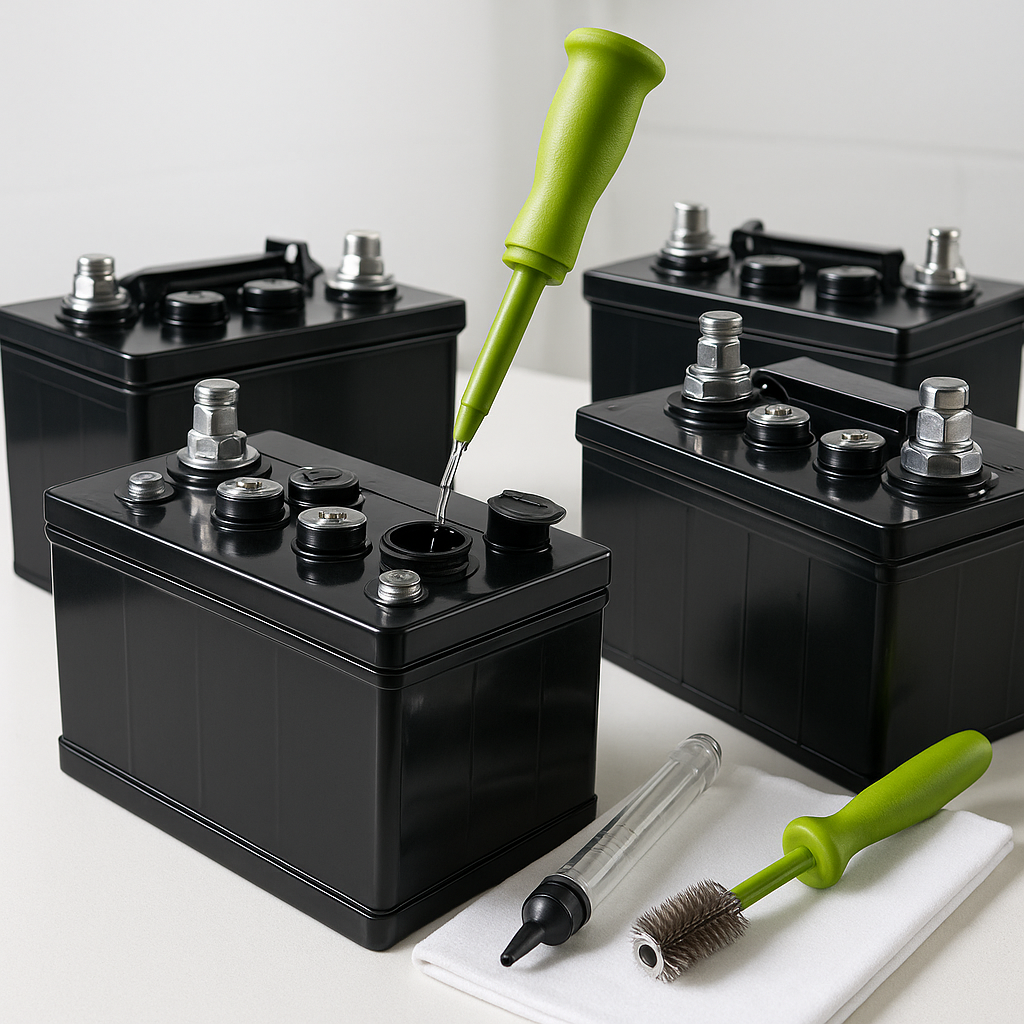
Start by putting on safety glasses and acid-resistant gloves — battery acid is no joke. Make sure your cart is turned off and the charger is disconnected. Open each battery cell cap and use a flashlight to inspect the water level relative to the plates and the fill ring inside the cell. If the plates are covered and the level looks adequate, leave it alone — overfilling is just as harmful as underfilling. If the level is low or the plates are exposed, carefully pour distilled water in using a squeeze bottle or a dedicated battery watering system until the water just reaches the bottom of the fill ring. Replace each cap firmly. If you've added water to multiple cells, wipe down the tops of the batteries with a damp cloth to clean up any drips before they attract corrosion.
How Often Should You Check?
For most recreational golf cart owners using their carts a few times a week, checking once a month is a reasonable baseline. If you use your cart daily, in hot weather, or in hilly terrain — all of which increase charging frequency and water loss — check every two to three weeks. New batteries or recently reconditioned packs may lose water faster at first as they break in, so check them more frequently during the first few months of use.
Battery Watering Systems
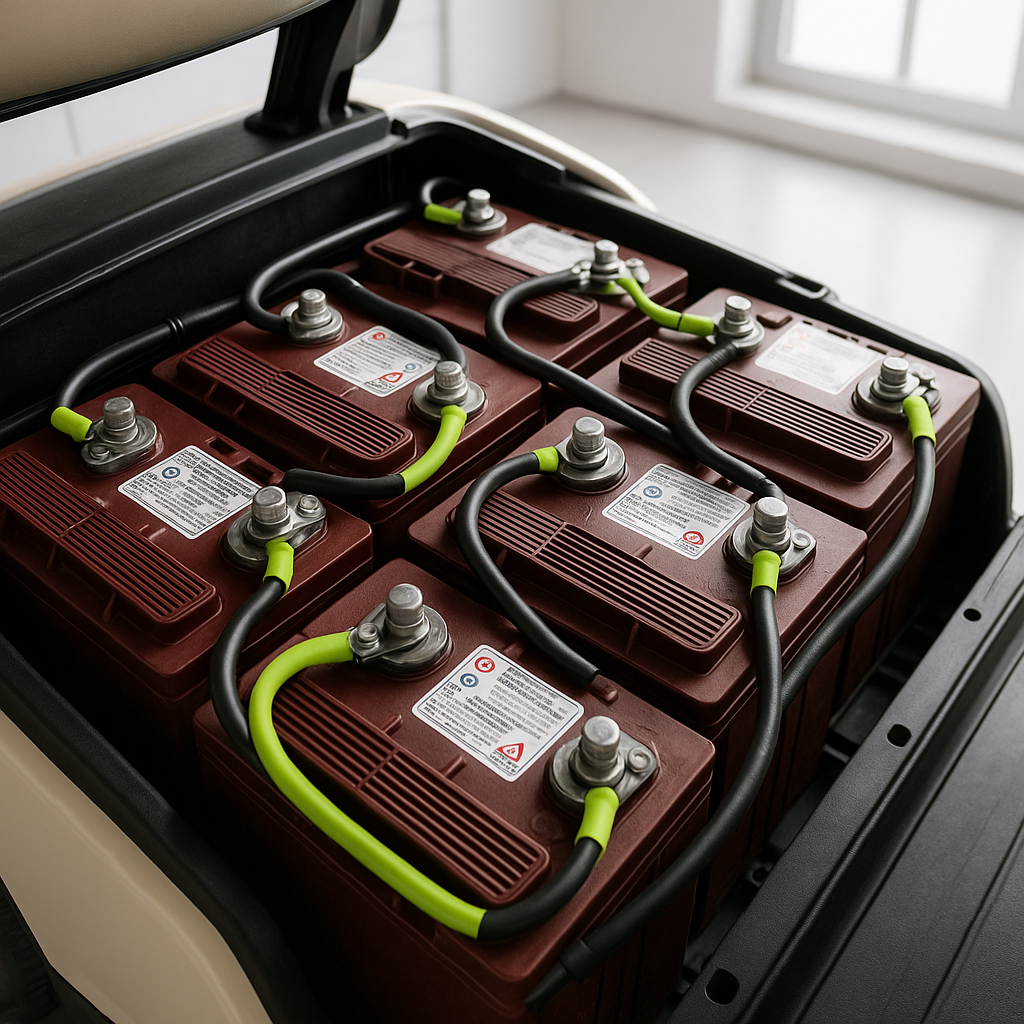
If you have a multi-battery pack and find the per-cell watering process tedious or easy to forget, single-point battery watering systems are worth considering. These interconnected systems let you fill all cells at once through a single fill point, with float valves in each cell that automatically shut off at the correct level. They're a genuine time-saver and reduce the risk of overfilling. They're widely available and designed to fit most standard flooded lead-acid golf cart batteries.
Signs You've Let It Go Too Long
If your batteries are running noticeably hot during charging, losing charge faster than they used to, or if you open a cell and find the plates visibly exposed and discolored, you may already have plate damage. At that point, watering and charging won't fully restore capacity — you're looking at reduced performance or eventual replacement. Catching low water levels early, before the plates are ever exposed, is the whole game. Build the inspection into your routine and it takes less than five minutes. That five minutes can add years to your battery pack's life.