Battery cables are one of the most overlooked parts on a golf cart — and one of the most common causes of performance problems. A cart with fully charged batteries can still behave like it's nearly dead if the cables delivering that power are corroded, loose, undersized, or damaged. Before you replace batteries or chase electrical gremlins through the controller, it's worth doing a thorough cable inspection first. It's fast, free, and often the actual fix.
What Bad Battery Cables Actually Do to Your Cart
A compromised cable creates resistance in the circuit. Resistance means the full voltage from your battery pack never makes it to the motor — you get sluggish acceleration, reduced top speed, motors that feel weak under load, and batteries that seem to drain faster than they should. In severe cases, the cart may hesitate, surge, or cut out entirely. Heat is the other symptom: a cable or connection that's warm or hot to the touch after a short ride is dissipating energy as heat instead of passing it on as usable power. That's a problem you need to address before it damages connected components.
Start With a Visual Inspection
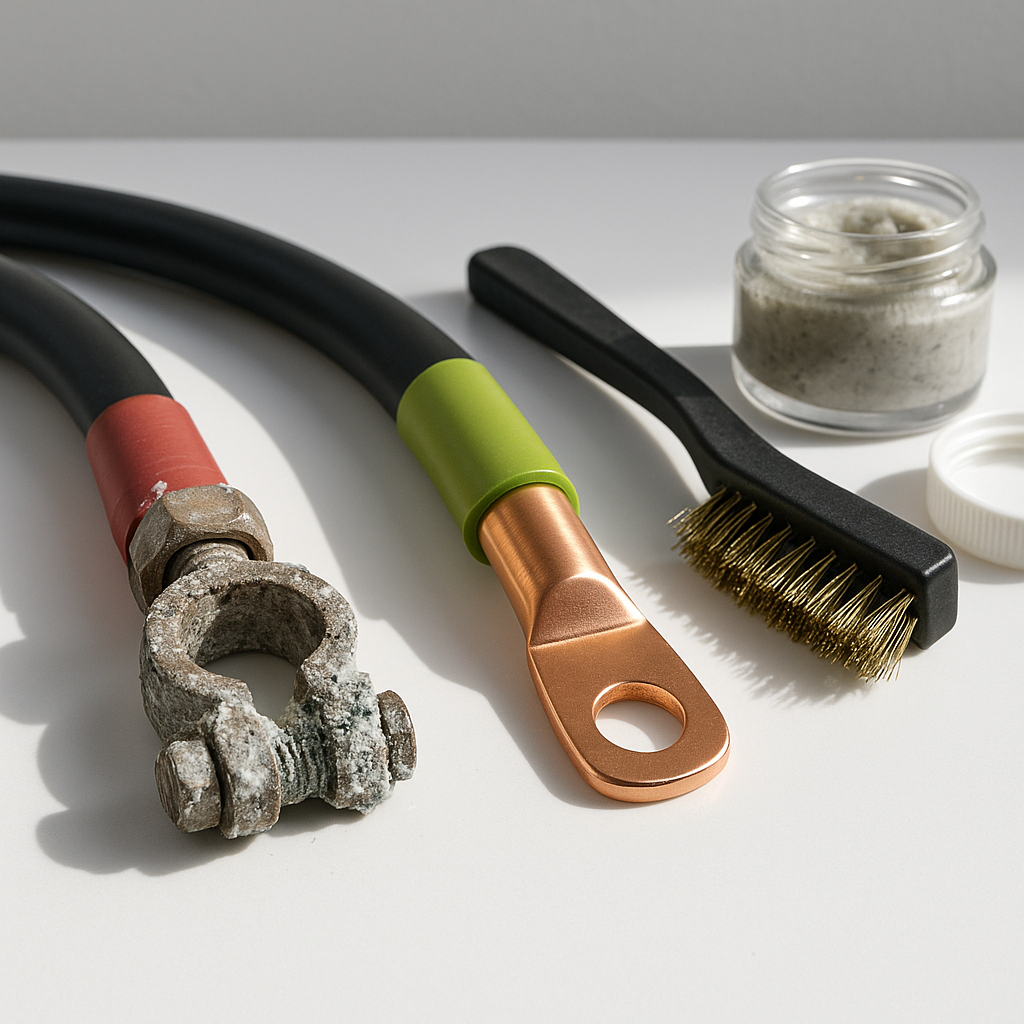
Work through the full cable run systematically — from each battery terminal, along the cable to every connection point, all the way to the motor, controller, and solenoid. Look for white, blue-green, or gray buildup on terminals, which is corrosion and a guaranteed source of resistance. Check for frayed or cracked insulation, especially where cables pass through metal frames or around tight bends. Look for any cable that appears heat-discolored — brown or blackened insulation is a red flag. Check that every terminal connection is actually tight. A battery terminal bolt that turns with your fingers should have been tightened a long time ago.
How to Check for Voltage Drop Across Cables
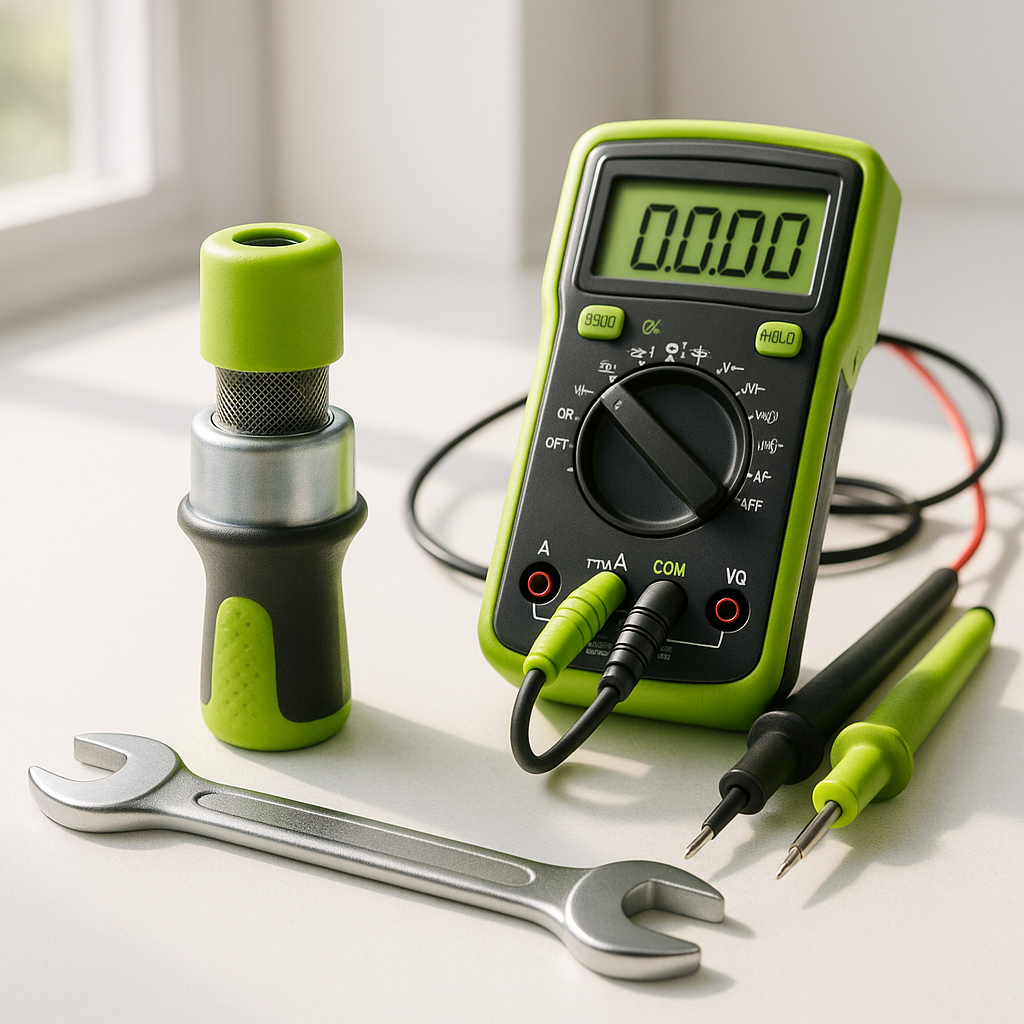
A multimeter set to DC voltage is your best diagnostic tool here. With the cart under load — meaning the motor is actually working, not just at rest — measure the voltage drop across each cable individually by placing one probe at each end of the cable. In a healthy cable, that reading should be very close to zero. Any meaningful voltage drop across a single cable or connection under load tells you that cable or terminal is adding resistance to the circuit. This test catches problems that aren't visible and that a simple continuity check will miss, because a corroded connection can still pass current — just poorly.
Terminal Connections: The Most Common Failure Point
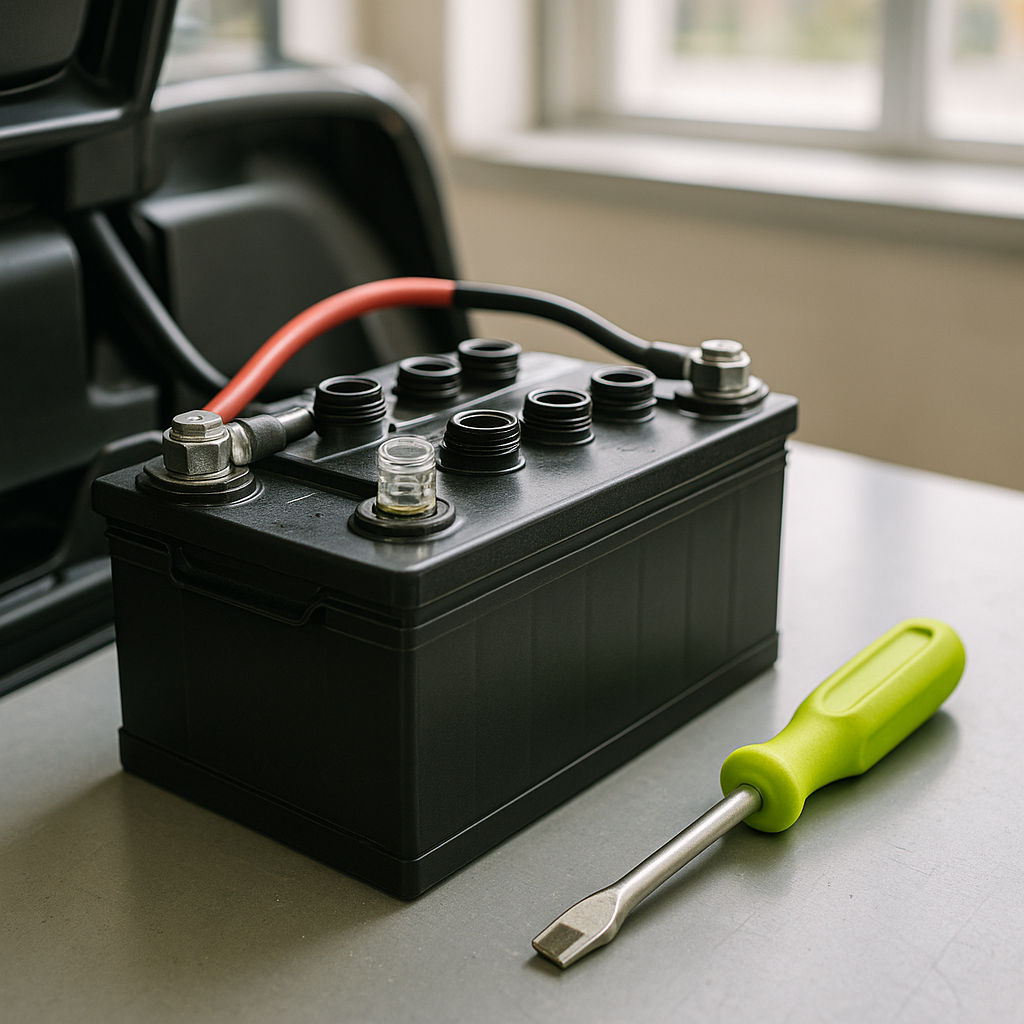
The connection between a cable end and a battery terminal is where most problems actually live. Corrosion builds up at this interface over time, especially on flooded lead-acid batteries that vent hydrogen and sulfuric acid vapor. The fix starts with removing each cable, cleaning both the terminal post and the cable lug with a wire brush and a proper terminal cleaning tool, then reinstalling and torquing the connection down firmly. Anti-corrosion spray or terminal protector applied after reassembly significantly slows the return of corrosion. If the cable lug itself is badly corroded, pitted, or has lost its shape, the cable should be replaced — cleaning only goes so far when the metal itself is degraded.
When to Replace Rather Than Clean
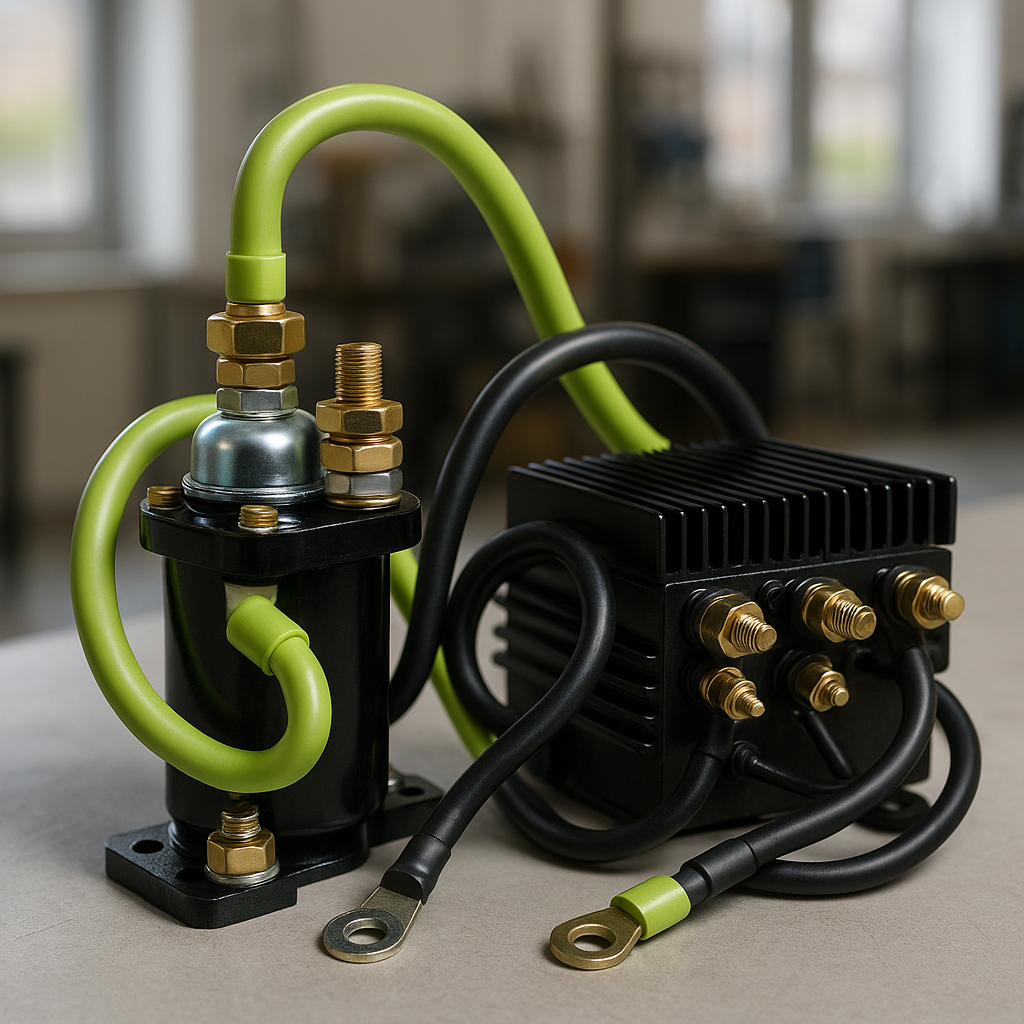
Some cables are past the point of rehabilitation. Replace a cable if the insulation is cracked or missing in multiple places, if the copper strands are visibly green or black throughout rather than just at the surface, if the lug has been burned or melted, or if the cable is undersized for your cart's voltage system. Undersized cables are more common than people expect, especially on older carts or carts that have had upgrades — a 48-volt system or a high-draw aftermarket motor may put more current through the cable than it was originally designed to handle. When replacing cables, match or exceed the original gauge and use cables with proper lug terminations, not field-crimped or improvised connections.
Don't Forget the Ground Cables and Frame Grounds
Positive cable problems get all the attention, but bad ground connections cause identical symptoms. Trace your negative cables with the same care — check each ground lug, each terminal connection, and any point where a cable grounds to the cart's frame. A loose or corroded frame ground is a surprisingly common cause of intermittent electrical problems that seem impossible to pin down. If your cart behaves differently on different days or cuts out only sometimes, a bad ground is high on the suspect list.
Battery cables are cheap relative to the components they protect — the motor, controller, and batteries themselves. If your diagnostics point to cable problems, don't delay the fix. A degraded cable that's forced to carry more current than it can cleanly handle will eventually overheat, and overheated cables can damage terminals, melt insulation, and in serious cases create a fire risk. Replace what needs replacing, keep terminals clean, and check the full cable run at least once a season.