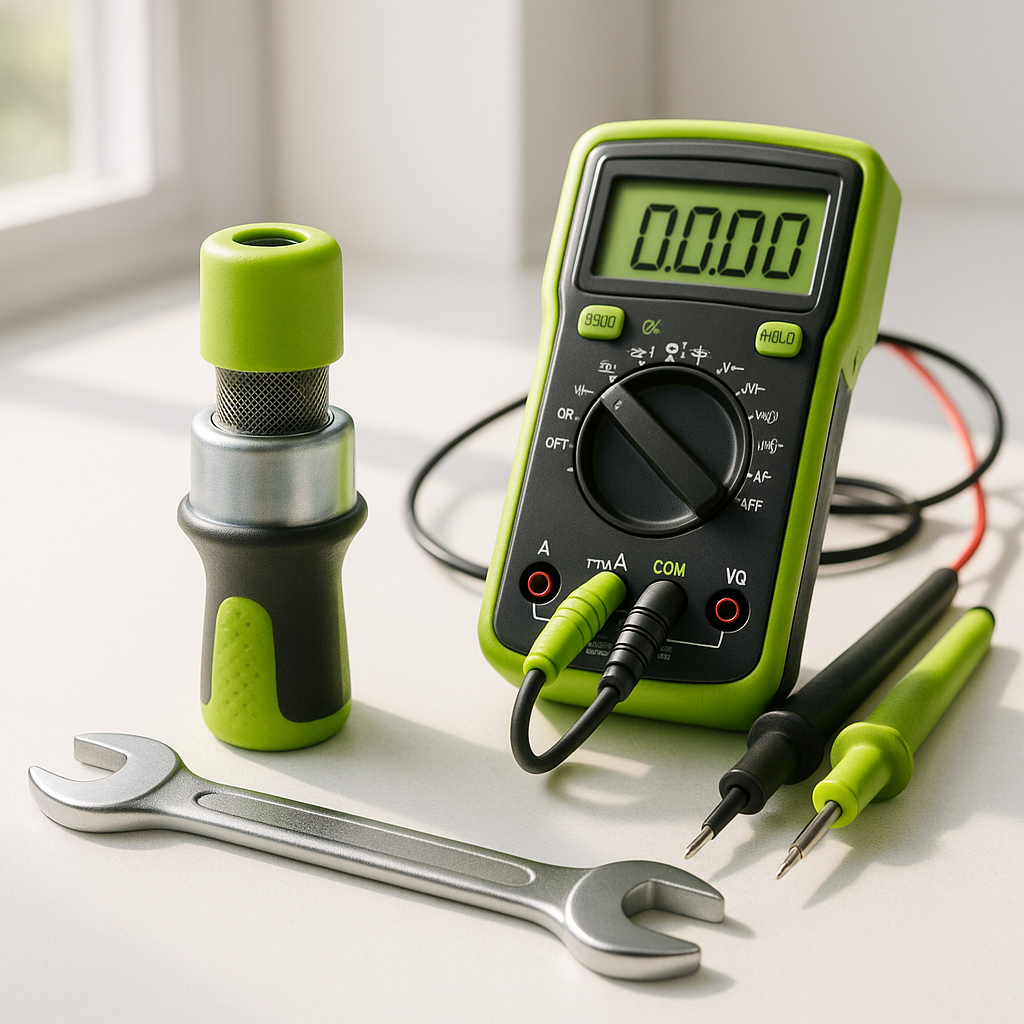
Most golf cart problems trace back to the battery pack. The good news is that the majority of battery issues follow predictable patterns, and a methodical diagnostic process will tell you exactly where the problem lives — whether that's a single bad cell, a corroded cable connection, or a pack that's genuinely at end of life. Before you spend money on new batteries or cables, run through these checks in order.
Start With a Visual Inspection
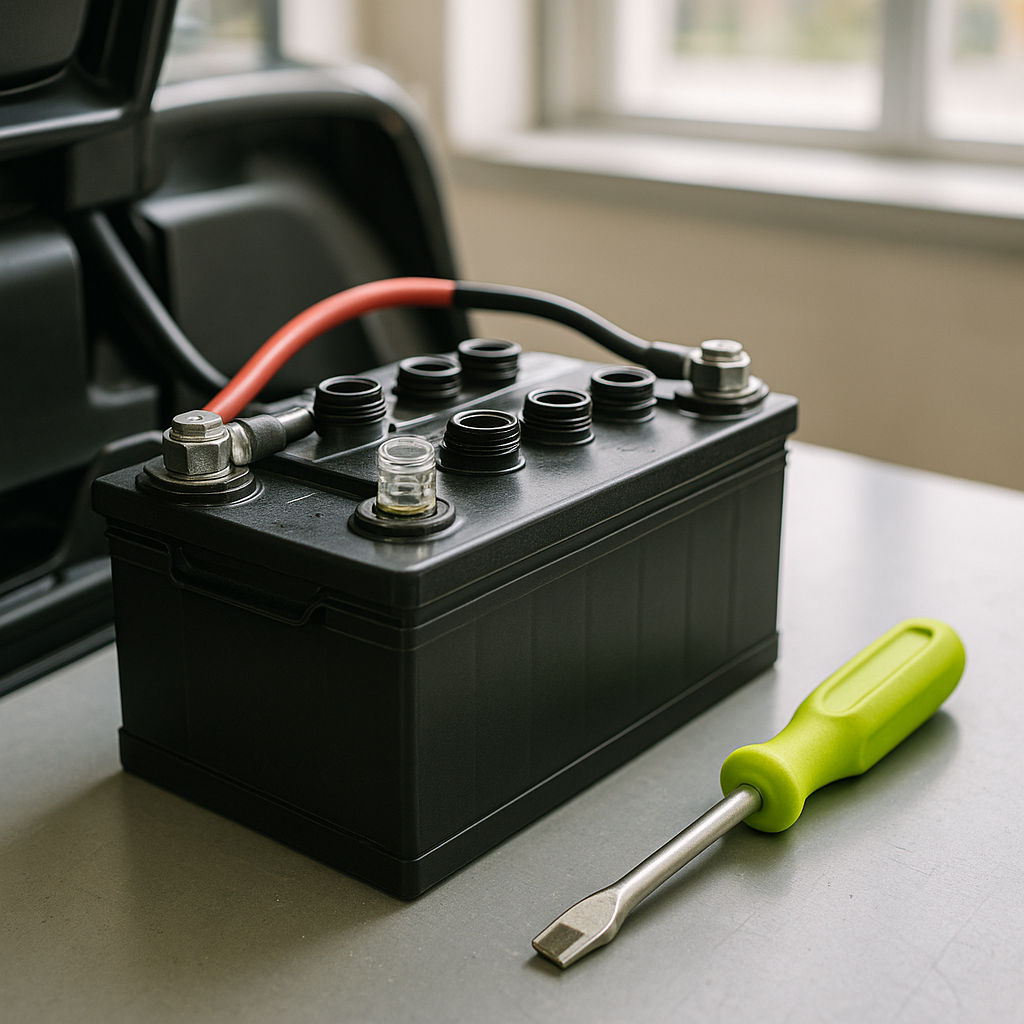
Open the battery compartment and look before you measure anything. You're checking for obvious corrosion (white or blue-green crust) on terminals and cable ends, swollen or cracked battery cases, loose or missing terminal hardware, and cables that show fraying, cracking insulation, or heat damage near the connectors. Any of these findings matter. Corroded terminals create resistance that mimics a weak battery, and a single bad cable connection can make an entire healthy pack behave like it's failing. Clean corrosion off terminals with a wire brush and a baking soda and water solution before moving on — dirty terminals will throw off every reading you take.
Check Individual Battery Voltages
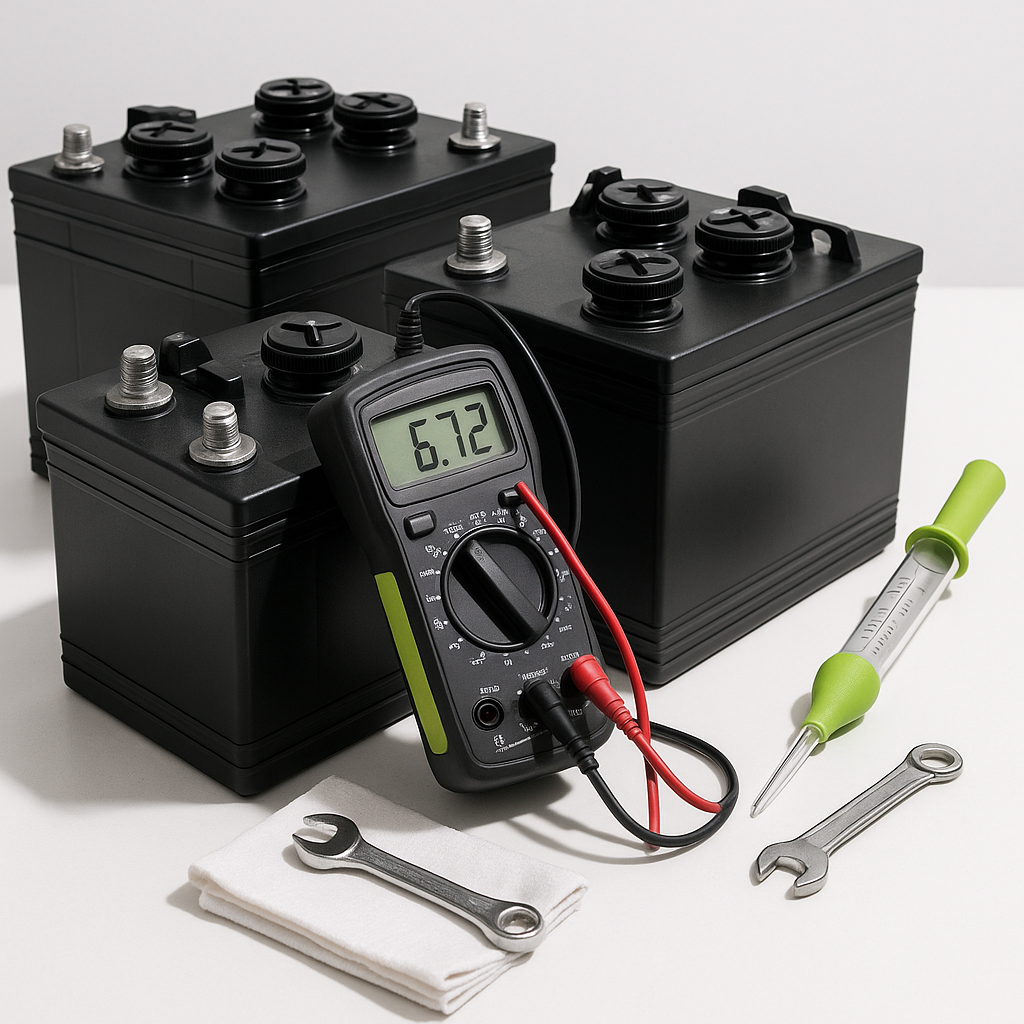
A fully charged golf cart battery pack should read near its rated voltage. The key diagnostic move is to check each individual battery separately, not just the total pack voltage. Use a digital multimeter set to DC voltage and probe each battery one at a time. In a healthy pack, all batteries should read very close to the same voltage after a full charge. If one battery reads noticeably lower than the rest, that battery is the weak link — this is one of the most common root causes of poor performance and short range. A pack is only as strong as its weakest battery.
Do a Load Test
Resting voltage only tells part of the story. A battery can read fine sitting still but drop out dramatically under load. The best way to see this is to take voltage readings while the cart is actually being driven or while drawing current from the pack. A battery that holds voltage at rest but collapses under load has degraded internal capacity — it's failing even if the open-circuit number looked acceptable. Battery load testers are inexpensive and will make this check much more precise than driving alone, but even watching your voltmeter while the cart climbs a hill will reveal a weak battery faster than any static test.
Inspect the Battery Cables and Connections
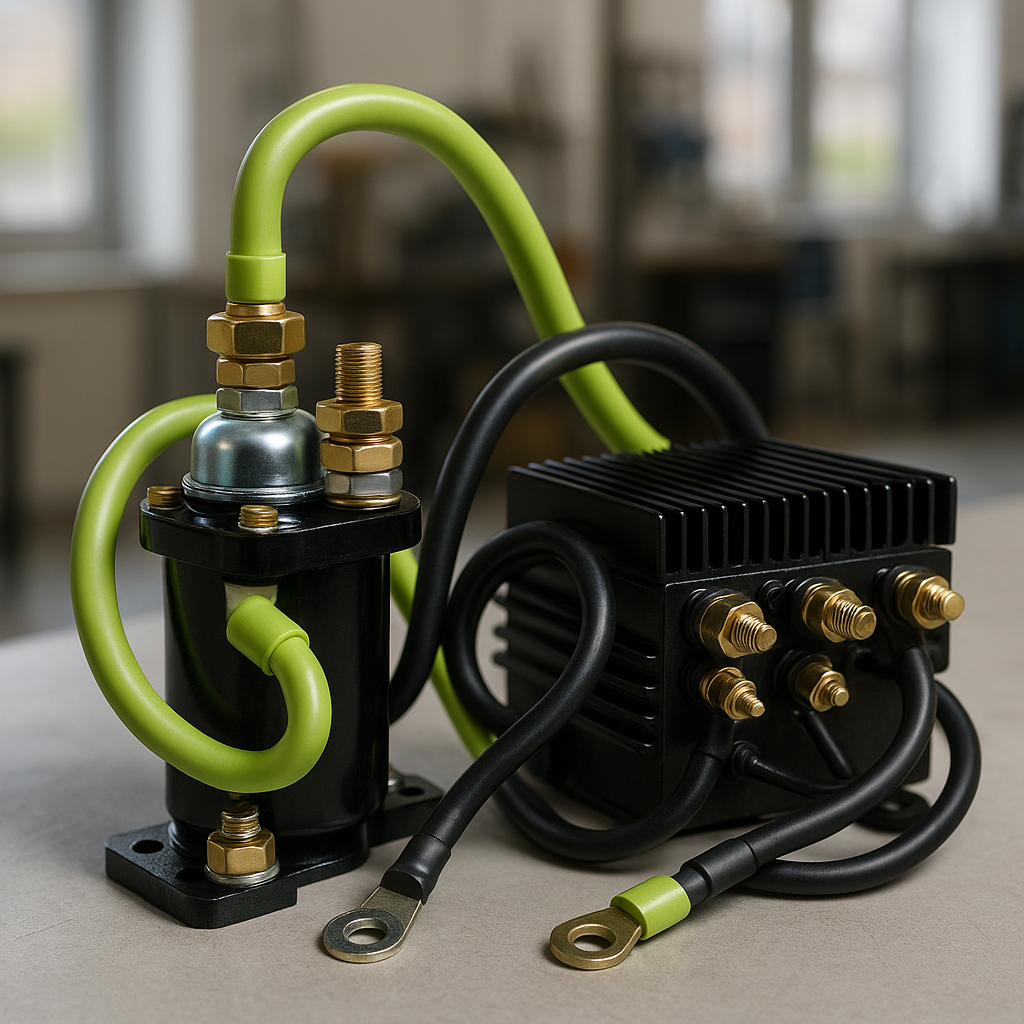
Cables are overlooked constantly. Undersized, corroded, or damaged battery cables cause voltage drop that steals power from the controller and motor before it ever gets there. The symptoms — sluggish acceleration, reduced top speed, heat at the connectors — closely mimic a failing battery. Check every cable end for tightness, corrosion underneath the lug, and any sign of discoloration or melting in the insulation near the terminal. Cables that feel warm after a short drive are a red flag. When cables or lugs are compromised, replacing them restores full pack performance even when the batteries themselves are fine. Make sure any replacement cables match the appropriate gauge for your cart's voltage system and amp draw.
Check Your Charger and Charging Habits
A battery pack that never gets a proper full charge will deteriorate faster than one that's maintained correctly. If your cart is losing range progressively over time, verify that your charger is actually completing a full charge cycle — not cutting off early due to a faulty charger or a bad connection between the charger port and the pack. Lead-acid batteries in particular need to reach a proper finish charge to prevent sulfation buildup on the plates. If your charger's indicator shows a completed charge but individual battery voltages are still uneven or low, the charger may be failing or your charging port connection may have resistance in it.
When to Suspect a Single Bad Battery vs. the Whole Pack
If your voltage check reveals one battery consistently lower than the others, start there. Replacing a single weak battery in an otherwise healthy pack is a legitimate repair, though it works best when the rest of the pack still has significant life left. If the pack is old and most batteries are showing uneven voltage, reduced capacity, or slow recovery after charging, whole-pack replacement is usually the more cost-effective call — mixing very old batteries with one new one rarely ends well. As a general rule, batteries in a golf cart pack age together and are best replaced as a set.
Working through these checks in order — visual, individual voltage, load test, cables, charger — will identify the real cause in most cases. Write down your measurements so you have a baseline to compare against, and don't skip the cable inspection even if the batteries look strong. Most slow or dead golf carts have a fixable problem somewhere in this list before they actually need a full pack replacement.