When your golf cart's brake pedal sinks to the floorboard with little or no resistance, you don't have a minor inconvenience — you have a brake system that can't reliably stop the cart. Whether you're on a flat course or a sloped driveway, a pedal that offers no pushback puts people at real risk. The good news is that the cause almost always falls into one of a handful of categories, and most of them are diagnosable with basic tools and a close visual inspection.
Start With the Brake Cable
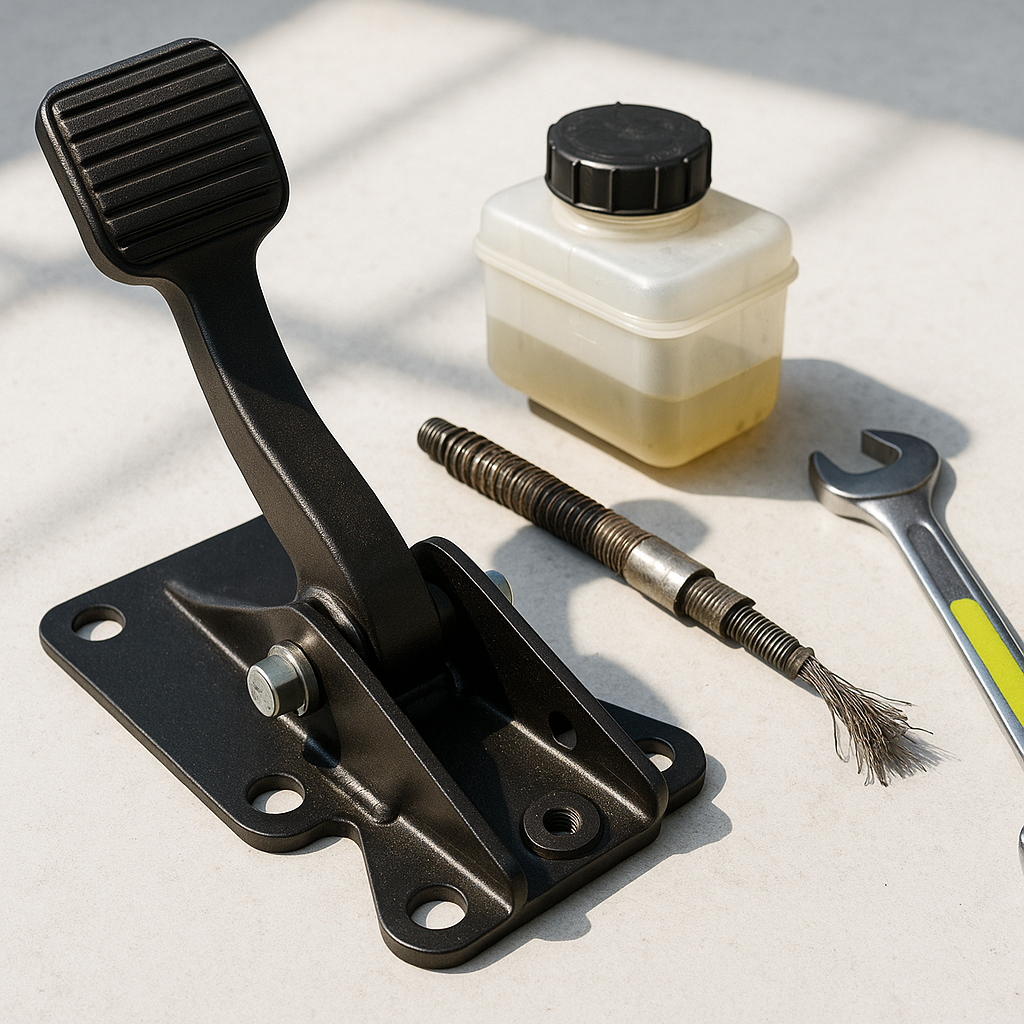
Most golf carts — especially older EZGO and Club Car models — use a mechanical cable-actuated brake system rather than hydraulics. On these systems, a stretched, frayed, or disconnected brake cable is one of the most common reasons the pedal loses its feel. Trace the cable from the pedal all the way back to the rear brake assemblies. Look for visible fraying, kinks, or areas where the cable housing has cracked and is allowing the inner wire to move freely without transferring force. Also check the cable adjustment: over time, cables stretch and the adjuster at one end (usually near the brake drum or at the equalizer bar) needs to be tightened down to restore pedal height and tension. If the cable has completely snapped or pulled free from its anchor, you'll have no resistance at all.
Check the Brake Drums and Shoes
On drum brake systems, worn brake shoes are a common culprit for a pedal that travels too far before engaging. As the friction material wears thin, there's more distance between the shoe and the drum surface, and the pedal has to travel further to make contact. Pull the rear wheels and inspect the drum interiors if you're comfortable doing so — look for a very thin layer of friction material, scoring on the drum surface, or shoes that have worn unevenly. Also check that the self-adjusting mechanism (if equipped) is actually functioning. Seized adjusters are common on older carts and can cause the brakes to gradually go out of adjustment without any obvious warning.
Look at the Brake Drum Itself
A cracked or heavily grooved drum can prevent the shoes from making proper contact even when the cable tension looks correct. Run your fingers along the inside of the drum and look for deep grooves, heat cracks, or areas that feel out-of-round. A drum that's worn beyond its serviceable diameter won't grip the shoes properly regardless of adjustment. If the drum has rust buildup from sitting — common on carts stored outdoors — that can also create uneven contact that feels like a low or spongy pedal on first use.
Inspect the Pedal Linkage and Pivot Points
The pedal itself connects to the brake cable or actuating rod through a series of pivot points and linkage arms. Any one of these can wear out, bend, or come loose, resulting in pedal travel that doesn't translate into braking force. Check that all clevis pins, cotter pins, and return springs are present and intact. A missing cotter pin can let a clevis pin walk out over time, and if the connection between the pedal arm and the cable anchor fails, you lose nearly all mechanical advantage. This is a quick visual check that takes only a few minutes but is often overlooked.
For Hydraulic Brake Systems
Some newer or upgraded golf carts use hydraulic disc brakes, and on those systems the diagnosis shifts entirely. A pedal that goes to the floor on a hydraulic system almost always means air in the brake lines or a fluid leak. Check the master cylinder reservoir first — if it's low or empty, you have a leak somewhere in the system. Inspect brake lines and caliper connections for any sign of moisture or residue. Bleeding the system to remove air is usually the fix for a spongy hydraulic pedal, but if the master cylinder seals are worn internally, it may need to be rebuilt or replaced regardless of fluid level.
Don't Overlook the Parking Brake Interaction
On many golf carts, the parking brake and the foot brake share cable components or the same rear actuating hardware. If the parking brake cable is seized or misrouted, it can affect how the foot brake engages — sometimes creating false slack in the system that mimics a failing foot brake. Check that the parking brake releases fully when disengaged and isn't creating tension that fights the foot brake adjustment.
When to Stop Driving It
If the pedal goes to the floor and you can't identify and correct the cause in a straightforward inspection, park the cart and don't drive it until the system is repaired. This isn't a wait-and-see situation — a brake failure on a hill, near a cart path, or around other people can cause serious injury. Brake cables, shoes, and drums are inexpensive parts relative to the risk of driving a cart that can't reliably stop. Once you've identified the failed component, replace it before getting back on the course.