A brake pedal that won't fully release — or brakes that stay partially engaged even after you let off the pedal — is one of those problems that sneaks up on you. The cart moves sluggishly, the motor works harder than it should, and you might notice heat or a burning smell coming from the wheel area. Left alone, a dragging brake accelerates wear on your drums, pads, and cables, and it can drain your battery pack faster than almost anything else. The good news: most stuck-brake issues come down to a handful of common mechanical failures that are straightforward to diagnose if you work through them systematically.
Start With the Cable
Brake cables are the most common culprit when a pedal refuses to release. Cables stretch, fray internally, and — especially on carts that sit outside — corrode inside their housing until they bind up and won't slide freely in either direction. Press the brake pedal down and release it while watching the cable at both ends. The cable should move smoothly and return to its slack position with the pedal up. If you see the cable moving but not returning, or if it looks kinked or frayed near either anchor point, the cable itself is likely sticking inside the housing. You can sometimes confirm this by disconnecting the cable at the drum end and checking whether it slides freely by hand. If it doesn't, the cable needs replacement — lubricating a corroded cable only delays the problem.
Check the Return Spring
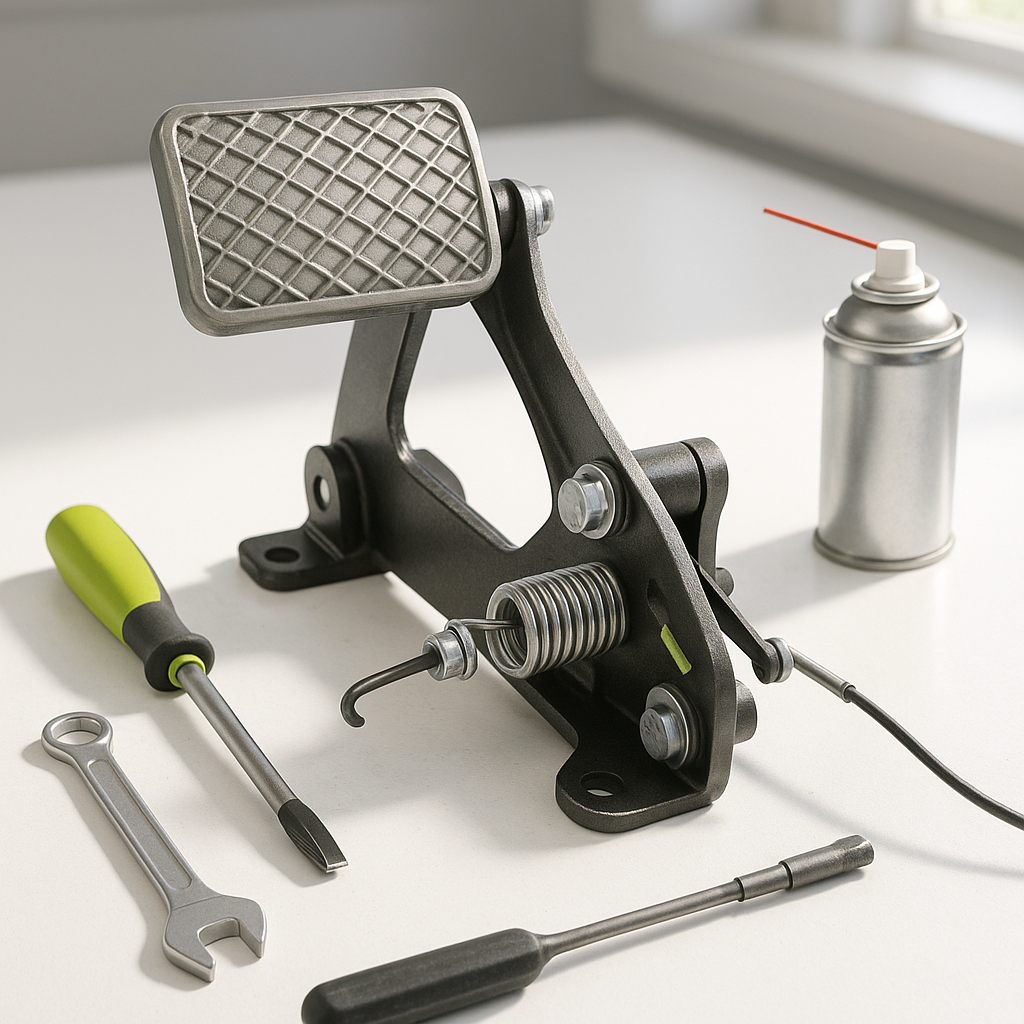
Every brake pedal assembly relies on a return spring — sometimes at the pedal itself, sometimes at the brake actuator arm near the drum — to pull everything back to the disengaged position. Springs fatigue over time, especially on carts that see a lot of use or have been sitting. If the spring is stretched, rusted, or broken, the pedal may go down fine but won't have enough force to pull itself back up. Visually inspect all return springs along the brake linkage path. A good spring should have obvious tension when the pedal is released; if it looks relaxed or deformed at rest, replace it. Springs are cheap, and a missing or weak one is an easy fix that gets overlooked.
Inspect the Drum and Shoes
Sometimes the issue isn't the cable or the spring — it's that the brake shoe itself is dragging inside the drum. This can happen if the shoes are adjusted too tight (common after a brake adjustment job that wasn't checked for free wheel rotation afterward), if the drum is warped or scored, or if a shoe has come loose from its anchor pin. With the cart safely supported and the wheel off the ground, spin the wheel by hand with the brake pedal fully released. There should be minimal drag — you shouldn't need significant effort to rotate it. If it's noticeably stiff or you can hear scraping, pull the drum and inspect the shoe-to-drum clearance and the condition of the drum surface. Glazed or scored drums can grab inconsistently and prevent clean release.
Look at the Pedal Pivot and Linkage
The pedal itself pivots on a bolt or pin, and that pivot point can seize with rust and dirt over the years — especially on older carts or those stored outdoors. A seized pivot means the pedal physically cannot return to its full up position even when there's no tension on the cable. Grab the pedal by hand and try to move it through its full range of motion. It should move freely with light pressure. If it's stiff or catches mid-travel, the pivot is the problem. Cleaning and lubricating the pivot often resolves it; on badly corroded examples, you may need to replace the pedal assembly bracket. While you're in there, check any intermediate linkage arms or clevis pins — a single bent or rusted pin in the linkage can prevent full pedal return.
Check for Proper Cable Adjustment
Even a perfectly healthy cable can cause dragging brakes if it's adjusted too tight. There should be a small amount of slack in the cable with the pedal fully released — just enough that no tension is being applied to the brake arm at rest. If someone recently adjusted the cable (or the adjuster backed off on its own due to vibration), the cable may be holding slight tension on the brake even with your foot off the pedal. Most brake cables have a threaded adjuster at one end where you can back off tension. Release the cable by loosening the adjuster until the brake arm sits fully in the released position, then re-tighten until you have the correct pedal travel and firm engagement — checking that wheels spin freely at rest when you're done.
When to Suspect the Wheel Cylinder (Hydraulic Systems)
Some golf cart models — particularly certain four-wheel brake setups — use hydraulic wheel cylinders rather than purely mechanical linkage. On hydraulic systems, a seized or corroded wheel cylinder piston can hold the shoes out against the drum even after pedal pressure is released. If you've checked all the mechanical components and the drag is isolated to one wheel on a hydraulic system, pull the drum and look for fluid weeping from the wheel cylinder — that's a sign the seals have failed and the piston is sticking. A leaking or seized wheel cylinder needs to be rebuilt or replaced; it won't free itself over time.
After Any Fix, Always Road Test Carefully
Once you've addressed the root cause, reinstall everything and spin each wheel by hand before driving. Both wheels should rotate with only light resistance. Then take the cart out at low speed and check that it accelerates freely without the motor straining, and that the brakes engage and release crisply. If you notice heat building up in one wheel area after a short drive, that wheel is still dragging and the diagnosis isn't finished. Dragging brakes are a safety issue and a battery drain — don't put off getting it right.