A brake pedal that requires serious leg strength to press — or barely moves at all — is one of those problems people sometimes dismiss as just the way older carts feel. It isn't. A properly adjusted mechanical brake system should engage with moderate, consistent foot pressure. When it suddenly takes a hard stomp to slow down, or the pedal feels like it's fighting you the whole way, something in the system has changed. The most common causes are mechanical, and most of them are diagnosable without special tools.
Start With the Brake Cable
Most golf carts use a cable-actuated drum brake system, and the brake cable is one of the first places to look when the pedal feels heavy. Cables can corrode, kink, or fray internally in ways that aren't obvious from the outside. When a cable loses its ability to slide freely through its housing, it creates resistance before any actual braking force even reaches the drums. Inspect the full cable run — look for sharp bends, housing damage, rust at the end fittings, or any spot where the cable contacts a frame edge. A cable that looks intact can still be binding internally, so if the exterior checks out but pedal feel is still stiff, disconnect the cable at the drum end and test how freely it moves through the housing alone.
Check the Drum and Shoe Condition
Brake drums can develop rust, scoring, or out-of-round wear over time — especially on carts that sit for long periods in wet conditions. When a drum surface is rough or pitted, the brake shoes can drag against it even at rest, and pressing the pedal into an already partially engaged system will feel noticeably harder. Remove the drum and look at the friction surface. Light surface rust from sitting is usually fine once it wears off with use, but deep scoring or a drum that's visibly warped should be inspected carefully. Also check the brake shoes themselves — shoes that are glazed, contaminated with grease, or worn unevenly can increase the force needed to generate adequate stopping friction.
Look at the Return Springs
Every drum brake system uses springs to retract the shoes away from the drum after the pedal is released. If one of these return springs is broken, weak, or installed incorrectly, the shoes may not fully release — leaving them in partial contact with the drum. This shows up as a pedal that's hard to press AND a cart that drags slightly even when you're not braking. With the drum off, inspect the springs visually. A broken spring is usually obvious. A weak spring is harder to spot by eye, but if the shoes don't snap back crisply when you push them by hand, that's a sign.
Inspect the Pedal Pivot and Linkage
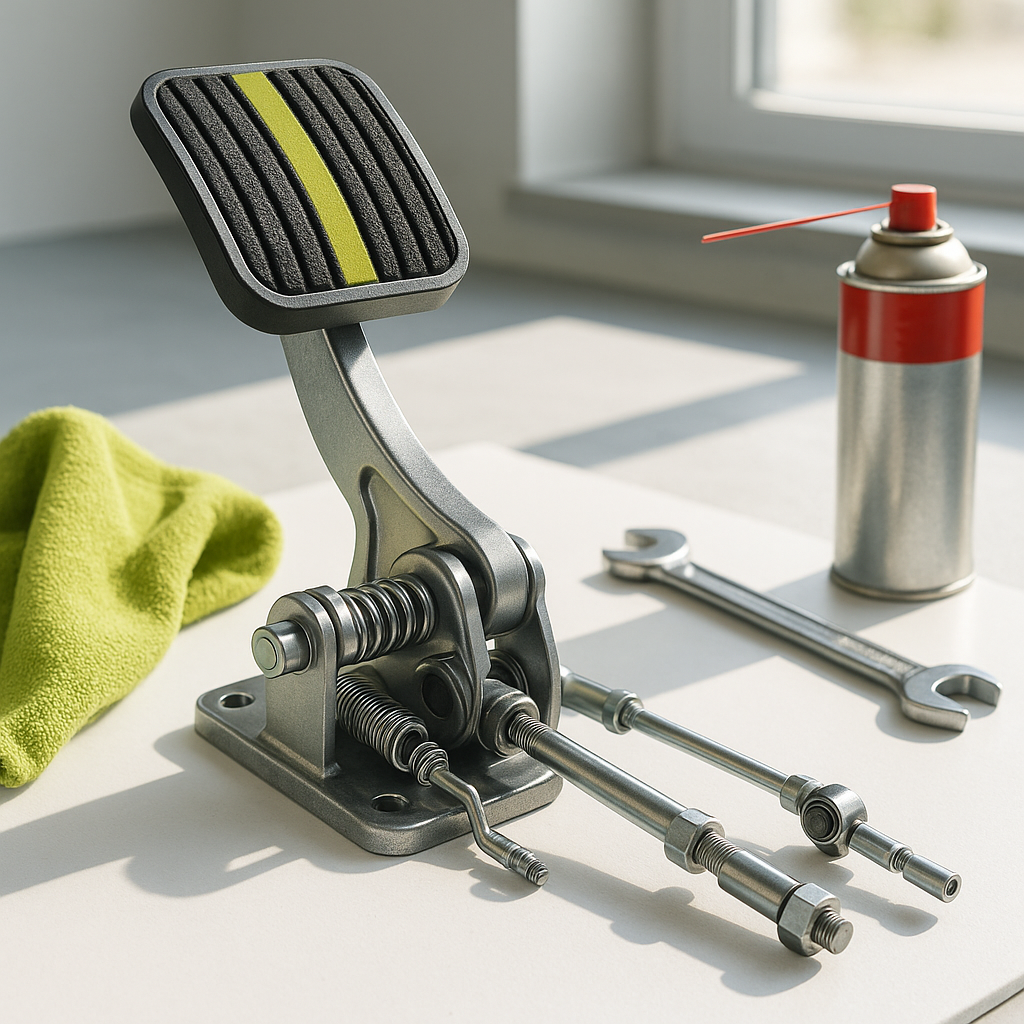
The brake pedal itself pivots on a bolt or pin that can corrode and seize over time. A pedal that's corroded at its pivot point will feel stiff from the moment you begin pressing it — not just at the end of travel. Apply penetrating oil to the pivot, let it soak, and work the pedal back and forth by hand to see if movement improves. Also look at any intermediate linkage rods or arms between the pedal and cable — a bent rod, a worn clevis pin, or a seized connection anywhere in that chain adds resistance. These small pivot points are easy to overlook but can have a significant effect on pedal feel.
Check Brake Adjustment
Drum brakes require periodic adjustment as the friction material wears down. A system that's been over-adjusted — shoes set too close to the drum — will feel hard to press and may cause the cart to drag. On most golf cart drum brakes, adjustment is made at the drum backing plate via a star wheel adjuster or an adjustment nut. The correct setting is shoes close enough to engage quickly but with enough clearance that the drum spins freely by hand when the pedal is released. If someone recently adjusted the brakes or replaced shoes without backing off the adjustment properly, over-tightening is a real possibility.
Don't Ignore the Parking Brake
If the parking brake cable is stuck or improperly released, it can hold the rear brakes in a partially applied state. This doesn't always trip the parking brake indicator or look obviously wrong. Try fully releasing the parking brake, then drive the cart slowly and check whether rolling resistance drops noticeably. A parking brake cable that's corroded in the applied position will keep constant tension on the system — making the service brake feel stiff and making the cart feel sluggish. Lubrication or cable replacement typically resolves this.
When to Stop Diagnosing and Replace Parts
Mechanical brake systems are relatively simple, but they're also safety-critical. If you've worked through the checks above and can't identify a clear cause, or if you find corrosion, cracking, or wear that's clearly beyond adjustment, replace the affected components before putting the cart back in service. Brake cables, drums, and shoes are wear items — not expensive to replace relative to the consequences of a brake failure. When reassembling anything in the brake system, verify pedal travel and braking performance at low speed in a safe area before returning the cart to normal use.