You press the accelerator, you hear a click — maybe one loud click, maybe a rapid clicking — and nothing happens. The cart doesn't move, or it hesitates badly before moving. This is one of the most common complaints on electric golf carts, and the solenoid is almost always somewhere in that story. The solenoid is the high-current switching relay that connects your battery pack to the motor circuit when you call for power. When it fails — or when something upstream of it fails — the symptoms can look almost identical, which is why a systematic diagnosis matters more than just swapping parts.
Understanding What the Solenoid Actually Does
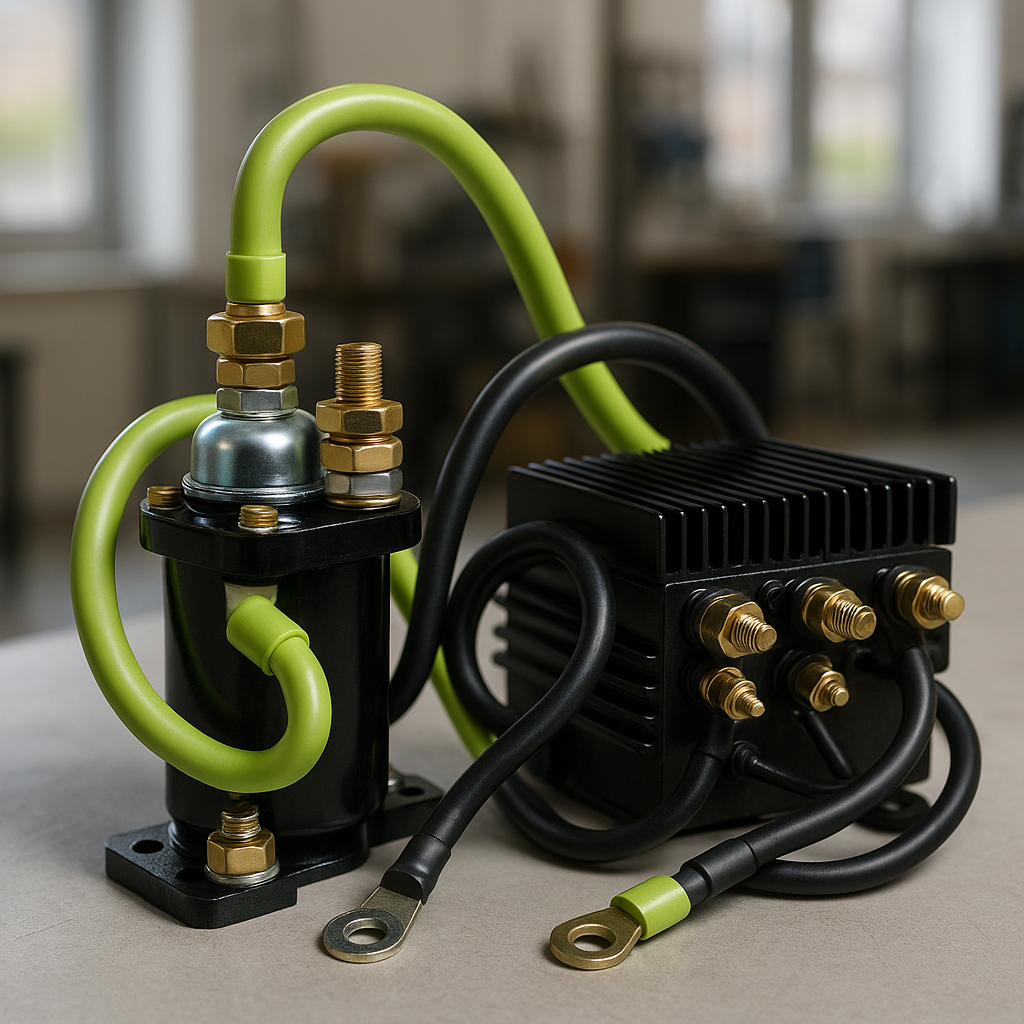
Think of the solenoid as a heavy-duty remote switch. When you press the accelerator (or engage the run circuit), a low-current signal energizes the solenoid's coil, which pulls a set of internal contacts together and completes the high-current circuit between your batteries and the motor controller or motor. If the coil never gets energized, the contacts never close. If the contacts are pitted or burned, they may close weakly or not at all. Either way, the cart won't move properly — and you'll usually hear it trying.
What Different Click Patterns Tell You
A single, solid click when you press the pedal means the coil is being energized and the plunger is moving — that's actually a good sign. The problem is likely in the main contacts themselves (burned, pitted, or welded open) or downstream in the motor/controller circuit. A rapid chattering or clicking, where the solenoid seems to be cycling on and off quickly, usually points to a low-voltage condition — either weak or failing batteries that can't sustain the coil voltage under load, or a loose/corroded connection in the activation circuit. No click at all is a different problem entirely: the coil isn't being energized, which means you need to look at the key switch, forward/reverse switch, pedal switch (or ITS), or the wiring connecting them before you assume the solenoid itself is bad.
The Basic Checks Before You Condemn the Solenoid
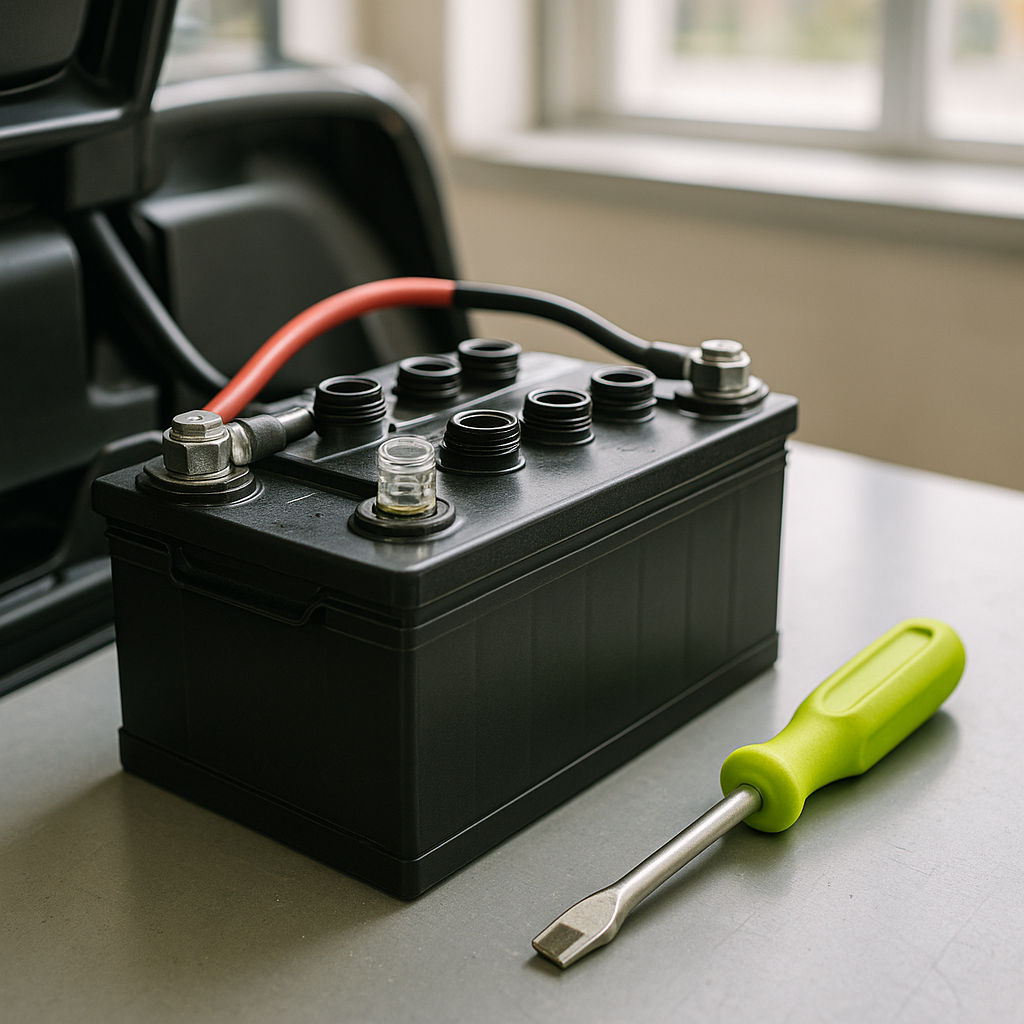
Start with your batteries. A pack that reads adequate voltage at rest can drop significantly under load, and a sagging pack will produce exactly the chattering-click symptom. Check individual cell or battery voltages if you can. Next, inspect every cable and terminal in the main power circuit — battery-to-battery connections, the cables running to the solenoid's main terminals, and the ground path. Corrosion and loose connections at these points create resistance that mimics a bad solenoid almost perfectly. Clean terminals and retorque connections before moving further into the diagnosis.
Testing the Solenoid Coil Circuit
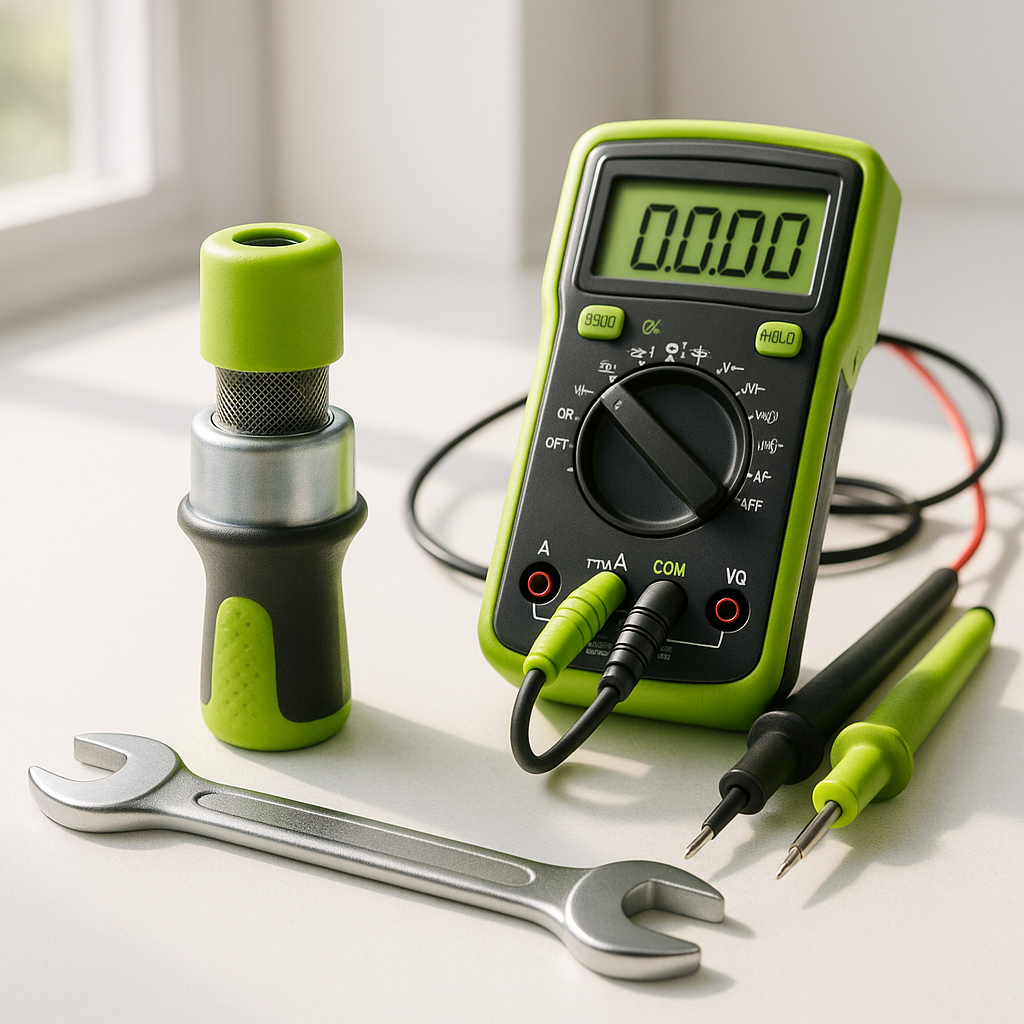
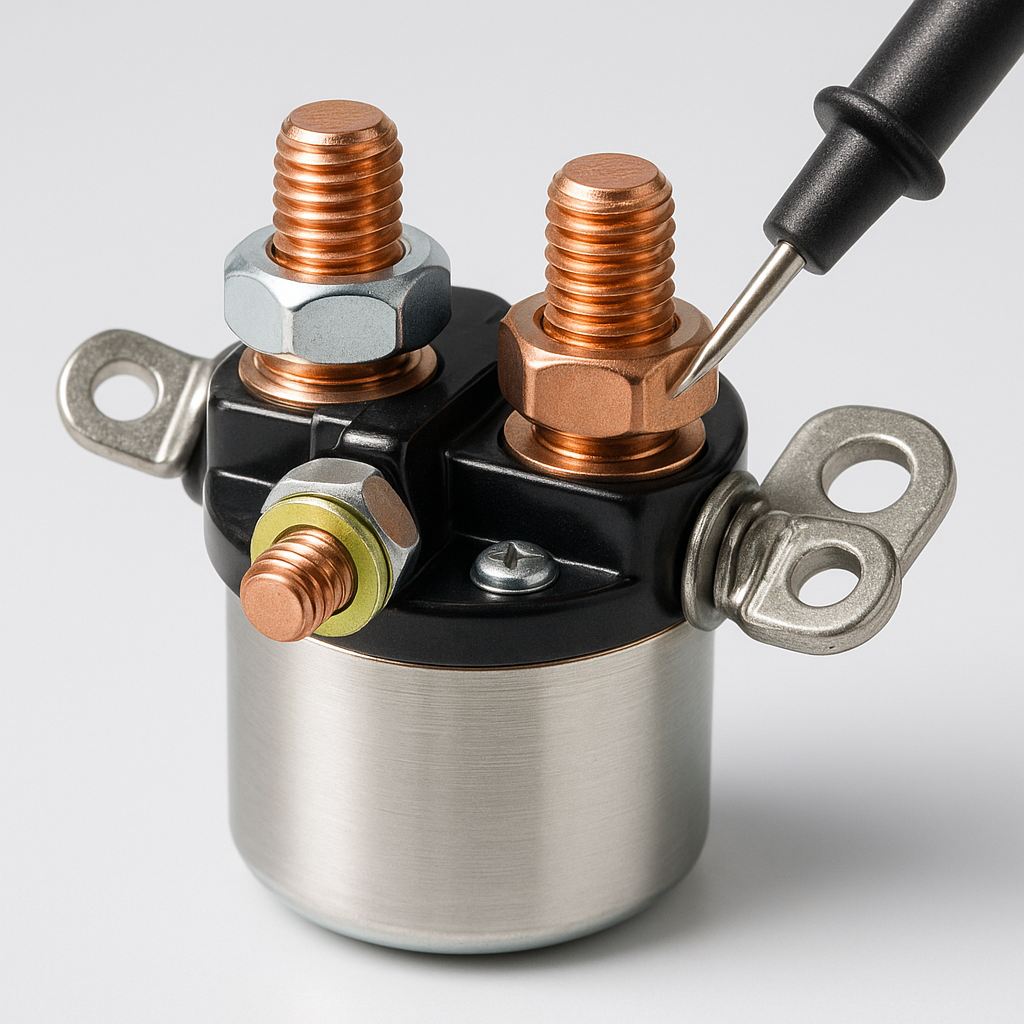
With a basic multimeter, you can check whether the solenoid coil is actually receiving voltage when you press the pedal. Set your meter to DC voltage, connect the negative lead to a good chassis or battery negative, and probe each small (activation) terminal on the solenoid while a helper presses the accelerator. You should see voltage on one terminal and near-zero on the other when the circuit is active. If you see no voltage at either small terminal, the problem is upstream — key switch, direction switch, pedal switch, or wiring. If voltage is present but the solenoid still doesn't click, the coil itself is likely open (failed). You can confirm this by measuring resistance across the two small terminals with the cart off; a reading of infinite resistance (OL) means the coil is open and the solenoid is definitively bad.
Testing the Main Contacts
If the solenoid clicks but the cart won't move or moves weakly, the main contacts are suspect. With the cart safely secured and all power considerations respected, you can measure voltage drop across the solenoid's two large terminals while the cart is being asked to move. In a healthy solenoid, the voltage difference across a closed set of contacts should be very small — a large drop means the contacts are failing to conduct properly. Severely burned contacts may also show signs of arcing, carbon buildup, or a physically stuck (welded) plunger if you remove and inspect the unit. Some solenoids have replaceable contact kits; others are sealed units that need full replacement.
Common Mistakes That Lead to Repeat Failures
Solenoids don't usually fail in isolation. If you replace one and it fails again quickly, look hard at the rest of the system. A weak battery pack that's constantly causing the solenoid to chatter is one culprit. A motor that's drawing excessive current due to worn brushes or a developing short will burn contacts fast. Incorrect solenoid voltage rating is another — using a solenoid rated for the wrong system voltage will cause premature failure or immediate non-function. Always match the replacement to your cart's actual system voltage, and verify the activation voltage requirements match what your cart's control circuit actually provides.
When to Move Past the Solenoid
If your solenoid tests good in every way — coil energizes, contacts close with minimal drop, everything looks clean — but the cart still won't move, shift your attention to the motor controller, the motor itself, and the direction switch. The solenoid is a simple device and it's usually straightforward to confirm whether it's the problem or not. Spending the time to test rather than just replace saves you both money and the frustration of finding the same symptom after a new part is already installed.