A golf cart floor mat seems like one of the simplest parts on the machine — but when it starts lifting at the edges, sliding around under your feet, or developing a persistent mildew smell, it becomes a genuine nuisance and occasionally a safety issue. A mat that bunches under the pedals is more than annoying; it can interfere with your ability to press the accelerator or brake cleanly. This guide walks through the most common floor mat problems and how to actually diagnose what's going wrong before you replace anything.
Mat Won't Stay Flat or Keeps Lifting at the Edges
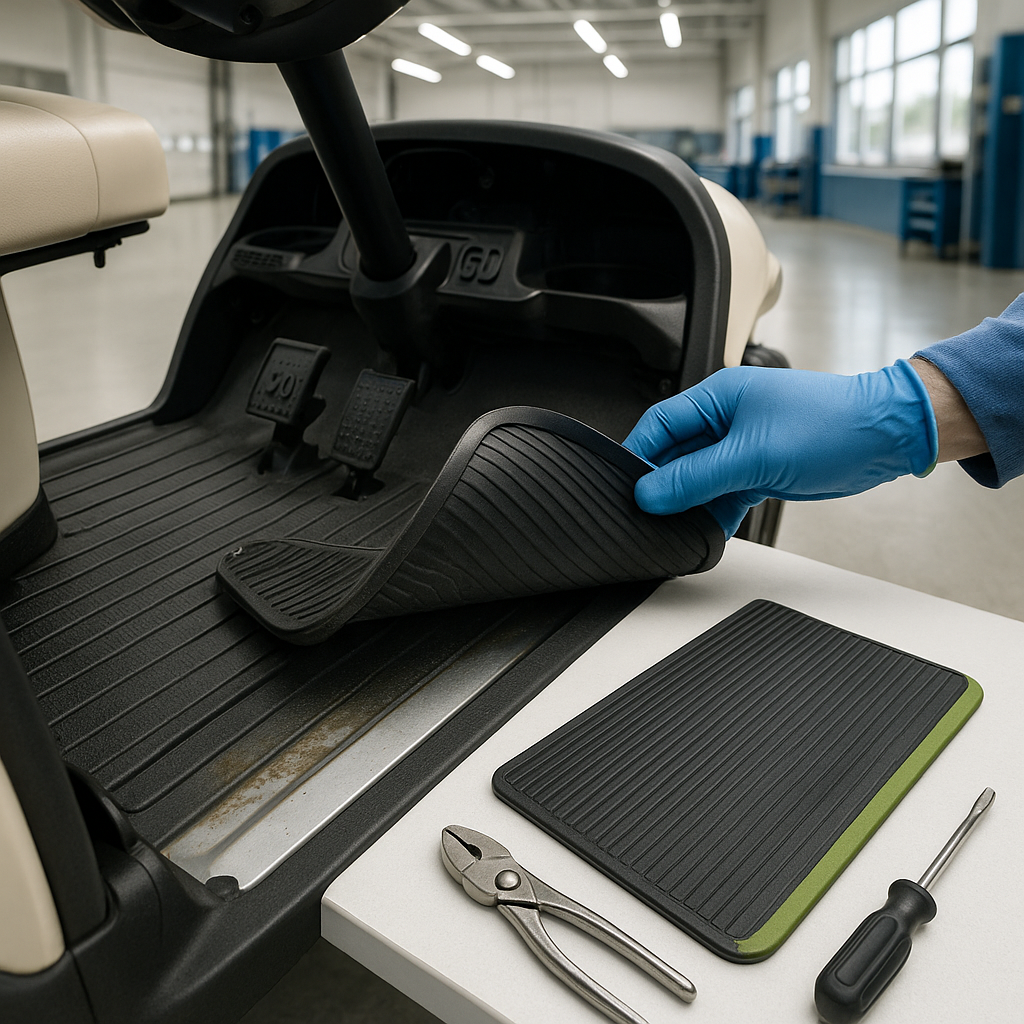
The most common cause of a mat that curls or lifts is moisture trapped underneath it. When water gets under the mat — from rain, a wet cart path, or a simple spilled drink — it has nowhere to go. The mat absorbs the humidity from below, swells slightly, and starts to delaminate or curl. Pull the mat out completely and check the floor pan underneath. If you see standing water, rust staining, or a chalky mineral residue, water intrusion is your problem. Look at where it's coming from: drainage holes clogged with debris, a cracked floor pan, or gaps around the pedal shafts are the usual entry points. Fix the source before you put any mat back down. A curling mat on a dry floor is usually just an old mat that's lost its shape — heat and age cause rubber and vinyl mats to take a permanent set.
Mat Slides or Shifts While Driving
If the mat moves around underfoot, start by checking whether it was designed to be secured at all. Many OEM-style mats rely on a snug fit against the floor pan walls and pedal cutouts to stay in place — if the mat is even slightly undersized for your cart's floor, it will wander. Compare the mat's shape to your actual floor pan. Aftermarket universal mats are especially prone to this because they're cut to approximate dimensions rather than your specific model. The fix is usually adhesive hook-and-loop strips or double-sided carpet tape along the perimeter, applied to both the mat and the clean, dry floor pan. Don't use tape on a wet or oily surface — it won't hold. If the mat is shifting because it's too thick and sits proud of the floor lip, trimming the edges or finding a thinner mat is the better solution.
Persistent Mildew or Musty Smell
A musty smell almost always means moisture is trapped somewhere — either in the mat itself or between the mat and the floor pan. Rubber-backed mats can hold water in the backing foam for weeks. Pull the mat, wash it thoroughly with a mild detergent and a stiff brush, rinse it well, and let it dry completely in the sun before reinstalling. If the smell returns quickly, the problem is the floor pan below. Check for standing water or wet insulation. On older carts, the factory sound-deadening material under the floor pan can get saturated and never fully dry out. In that case, removing the old insulation and replacing it — or simply letting the pan air out fully before reinstalling a mat — is the only real fix. Mildew in a closed cart interior builds fast in warm weather, so sealing the source of moisture is more important than any cleaning product.
Mat Is Cracking, Flaking, or Deteriorating
Vinyl and rubber mats exposed to UV light break down over time. If your mat is cracking on the surface, flaking, or the backing is coming apart, the material has simply reached the end of its service life — no product will reverse that. The question is whether deterioration is happening faster than it should. Carts stored outdoors without a cover age much faster. Cleaning mats with harsh solvents or bleach also accelerates breakdown. If you're replacing a mat that aged out prematurely, look for one with UV stabilizers in the material and commit to covering the cart when not in use. A marine-grade vinyl or heavy molded rubber mat will outlast a lightweight universal piece by years in outdoor conditions.
Pedal Cutouts Don't Line Up or Interfere With Operation
If a replacement mat's pedal cutouts don't match your cart's pedal layout precisely, you can end up with the mat bunching against the base of the accelerator or brake pedal. This is most common with universal mats trimmed to fit. Press each pedal through its full range of motion and watch the mat. If it catches or restricts movement at any point, that's a safety problem that needs to be corrected immediately. Trim the cutout carefully with sharp scissors or a utility knife — go slowly and test frequently. The goal is clearance at full pedal travel, not just at rest. If the geometry is too far off to trim cleanly, the mat isn't the right fit for your cart.
When to Replace vs. When to Repair
A mat that's simply dirty or has minor lifting is usually worth cleaning and re-securing rather than replacing. A mat that's cracked through, has deteriorating backing that sheds material onto your floor pan, or genuinely doesn't fit your floor pan shape is worth replacing properly. The floor of a golf cart is one of the few interior surfaces that takes real abuse — wet boots, mud, spilled drinks, direct sun — so investing in a mat that actually fits your specific model and is made from durable outdoor-rated material pays off over the long run. Whatever you install, make sure the floor pan underneath is fully clean and dry first. A new mat over a wet, rusty pan will fail just as fast as the old one did.