A golf cart floor mat that shifts around, bunches up, or refuses to lie flat is one of those problems that seems minor until you're constantly kicking it back into place or tripping over a curled edge mid-ride. Beyond the annoyance, a mat that moves underfoot can actually interfere with pedal feel and become a genuine safety hazard. Before you just jam it back down and forget about it, it's worth spending a few minutes diagnosing why it keeps happening — because the fix usually depends on the cause.
Start With the Floor Itself
The most common reason a floor mat won't stay put is a dirty or wet floor underneath it. Oil residue, moisture, dirt, and even dried-on grass clippings all reduce friction and let the mat skate around freely. Pull the mat out completely and inspect the floorboard surface. If it's grimy, clean it thoroughly and let it dry before reinstalling. A clean, dry floor gives the mat's backing something to grip. On carts with fiberglass or plastic floorboards, this matters even more since those surfaces are naturally slippery compared to textured metal.
Check Whether the Mat Fits the Cart
Universal-fit mats are convenient, but they're also the most likely to shift because they weren't cut specifically for your cart's floorboard geometry. If your mat overhangs the edges, folds at the pedal cutouts, or has gaps where it should make contact, it's going to move. Compare the mat's footprint to your floorboard carefully. A mat that's slightly too large will buckle and curl; one that's too small won't cover the mounting points or anchor areas the design relies on. OEM-style mats cut for a specific model tend to stay in place far more reliably because the fitment is precise.
Inspect the Backing Material
Flip the mat over and look at the underside. Most quality floor mats have a textured rubber or nitrile backing designed to grip the floorboard. Over time — especially with UV exposure, heat cycling, and cleaning chemicals — that backing can harden, crack, or compress flat. Once the texture is gone, so is the grip. Run your hand across the backing: it should feel slightly tacky or have a pronounced texture. If it feels smooth and hard, the mat has simply worn out and needs to be replaced rather than repositioned.
Look for Warping or Permanent Curl
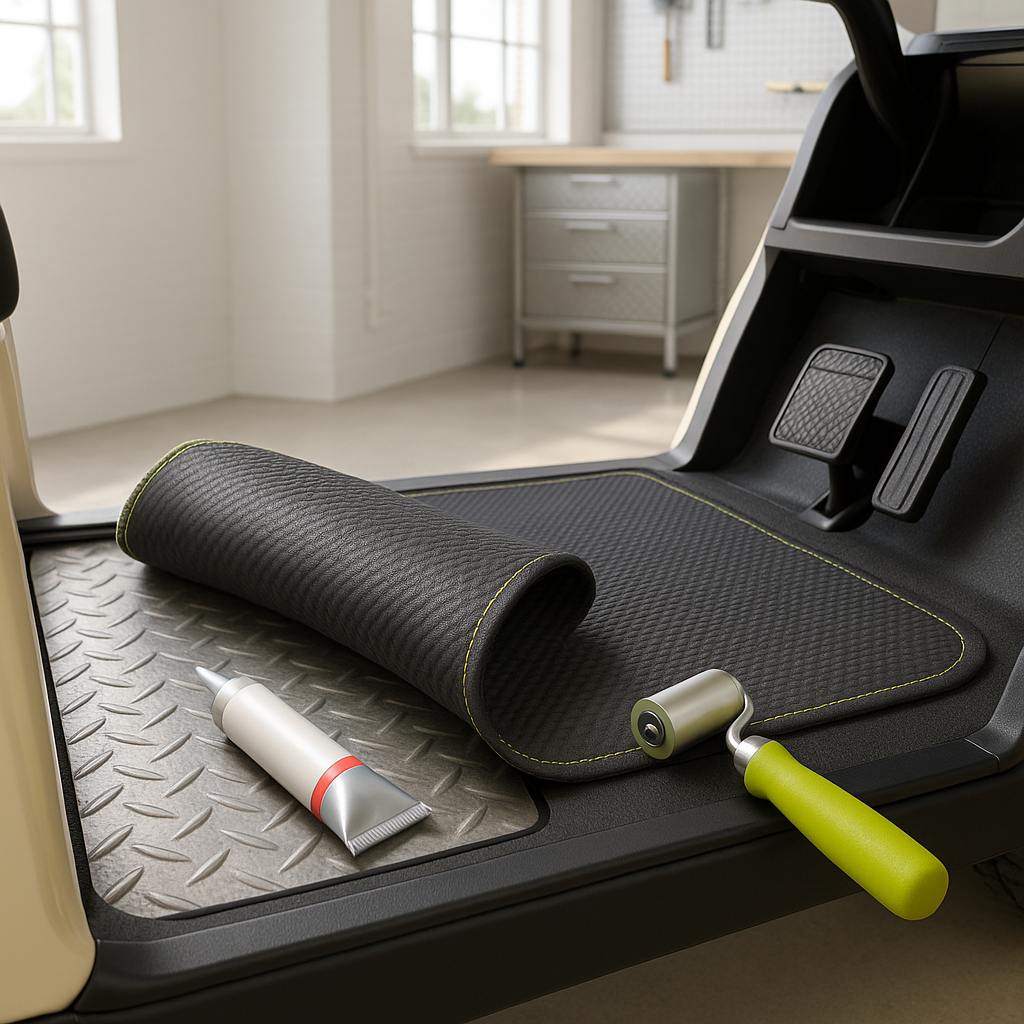
Mats stored rolled up, shipped folded, or left in a hot cart for extended periods can take on a permanent curve or curl at the edges. When you lay a warped mat flat, it wants to spring back to its distorted shape — and that movement pulls the whole mat out of position. In mild cases, laying the mat flat in direct sunlight for an hour or two can relax the material enough to lie flat again. Severe warping usually means the mat won't ever sit correctly and replacement is the practical answer.
Consider Anchoring Options
Some carts have factory anchor points — small tabs, lips, or recesses in the floorboard that are designed to hold the mat in place. If your mat isn't engaging those features, or if your cart doesn't have them, there are a few common solutions. Hook-and-loop fastener strips applied to the mat backing and floorboard work well on clean, dry surfaces. Automotive carpet tape is another option, though it can be messy to remove later. A few small dabs of non-permanent adhesive in the corners can hold things in place without making future removal a nightmare. Avoid over-fastening — the mat still needs to come out for cleaning and floorboard inspection.
Don't Overlook Pedal Cutout Fit
On carts where the mat wraps around or has cutouts for the accelerator and brake pedals, poor fitment around those openings is a common source of shifting. If the cutout is slightly off, the pedal hardware can catch the edge of the mat during use and drag it out of position with every press of the pedal. Check that the mat lays completely flat through the pedal area with no overlap or bunching. A mat that's riding up against the pedal assembly is also a safety concern worth addressing immediately.
When to Just Replace It
If the mat is warped, the backing is shot, the fit is clearly wrong for your cart, or you've tried repositioning it multiple times and it keeps moving — replacement is the right call. A properly fitting mat with good backing and clean floorboard contact should stay put without any heroic measures. The goal is a mat that lies flat, grips the floor, clears the pedals, and doesn't require constant adjustment. If yours can't do those things, it's done its job and it's time for a new one.