A grinding or squealing noise coming from your golf cart while it's moving is never something to ignore. Beyond being annoying, these sounds are your cart's way of telling you something mechanical is wearing, binding, or failing. The good news is that most drivetrain and brake-related noises have identifiable patterns — when they happen, where they seem to come from, and whether they change under braking or acceleration are all clues that narrow down the diagnosis fast.
Does It Happen While Braking, or All the Time?
The first thing to figure out is whether the noise occurs only when you apply the brakes or whether it's present any time the cart is rolling. A squeal or grind that shows up specifically when you press the brake pedal almost always points to the brake system — worn brake pads or shoes that have reached the end of their lining, a glazed drum surface, or a brake component that's shifted out of alignment. If the noise happens regardless of braking and is tied to wheel rotation, you're more likely looking at a wheel bearing, axle, or something caught in the wheel assembly.
Common Cause: Worn Brake Pads or Shoes
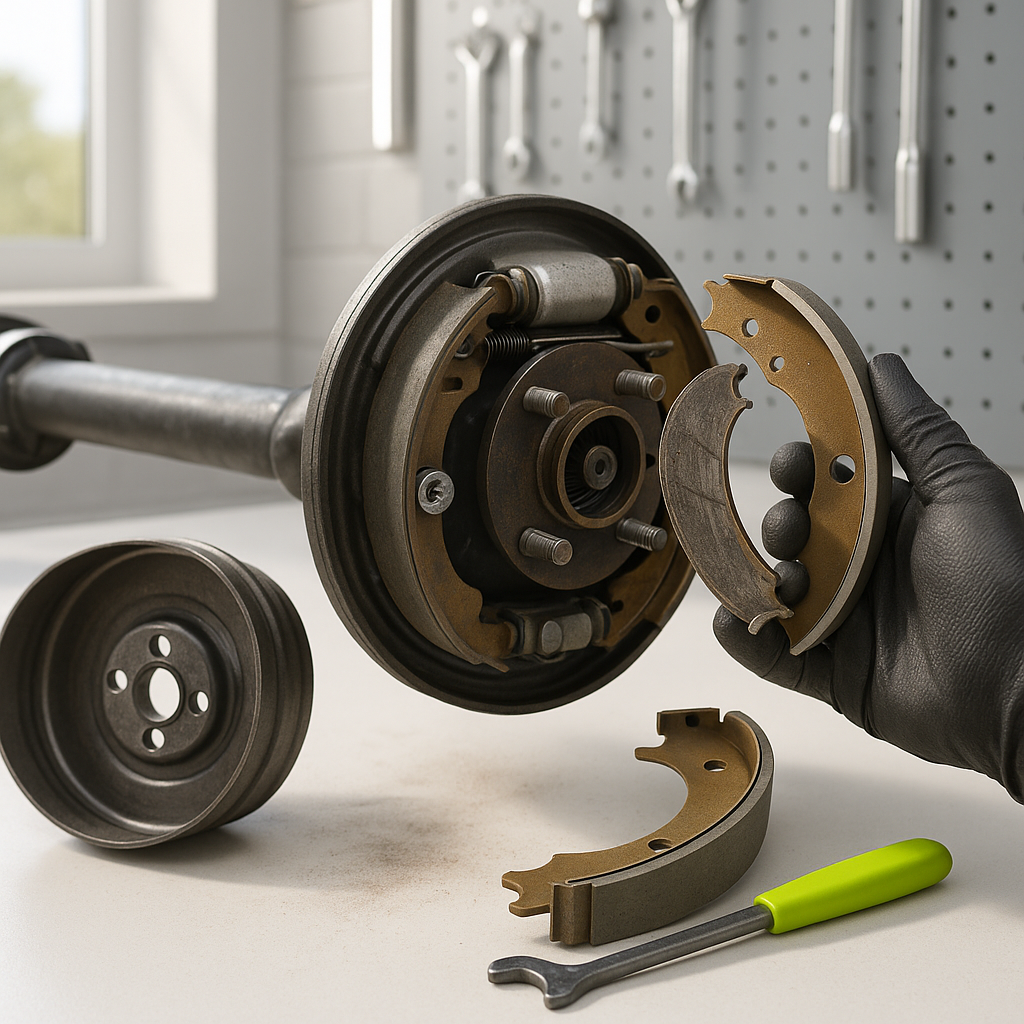
Golf carts use either drum brakes or disc brakes depending on the model and year, and both types will announce their wear audibly. Drum brake shoes that have worn thin will produce a grinding metal-on-metal sound as the shoe backing contacts the drum. Disc brake pads often have wear indicators that produce a squeal intentionally — that high-pitched chirp under light braking is a warning, not a failure, but it means new pads are overdue. Pull the wheels and inspect the lining thickness. If you're seeing very little material left, replacement is the fix, not the question.
Glazed or Scored Drums and Rotors
Even when there's still lining material present, brake drums or rotors can develop a glazed, hardened surface from heat cycles or from sitting unused for an extended period. Glazing causes an inconsistent, sometimes squealing contact between the friction material and the braking surface. Scored drums — grooves worn into the metal from grit or a worn-down shoe — will cause a rhythmic grinding sound that pulses with each wheel rotation. A scored drum usually needs to be turned by a machine shop or replaced; light glazing can sometimes be scuffed off with sandpaper, but resurface or replace if there's any doubt.
Wheel Bearings and Hub Issues
A grinding or rumbling noise that persists during normal rolling and gets louder with speed — but doesn't change much when you brake — points toward a wheel bearing. Grab the top and bottom of the wheel with the cart safely lifted and try to rock it. Any perceptible play or roughness felt while spinning the wheel by hand is a sign the bearing is worn. Wheel bearings in golf carts are relatively inexpensive and not especially difficult to replace, but a failed bearing left unaddressed can eventually allow a wheel to develop dangerous slop or, in extreme cases, seize.
Brake Cable Tension and Hardware
On carts with mechanical drum brakes, the brake cable controls how and when the shoes engage. A cable that's frayed, kinked, or stretched can cause uneven engagement — one side dragging while the other releases cleanly. Dragging brakes produce heat and a grinding or burning smell in addition to noise, and they'll wear the affected components much faster. Check that the cable moves freely through its housing, that the adjuster hardware is intact, and that the return spring is pulling the shoes back off the drum fully when the pedal is released. A brake that drags even slightly when you're not pressing the pedal is a problem worth fixing immediately.
Debris and Foreign Objects
Before assuming a major failure, do a quick visual check around all four wheels. Small stones, sticks, or packed debris caught between a brake drum and the backing plate will create a scraping or grinding sound that mimics worn components. It's one of the most common causes of sudden brake noise on carts used on or near natural terrain. Remove the wheel, clean out the backing plate area, and recheck. If the noise disappears, you found your culprit without spending a dime.
When to Stop Driving and Fix It First
Any grinding that gets progressively worse, any wobble felt through the steering wheel or floorboard accompanying the noise, or any sign of reduced braking effectiveness means the cart should come out of service until it's repaired. Operating a cart with badly worn brakes or a damaged bearing risks damage to other components and, more importantly, creates a genuine safety hazard — especially on slopes. Most of the parts involved in these repairs are straightforward to source and install, and the diagnostic steps above are enough to get you pointed at the right fix without guessing.