Installing a lift kit is one of the most impactful upgrades you can make to a golf cart, but it's also one of the most common sources of handling complaints after the fact. If your cart suddenly feels darty, wanders at speed, pulls to one side, or just feels vague and unpredictable compared to before the lift, the good news is that most of these problems come from a short list of causes — and they're diagnosable without special equipment. The key is understanding that lifting a cart changes the geometry of every system that touches the ground: suspension, steering, and tires all shift when ride height goes up.
Start With the Obvious: Wheel Torque and Basic Alignment
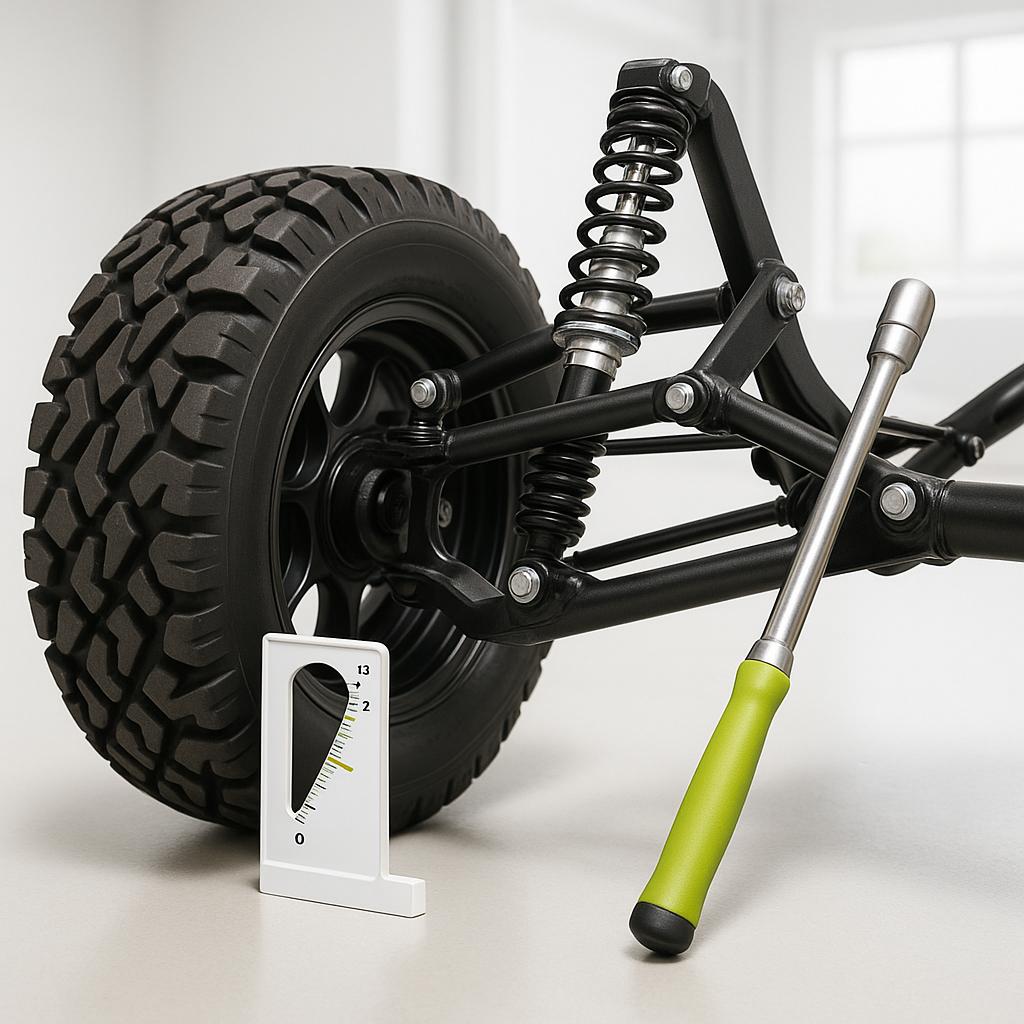
Before you dig into anything complex, confirm the basics. Check that all lug nuts are fully torqued — wheels that aren't completely tight will cause wobble and vague steering that mimics more serious problems. Then look at your front wheels from the front of the cart. They should appear to be roughly perpendicular to the ground. Significant camber (wheels visibly tilted in or out at the top) is normal to a small degree but shouldn't look extreme. Lifting a cart raises the spindle height and can alter camber beyond spec, especially on spindle-style lifts. If the tops of the tires are leaning noticeably inward or outward, camber is likely contributing to your handling issues. This usually requires a professional alignment check to correct properly.
Check Toe — It's the Most Common Post-Lift Problem
Toe is the angle of your front tires when viewed from above — whether the fronts of the tires point slightly inward (toe-in) or outward (toe-out) relative to each other. It's extremely sensitive to suspension geometry changes, and a lift kit almost always affects it. Even a small amount of incorrect toe causes noticeable wandering, pulling, and edge tire wear. You can get a rough sense of toe by measuring the distance between the front edges of your front tires and comparing it to the distance between the rear edges of those same tires, measured at the same height off the ground. On most golf carts, a slight toe-in is the target. If your measurements are significantly off, your tie rod ends need adjustment. This is one of the most common overlooked steps after a lift install, and correcting it often resolves most handling complaints immediately.
Inspect the Steering Components for New Stress Points
A lift changes the angles at which your tie rods, drag links, and steering arms operate. Components that were fine at stock height may now be working at angles they weren't designed for, accelerating wear or introducing bind and slop. Grab each front wheel at the 9 and 3 o'clock positions and try to rock it — any looseness indicates wear in the tie rod ends or king pins. Then grab the wheel at 12 and 6 and do the same — looseness here points to king pin or spindle wear. Also inspect the drag link and any steering rack or box connections for play. Post-lift, these joints are under new stress and wear faster than they did at stock height. Any detectable looseness should be addressed before you focus on alignment.
Look at the A-Arms, Spindles, and Lift Brackets
Depending on what style of lift you have — whether it's a spindle lift, A-arm lift, or long-travel kit — the hardware connecting the lift to your cart's original suspension points deserves a close inspection. Look for any mounting brackets that seem flexed, cracked at welds, or that have hardware that has worked loose. An A-arm lift that adds length to the control arms can change suspension travel in ways that weren't immediately obvious during installation. Bounce each corner of the cart by hand and watch how the suspension moves — it should compress and rebound smoothly without binding or clunking. Any binding suggests a geometry conflict, usually related to the lift block or bracket interfering with normal suspension travel.
Evaluate Tire Size and Inflation
Many lift kit installs happen alongside a tire size upgrade, and oversized or improperly inflated tires are a frequent but overlooked handling culprit. Tires that are too wide for your wheel offset can scrub and create steering pull. Uneven inflation between the two front tires will cause a consistent pull toward the low-pressure side. Check pressure in all tires cold and match them to the manufacturer's recommendation for your tire size — this is especially important if you've moved to a larger tire than stock. Also look at the inside and outside edges of your front tires for wear patterns; edge wear almost always means a toe or camber issue is actively worsening the problem while you drive.
When to Get a Professional Alignment
If you've checked torque, inspected all joints for play, and confirmed inflation is correct but the cart still handles poorly, it's time for a proper alignment. Golf cart alignment isn't something every shop offers, but many do, and it's worth the cost after a lift install. A lift raises the entire front geometry, and what looks close by eye is often enough off to cause real handling problems. Some lift kit manufacturers publish the expected alignment specifications for their kits — if yours did, bring those numbers to the shop. If not, the cart's original factory specifications are a reasonable starting point, though you may need to accept slightly different numbers given the new geometry. Don't keep driving on a misaligned cart; it wears tires quickly and masks other problems that might otherwise be easy to catch early.