If your golf cart suddenly feels like it takes real effort to turn the wheel — or if it's always been stiff and you've just accepted it — don't. Heavy steering is a solvable problem in the vast majority of cases, and ignoring it makes the cart harder to control and accelerates wear on your steering components. Here's how to work through the most common causes systematically.
Start With the Tires
Low tire pressure is the single most overlooked cause of heavy steering on a golf cart. Under-inflated tires dramatically increase rolling resistance and make the front end feel sluggish and reluctant to turn, especially at low speeds. Before you dig into anything mechanical, check both front tires with a gauge and inflate them to the pressure listed on the tire sidewall or in your cart's owner manual. If the steering lightens up noticeably after that, you found your problem. Also look for obvious tire damage — a bulge, a flat spot, or a severely worn tread can create uneven resistance that makes steering pull or bind in certain directions.
Check the Steering Column and Wheel for Binding
With the cart on a flat surface and the front wheels on the ground, try turning the steering wheel slowly from lock to lock. Feel for any spot where the steering suddenly gets heavier, catches, or requires noticeably more effort. That kind of localized resistance usually points to something binding in the steering column itself — a bent column, a collapsed bearing, or debris that's gotten into the column housing. On many golf carts the steering column is exposed and relatively easy to inspect visually. Look for obvious bends, cracks, or anything that shouldn't be there pressing against the column.
Inspect the Tie Rods and Steering Rack
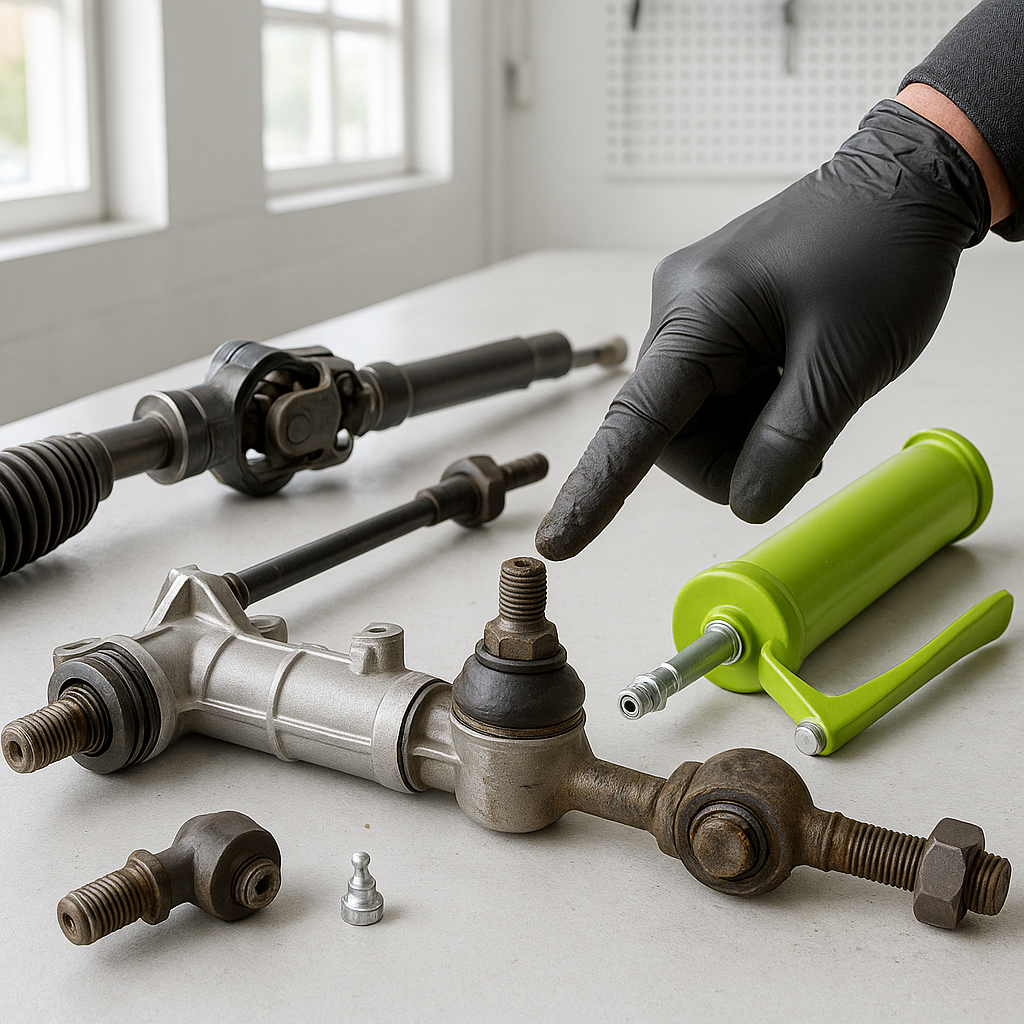
The tie rods connect your steering box or rack to the front spindles, and they're a frequent trouble spot. Grab each tie rod end and try to wiggle it in multiple directions. There should be very little play. If a tie rod end feels loose, sloppy, or if you can see visible corrosion or damage at the joint, it may be binding under load even if it wiggles freely when you're moving it by hand. A bent tie rod — which can happen after a hard curb strike — creates asymmetric resistance that makes steering feel heavy in one direction more than the other. Steering racks on older carts can also develop internal wear or corrosion that causes them to bind; if the rack feels rough when you work through its range of motion by hand, that's worth investigating further.
Look at the Front Spindles and Kingpins
The kingpins and spindles are the pivot points that allow your front wheels to turn. On golf carts that see a lot of use or that have never been lubricated, these components can seize or wear in ways that make steering significantly heavier. Try lifting the front of the cart safely off the ground and turning the front wheels by hand at the spindle level — not through the steering wheel. If the wheels are hard to rotate at the spindle, or if you hear grinding or feel roughness, your kingpins or spindle bearings are likely dry or worn. These components typically require periodic greasing, and neglecting that maintenance is very common on carts that have had multiple owners.
Check the Front Wheel Bearings
Wheel bearings that are worn, dry, or beginning to fail create drag and resistance that the steering system has to fight against. With the front of the cart safely elevated, spin each front wheel by hand and listen for grinding or a rough, notchy feel. A healthy wheel bearing allows the wheel to spin smoothly and quietly. Also grab the wheel at the 9 o'clock and 3 o'clock positions and try to rock it — excessive play there can indicate a bearing that's worn enough to be affecting steering feel, not just noise.
Evaluate Steering Geometry If Nothing Else Explains It
If your tires, tie rods, spindles, and bearings all check out but steering is still heavy, look at whether the cart has had any recent suspension or lift kit work done. Changes to ride height affect the front-end geometry, and if caster, camber, or toe settings are significantly off after a lift, the steering can feel noticeably heavier and less natural. This is especially common on carts that had lift kits installed without a proper alignment adjustment afterward. A golf cart alignment isn't as involved as a car alignment, but the geometry still matters — particularly toe-in — and getting it checked by someone with a basic alignment setup is worth the time if you've recently raised the cart.
When to Stop DIY Troubleshooting
Most causes of heavy steering are mechanical and fixable with basic tools and some patience. But if you find obvious damage to the steering rack, a bent steering column, or severely worn kingpins, those repairs go beyond simple maintenance and warrant professional attention or proper replacement parts. Steering is a safety-critical system — if you're not confident in a repair, get a second opinion before driving the cart again. The good news is that a systematic inspection will almost always point you to the cause, and most of the fixes are straightforward once you know what you're dealing with.