A golf cart hubcap that won't stay put is one of those small problems that compounds fast. Lose one on the course and you're either hunting the rough for a plastic cap or driving around with a mismatched wheel. The good news is that most hubcap retention failures come down to a handful of very fixable causes — and none of them require specialized tools or a trip to a dealer.
Start With the Wheel Itself
Before blaming the hubcap, look at the wheel. Hubcaps are designed to seat against a specific rim diameter and profile, and if your wheels have taken any curb hits or minor bends along the outer lip, the seating surface may no longer be round enough to hold a snap-fit cap securely. Run your finger around the inner rim edge where the cap seats. If you feel flat spots, warping, or significant corrosion buildup, no hubcap is going to grip consistently. Light corrosion can be wire-brushed clean; a visibly bent or oval rim needs replacement before the hubcap problem will go away.
Check the Retention Tabs or Clips
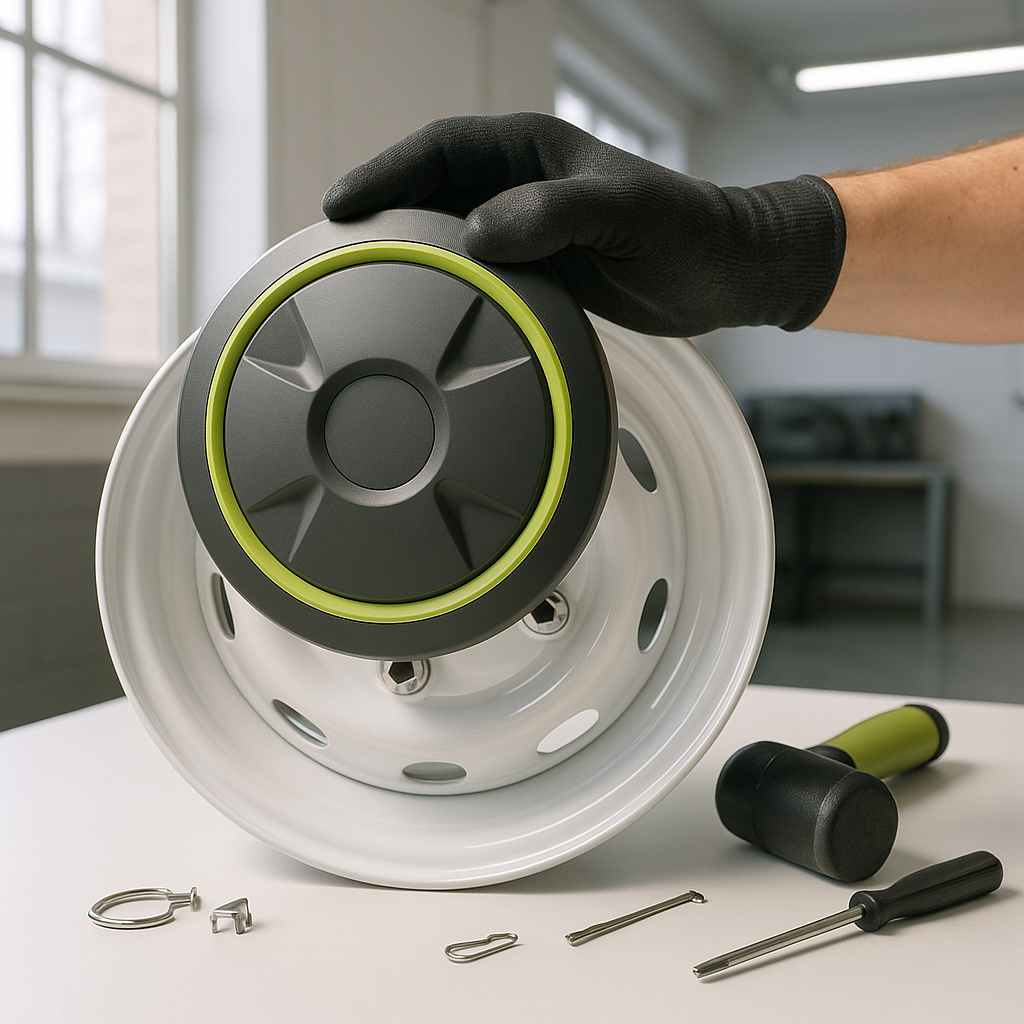
Most golf cart hubcaps stay on through one of two methods: a ring of flexible plastic retention tabs that grip the inside of the wheel, or a set of clips that lock onto lug nuts or wheel bolts. On tab-style caps, the tabs wear down and lose their snap over time — especially on carts that see a lot of vibration from rough terrain. Inspect each tab: they should all be roughly the same length and angle. If several are broken, bent outward, or visibly fatigued, the cap has simply worn out and needs replacing rather than reinstalling. On clip-style caps, confirm that every clip is fully engaged on its lug and that the lug nuts themselves are snug. A loose lug nut gives the clip nothing solid to hold against.
Confirm You Have the Right Size
This sounds obvious, but it's one of the most common causes of recurring pop-offs: the cap is the wrong diameter for your wheel. Golf cart wheel sizes are not universal — common sizes differ between manufacturers and even between model years from the same brand. A cap that measures even a fraction of an inch too large for your rim will never grip properly, no matter how hard you press it on. Check your wheel diameter before ordering a replacement, and if you're unsure, measure the inner diameter where the cap seats rather than relying on the tire size printed on the sidewall.
Vibration and Terrain Are Factors
If your cart spends time on gravel paths, cart paths with expansion joints, or any surface with repeated impact, hubcaps take a beating. Snap-fit caps that hold fine on smooth pavement may loosen progressively on rough terrain. In these situations, consider caps that use a secondary retention method — either lug-nut clips in addition to the rim lip, or caps that accept a small bead of weatherstrip adhesive around the contact ring. Some owners run a thin bead of adhesive as a semi-permanent fix on carts that never leave rough terrain; just know you'll fight it when you eventually need to swap the cap.
Reinstallation: Do It Right
When pressing a tab-style cap back on, start it flat against the wheel and press firmly and evenly around the perimeter — don't hammer one side in first. Work around the cap in a star pattern, similar to tightening lug nuts, until you hear or feel each section snap into place. An uneven press-on leaves one side seated and the opposite side barely engaged, which is exactly how caps pop off at the first bump. If the cap feels loose even when fully pressed, the tabs are worn and replacement is the right call.
When to Just Replace It
Hubcaps are a wear item. If the tabs are cracked, the finish is peeling, or the cap has been run over or heavily scuffed, fighting to keep it on isn't worth the effort. Replacements are widely available in standard sizes for the major cart platforms and as universal-fit options. When shopping, confirm the rim diameter your wheel actually requires, verify the retention style matches your wheel type, and look for caps with a solid tab count — more tabs generally means better grip, especially on rougher terrain.