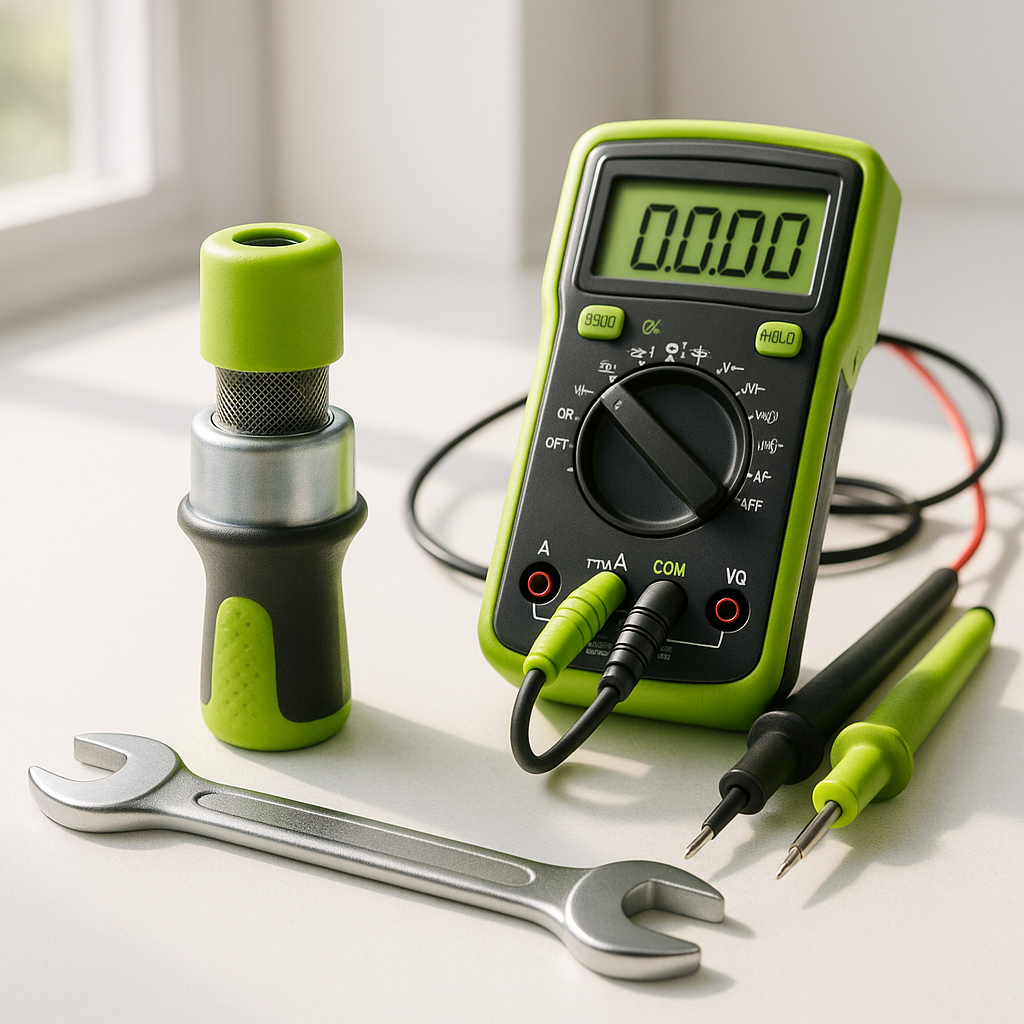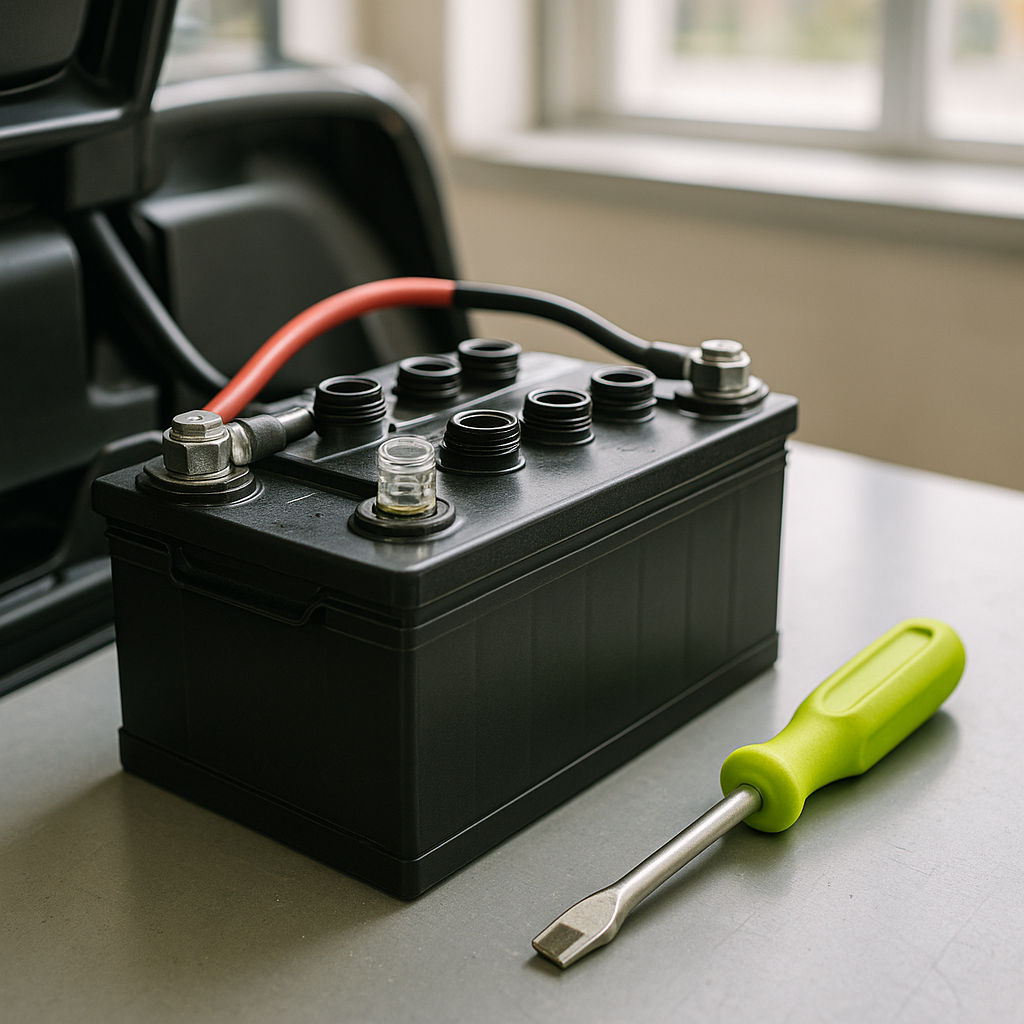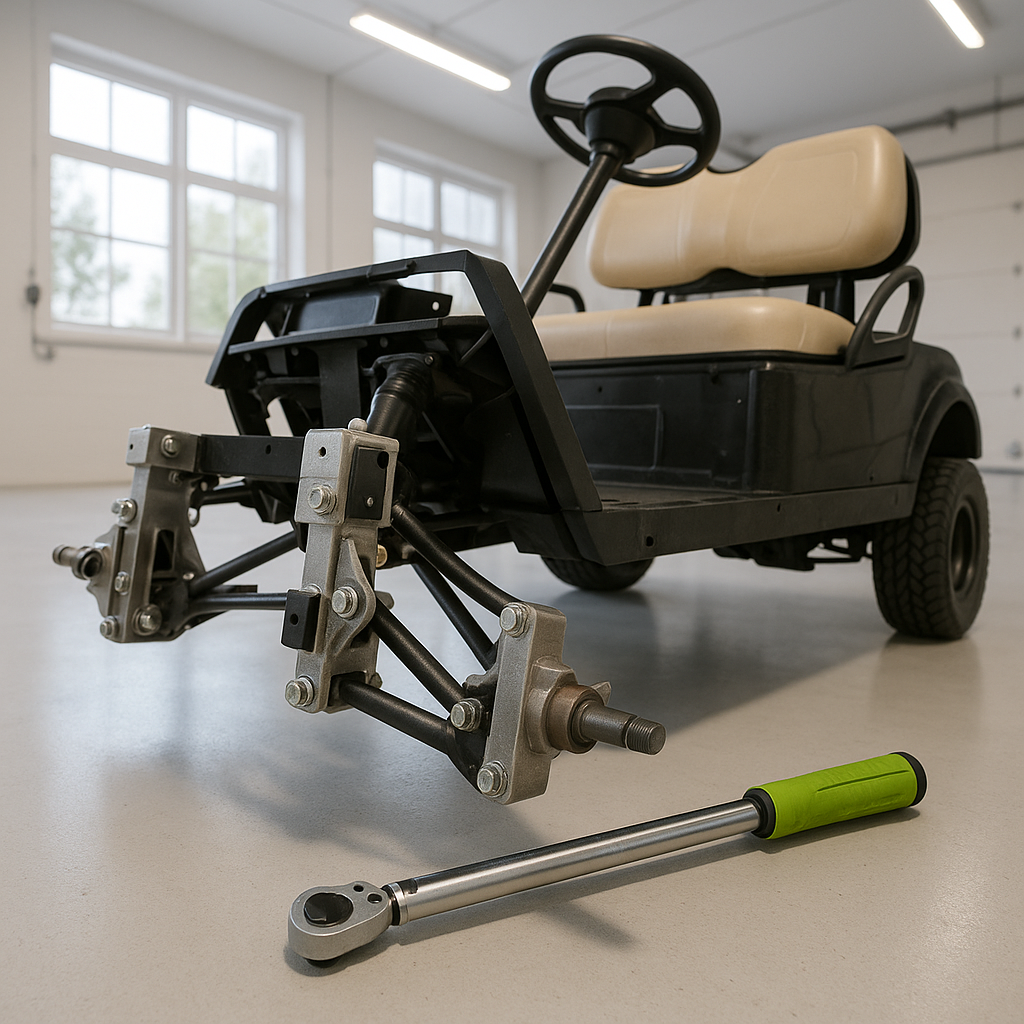
A lift kit should give your cart a level, planted stance — so if the finished product looks like it's favoring one corner or leaning side to side, something went wrong during the install or in the components underneath. This isn't just cosmetic. An uneven stance affects tire wear, handling stability, and how the cart behaves on slopes. The good news is that the causes are almost always mechanical and diagnosable with basic tools and a careful eye.
Start with a Level Surface and a Real Measurement
Before you dig into hardware, make sure you're actually looking at a real problem. Park the cart on flat, hard ground — concrete is ideal — and measure from the frame rail or rocker to the ground at all four corners. Small discrepancies can look dramatic when you're standing behind the cart. If the difference between corners is more than about an inch and a half, you're looking at something that warrants investigation. If it's minor and the cart drives straight and feels balanced, you may just be seeing a visual trick from uneven ground or slightly different tire pressures. Check the tires first — a soft tire on one side will absolutely make the cart look like it's leaning.
Check the Lift Blocks and Spacers on Each Corner
Lift kits that use blocks or spacers to raise the suspension are only as even as the installation. If a block on one side is seated slightly off, sandwiched against debris, or installed on the wrong side of a bracket, it will produce a height difference. Get under each corner and look at how the lift components sit. They should be flush, square, and symmetrical from one side to the other. Mismatched or missing hardware — even a single washer in the wrong place — can create a measurable tilt. Compare the driver's side and passenger's side hardware stack-up piece by piece.
Look at the Leaf Springs or A-Arms for Damage or Settling
If the lift kit uses extended leaf springs or modified A-arms, those components can settle unevenly after initial use, especially if the cart has been driven hard or carried heavy loads. A leaf spring that's cracked, fatigued, or installed with incorrect arch orientation will cause one corner to sit lower. On A-arm setups, look for any binding, bent tubing, or bushings that have shifted out of place. Bushings that weren't fully pressed in during installation are a common culprit — they can migrate under load and change the geometry of one side independently of the other.
Inspect the Spindles and Steering Components
Extended spindles are a core component of most golf cart lift kits, and if one spindle is installed at a slightly different angle than the other — or if one side has a bent or incorrectly torqued tie rod end — the cart can develop a lean or a pull that reads as uneven stance. Check that both front spindles are at the same angle and that the tie rod ends are seated fully in their tapered holes. A loose castle nut or missing cotter pin is a serious safety issue, not just a geometry problem. Address any loose steering hardware immediately before driving the cart further.
Consider the Rear Axle and Shock Mounting Points
On the rear, look at the axle carrier brackets and shock absorber mounting. If a rear shock is blown or has significantly different preload than the opposite side, the rear of the cart will sit unevenly under its own weight. Bounce each rear corner by hand — it should compress and rebound at roughly the same rate. A shock that barely resists or returns very slowly is a worn-out unit. Also check that any rear lift blocks are installed symmetrically and haven't shifted in the U-bolt pockets. Loose U-bolts are surprisingly common after a first install and can allow the axle to walk sideways over time.
Re-Torque Everything and Recheck
If you've gone through all the above and can't find a single obvious fault, do a full re-torque of every fastener in the lift system. Hardware that was installed correctly but not fully torqued can settle and shift during the first few drives, causing everything from a slight lean to a more serious alignment pull. Follow the torque specifications in your kit's documentation for each joint type. After re-torquing, take the cart for a short drive on flat ground and recheck the corner heights. In many cases, this alone corrects a lean that developed in the break-in period after installation.
A level stance after a lift install isn't something to accept as "close enough." An uneven cart puts asymmetric stress on your tires, bearings, and frame over time, and it makes the cart noticeably less stable on hills and turns. Work through these checks systematically, and in most cases you'll find the fix is straightforward — a misaligned block, a loose bolt, or a single component that needs to be reseated correctly.