A golf cart that runs fine on flat ground but loses power, slows dramatically, or cuts out entirely on hills is one of the most common and frustrating performance complaints. The incline just exposes a weakness that flat terrain was hiding. The good news is that uphill power loss follows a fairly predictable diagnostic path — work through these checks in order and you'll narrow it down quickly.
Start With the Battery Pack
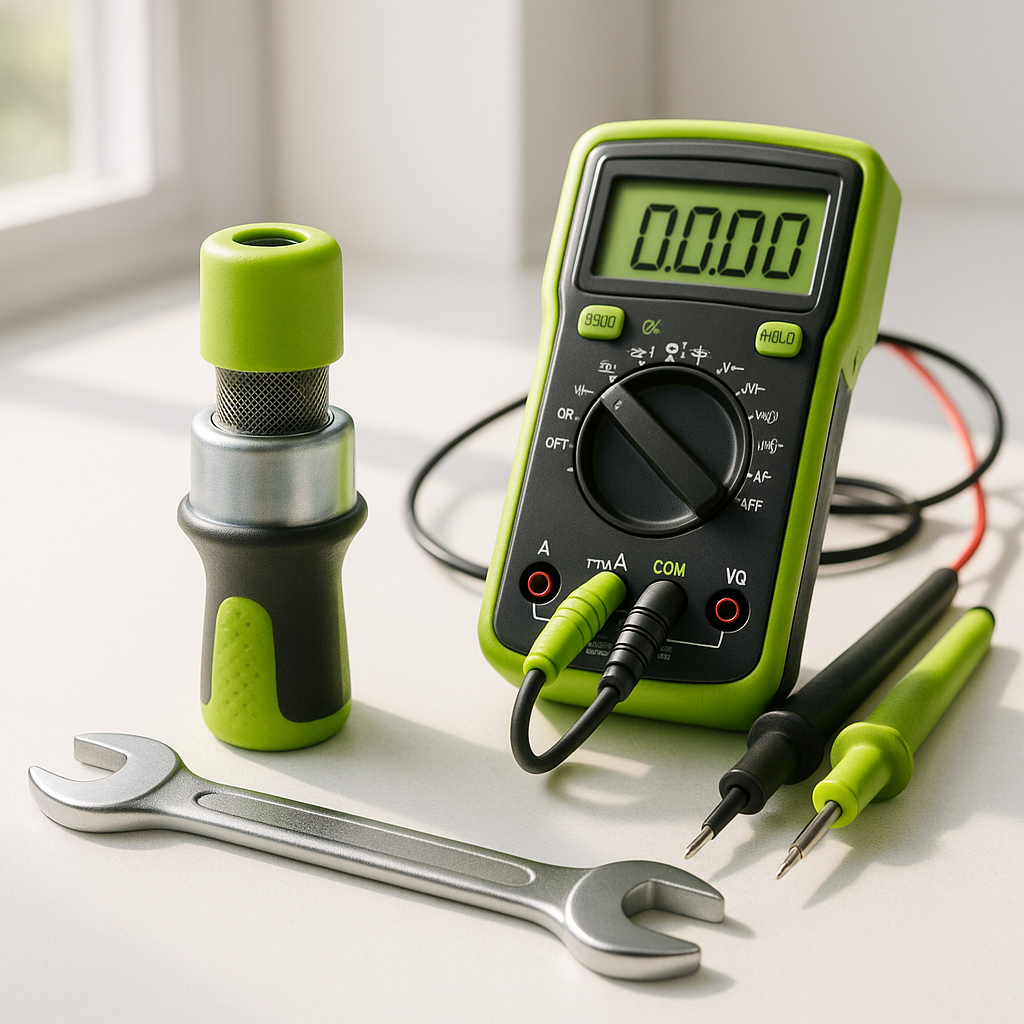
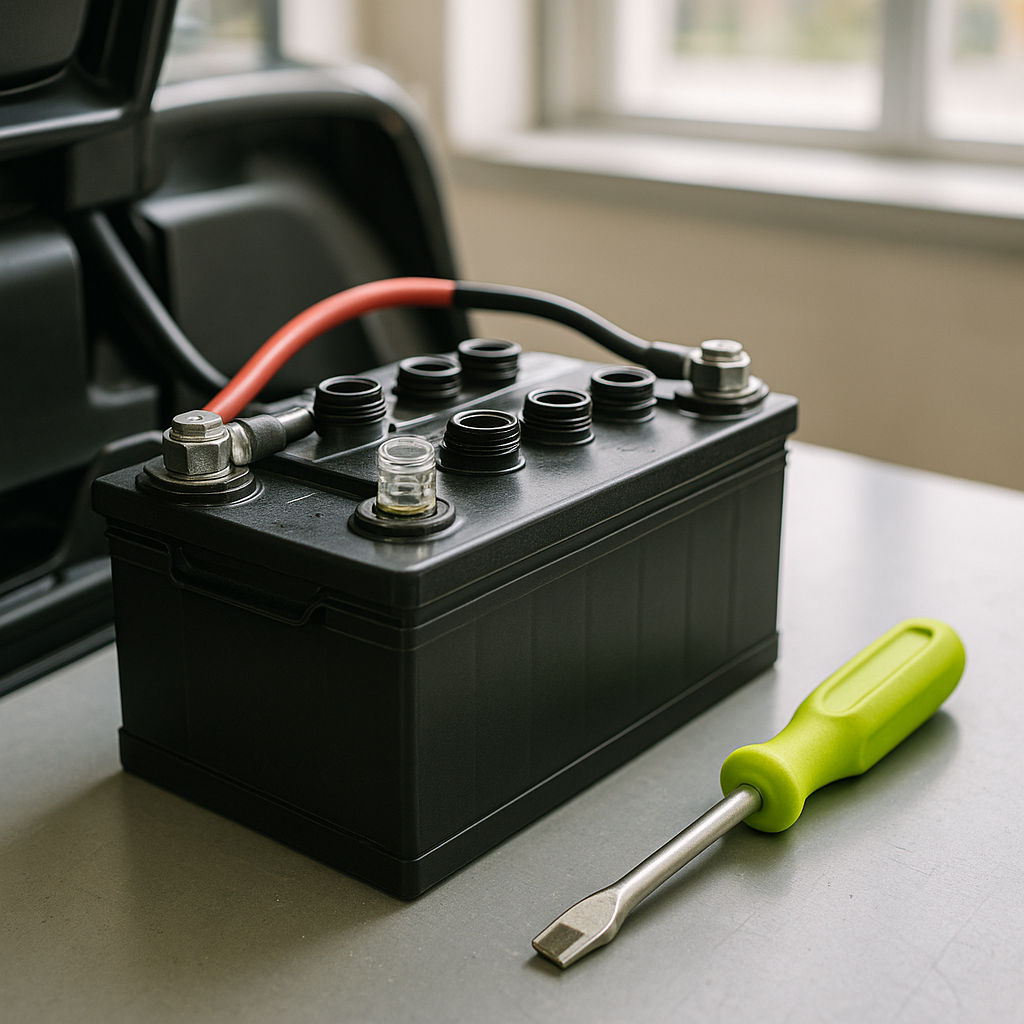
Hills demand significantly more current draw than flat ground, so a weakening battery pack that appears fine during casual use will show its true condition under load. Check the overall pack voltage with a digital voltmeter before and immediately after a hill run. A healthy fully-charged pack should hold close to its rated voltage even under load. If you see a large voltage sag the moment demand increases, one or more batteries are failing. Go further and check each individual battery — a single weak cell in the pack drags the entire system down and is easy to miss if you only test at the pack level. Also inspect water levels in flooded lead-acid batteries, and look for any terminal corrosion that adds resistance exactly when the cart needs clean current flow most.
Check Your Battery Cables and Connections
Loose or corroded connections cause resistance, and resistance under high current draw creates voltage drop. Under the relatively low demand of flat ground this may be invisible, but on a hill that extra resistance robs the motor of the power it needs. Inspect every cable connection in the circuit — battery terminals, solenoid terminals, controller terminals, and motor terminals. Look for heat discoloration, corrosion, loose bolts, or cables that have started to fray near the lugs. A connection that looks fine visually can still have hidden resistance; if you have an inductive ammeter or a clamp meter, checking for unexpected current loss between points can reveal a bad connection that a visual check misses.
Inspect the Solenoid
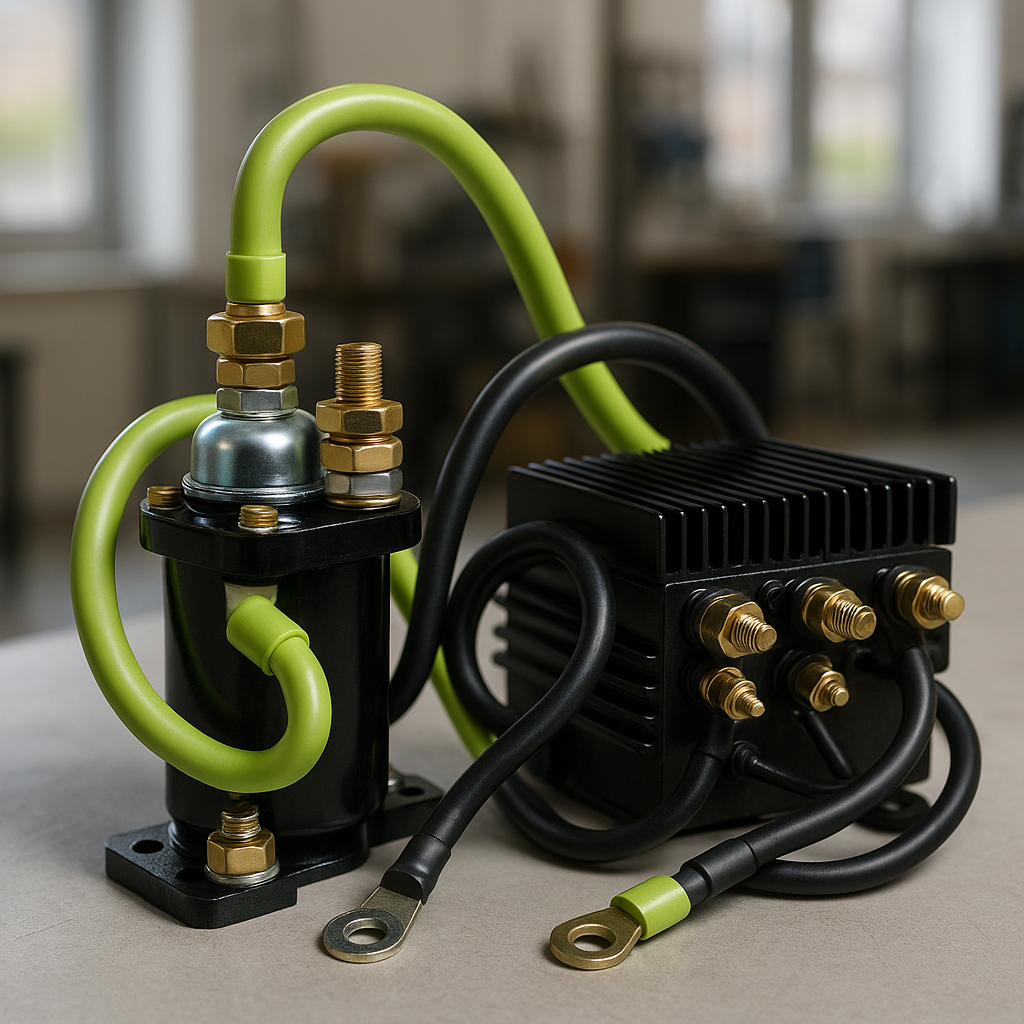
The solenoid is the high-current switch that connects the battery pack to the controller. A solenoid with worn or pitted contacts creates resistance under heavy load — exactly the condition a hill creates. If you hear the solenoid engage (the audible click) but the cart bogs badly on hills, the solenoid's internal contacts may be partially failed. A solenoid that's starting to fail will often allow normal flat-ground operation right up until load spikes. Testing voltage drop across the solenoid while the cart is under load is the most reliable check — more than a fraction of a volt drop across closed contacts points to a faulty solenoid that needs replacement.
Look at the Motor Controller
The motor controller is what actually regulates power delivery to the motor, and it's often the first component to get blamed for hill power loss — sometimes correctly, often not. Before replacing a controller, confirm your batteries and connections are genuinely healthy, because a controller can only work with what the pack delivers. That said, controllers do fail or degrade, and a controller with a heat-related fault may reduce power output (a protective behavior known as thermal limiting) when current demand spikes on a hill. If the cart loses power progressively during a long climb and recovers after a rest, thermal issues in the controller or motor are worth investigating. Many controllers also have fault codes that can be read with a handheld programmer or code reader — checking for stored fault codes before condemning a controller is always worth doing.
Don't Overlook the Motor Itself
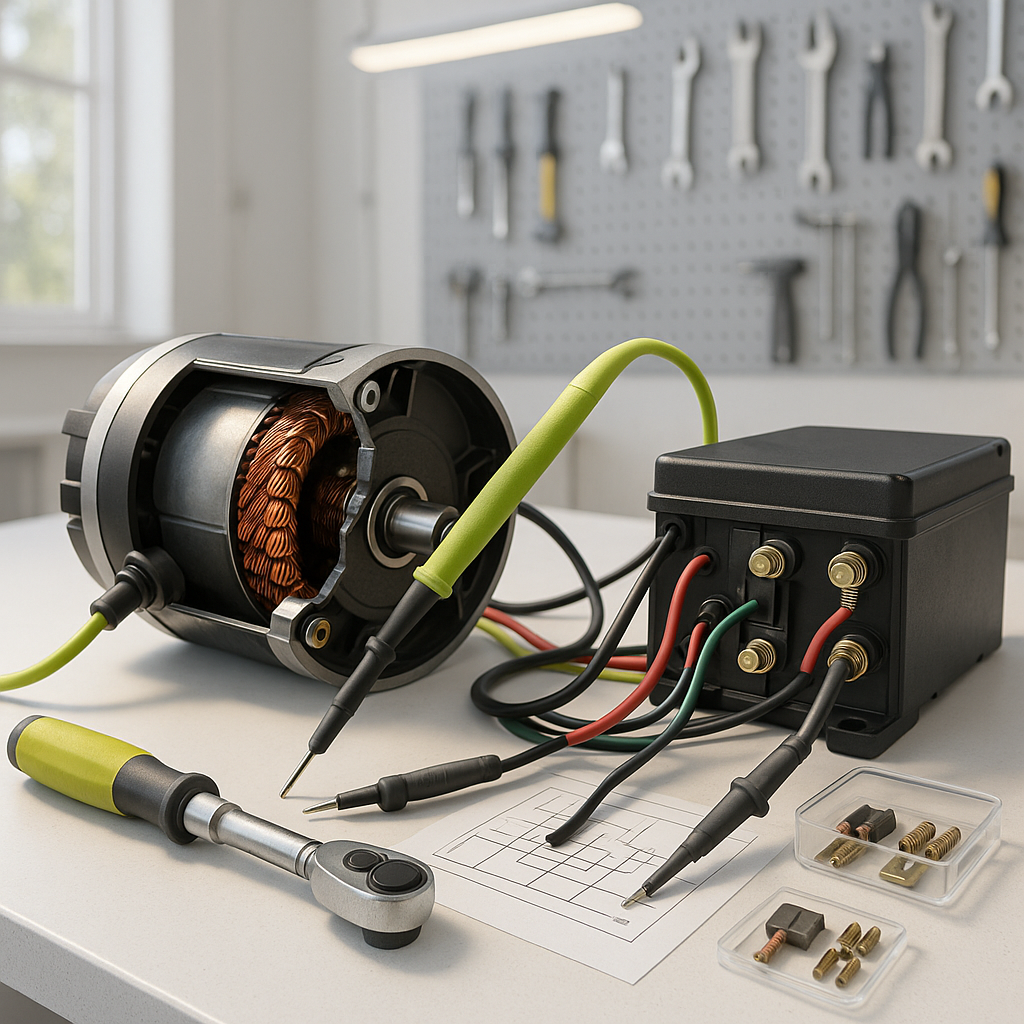
A worn motor is a common culprit that gets overlooked when chasing hill power loss. DC series-wound motors have carbon brushes that wear over time, and worn brushes create poor contact with the armature, reducing the motor's ability to produce torque under load. Remove the brush inspection covers and check brush length — severely worn brushes are a straightforward fix. Also check for any signs of burnt smell or heat damage around the motor, and make sure the motor vents aren't blocked by debris. A motor that's partially failing mechanically will often seem fine at low load and fall apart when the cart hits an incline.
Check for Mechanical Drag
Sometimes what looks like a power delivery problem is actually a mechanical one. Dragging brakes, a binding axle bearing, or misadjusted rear brakes that don't fully release can add enough resistance to make hill climbing noticeably harder. Jack up the rear of the cart safely and spin each rear wheel by hand — it should spin freely with minimal resistance. If a wheel feels stiff or grinds, you've found a mechanical load that's compounding whatever electrical limitations already exist.
Putting It Together
Uphill power loss is almost always the result of one weak link in the chain — and that chain runs from the battery pack through the cables, solenoid, controller, and into the motor. Work through each component systematically rather than guessing, because replacing an expensive controller when the real problem is a single bad battery or a loose cable connection is a frustrating and costly mistake. The hill is doing you a favor by making the problem visible — use it as a diagnostic tool and test each component under load, not just at rest.