A golf cart mirror that works fine sitting still but turns into a blurry, useless blur the moment you hit the gas is one of those problems that's easy to ignore — until you actually need to see what's behind you. Whether you're navigating a crowded campground, sharing a cart path with other vehicles, or driving on a street-legal setup, a mirror that won't hold a clear image while moving is a genuine safety issue. The good news: the causes are predictable, and most can be fixed without specialized tools.
Start With the Mount, Not the Mirror
The most common reason a golf cart mirror vibrates is a loose or poorly matched mounting point, not anything wrong with the mirror itself. Golf carts produce a surprising amount of vibration through the frame, steering column, and windshield frame — especially on gas-powered units or carts running on rougher terrain. If the mirror is clamped to a round tube, check whether the clamp diameter actually matches the tube. A clamp that's even slightly too large will never grip firmly enough to resist vibration, no matter how tight you crank it down. Try rocking the entire mirror assembly by hand with the cart off — any movement at the mount point is movement that will amplify at the mirror face when you're moving.
Check the Mirror Head and Pivot Joint
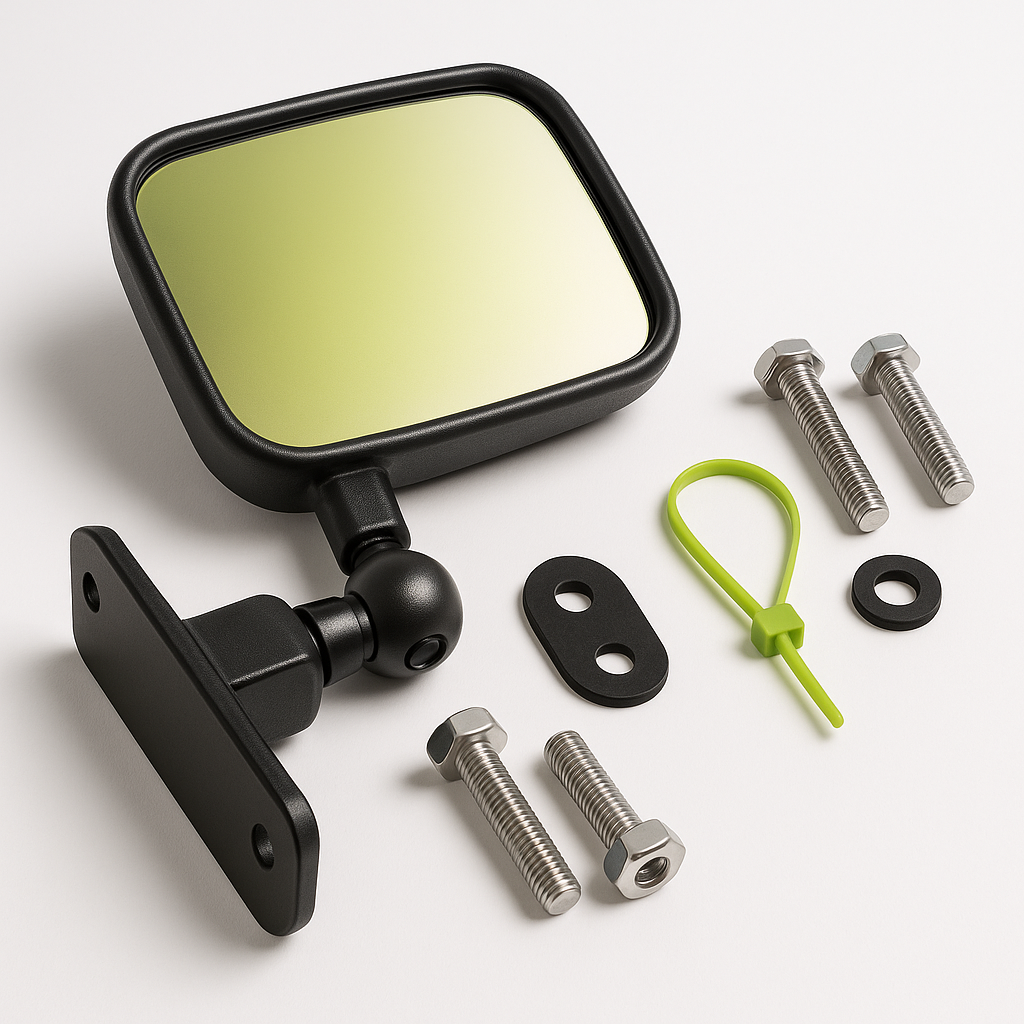
On most golf cart mirrors, the head (the reflective part) connects to the arm via a ball-and-socket joint or a friction pivot. These joints loosen over time from repeated adjustment, UV exposure, and vibration fatigue. If the mount is solid but the mirror head still shakes, the problem is usually this pivot. Tighten the adjustment nut or bolt at the pivot if there is one — but don't overtighten to the point where you can no longer adjust it at all. On some cheaper mirror designs, the pivot joint simply wears out and no amount of tightening will restore friction; in those cases, replacement is more practical than repair.
Consider Where the Mirror Is Mounted
Location matters enormously for vibration. Mirrors mounted directly to the windshield frame tend to transmit less vibration than those mounted to the overhead canopy frame or a freestanding post, because the windshield frame is typically more rigid. Canopy-mounted mirrors are convenient but the canopy itself flexes and bounces, turning every bump into mirror movement. If you've been fighting a canopy-mounted mirror, relocating to the windshield frame or the side of the dash structure can make a dramatic difference. Rearview mirrors mounted to the interior of the windshield (using adhesive or a windshield-clip bracket) tend to be the most stable option for on-the-go visibility, provided the windshield itself doesn't flex excessively.
Look at the Mirror Arm Length
A long mirror arm acts like a lever — the longer it is, the more it amplifies small vibrations at the mount point into large movements at the mirror face. If your current mirror uses an extended arm to reach around a wide windshield or canopy post, that extra length is working against you. Shorter, more direct mounting paths are almost always more stable. If you need a side mirror to clear an obstacle, look for designs with a brace or a secondary attachment point rather than a single long arm cantilevered off one clamp.
Anti-Vibration Measures Worth Trying
Before replacing anything, there are a few practical fixes that often resolve mirror vibration. Foam or rubber shim tape wrapped around the mounting tube before clamping increases grip significantly and dampens vibration transmission. Many mirror clamps come with a rubber insert for exactly this reason — if yours is missing or compressed flat, replacing it costs almost nothing. For mirrors that use a set screw to lock position, make sure the set screw is bearing on a flat or slightly soft surface rather than a polished round tube; on a smooth tube, set screws tend to back out under vibration. If you have access to a small piece of rubber or neoprene, placing it between the set screw and the tube gives it something to bite into.
When the Problem Is the Cart, Not the Mirror
Some carts are simply rougher than others. Older gas carts with worn engine mounts transmit significantly more vibration through the frame than a well-maintained unit. Electric carts are generally smoother, but rough terrain, low tire pressure, or worn suspension components can shake any mirror loose. If you've addressed the mirror mounting thoroughly and still can't get a stable image, it's worth checking tire pressure and inspecting whether the front end has any loose components contributing to overall vibration. A mirror can only be as steady as the surface it's bolted to.
The bottom line: most golf cart mirror vibration problems come down to a mismatch between the mount and the tube it's clamping to, a worn pivot joint, or a mounting location that amplifies rather than dampens frame vibration. Work through each of these systematically and you'll almost always find a fixable root cause — no guesswork required.