A mirror that won't hold its angle is more than an annoyance — it's a real safety issue. If you have to reach up and readjust your rearview or side mirror every few minutes because it drifts down or rotates out of position, you're not actually getting any visibility benefit from it. The good news is that this problem almost always comes down to one of a few fixable causes, and you don't need to be a mechanic to work through them.
Start With the Mounting Hardware
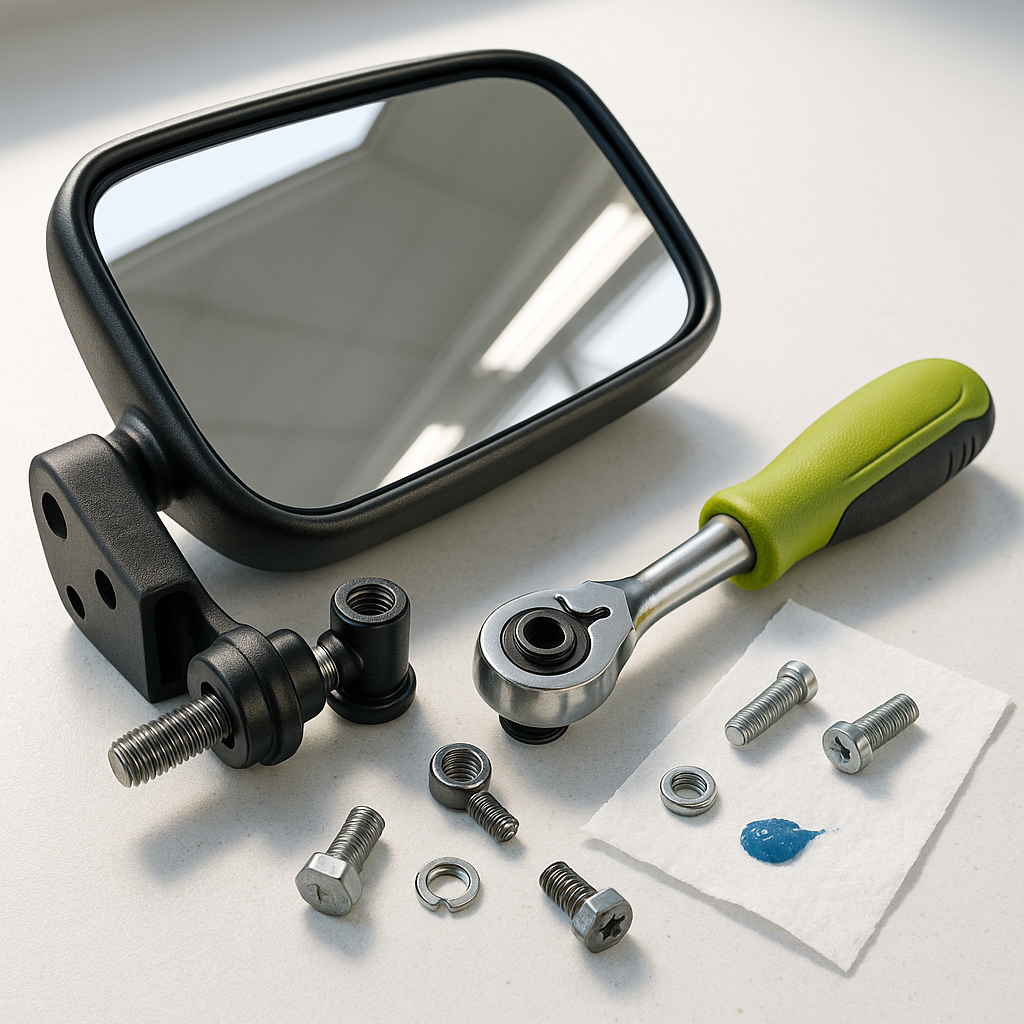
The most common reason a golf cart mirror won't hold position is loose or worn hardware at the pivot point. Most golf cart mirrors use a friction-based pivot — tightening a bolt or nut increases the clamping force on the joint, which is what holds the mirror head at whatever angle you set. Over time, that hardware can back itself off from vibration alone. Check the bolt or nut at the pivot first. On many designs, simply snugging it down a quarter to half turn is enough to restore holding power. Don't overtighten — you want it to stay put but still be adjustable by hand. If you crank it all the way down and the mirror still droops, the friction surface itself may be worn out.
Check the Clamp or Mounting Base
Even if the mirror head holds its angle, a loose mounting base can let the entire mirror assembly rotate or tilt on the bar, strut, or windshield frame it's attached to. Test this separately: grab the mirror at the base where it meets the cart and try to rotate or wiggle it. Any movement here means the base clamp isn't gripping the mounting surface tightly enough. This can happen because the clamp hardware has loosened, because the clamp isn't sized correctly for your mounting bar's diameter, or because the mounting surface itself (like a rounded windshield frame) isn't giving the clamp enough to bite into. Tighten the base hardware and retest. If the clamp still slips, check whether a rubber insert or grip pad is present — these wear down and lose friction over time, and replacing them is often all it takes.
Look for Cracked or Worn Pivot Components
If tightening doesn't solve it, inspect the pivot joint itself. On inexpensive mirrors especially, the plastic or nylon friction washers inside the pivot can crack, compress, or wear smooth over time — especially after extended sun and UV exposure. When these fail, the joint loses its ability to hold a set position no matter how tightly you clamp it down. This is the kind of wear you can sometimes see by disassembling the joint and looking at the contact surfaces. Worn washers or a cracked pivot housing usually means it's time to replace the mirror or the pivot hardware rather than trying to shim or patch it.
Consider Vibration as a Compounding Factor
Some mirror positioning problems aren't really about the hardware being loose — they're about the mounting location transferring too much vibration from the cart. Mirrors mounted directly to the steering column or to thin metal struts pick up more vibration than those mounted to a solid windshield frame or roof support. If your mirror holds position when the cart is stopped but drifts during driving, vibration is almost certainly involved. In this case, even properly tightened hardware may not be enough on its own. Adding a rubber vibration-dampening washer or grommet between the mirror base and the mounting point can help significantly. Relocating the mirror to a stiffer mounting surface is the more permanent fix.
Check the Mirror Arm for Damage
On mirrors with adjustable or telescoping arms, the arm itself can develop looseness at its joints. Inspect the full length of the arm, including any swivel or extension points, and tighten or replace any loose fasteners. A bent arm can also cause a mirror to cant at an odd angle and appear to "drift" when it's actually just sitting at the wrong baseline angle. Straightening a bent arm carefully, or replacing it, addresses that issue directly.
When to Just Replace It
If you've tightened all the hardware, replaced any worn friction surfaces, and addressed vibration at the mount point and the mirror still won't hold its angle, the mirror has likely reached the end of its useful life. This is especially common with low-cost mirrors that have been on a cart for several years of UV exposure and vibration. Replacing it with a unit that has a more robust clamping mechanism — or one designed specifically for your cart's mounting setup — will solve the problem more reliably than continued attempts to patch worn hardware.