A mirror that won't stay put isn't just annoying — on a cart you use on roads, paths, or busy courses, it's a real safety issue. The problem usually isn't the mirror itself. It's almost always the mounting point, the hardware, or a mismatch between the mirror's clamp design and whatever it's attached to. This guide walks you through the most common reasons mirrors fail to stay mounted and what to check before you replace anything.
Start With the Mounting Surface
Most golf cart mirrors clamp onto a windshield frame, roof strut, or roll bar. The first thing to check is whether that surface is round, oval, or flat — and whether it's the right diameter for your mirror's clamp. A clamp designed for one tube diameter will never grip properly on a significantly different size, no matter how tightly you torque the bolt. Grab the mirror with both hands and try to rotate it. If it spins with light pressure, the clamp isn't making solid contact with the tube. If it rocks side to side, the clamp may be too large for the mounting surface or the clamp itself is worn or cracked.
Check the Clamp Hardware
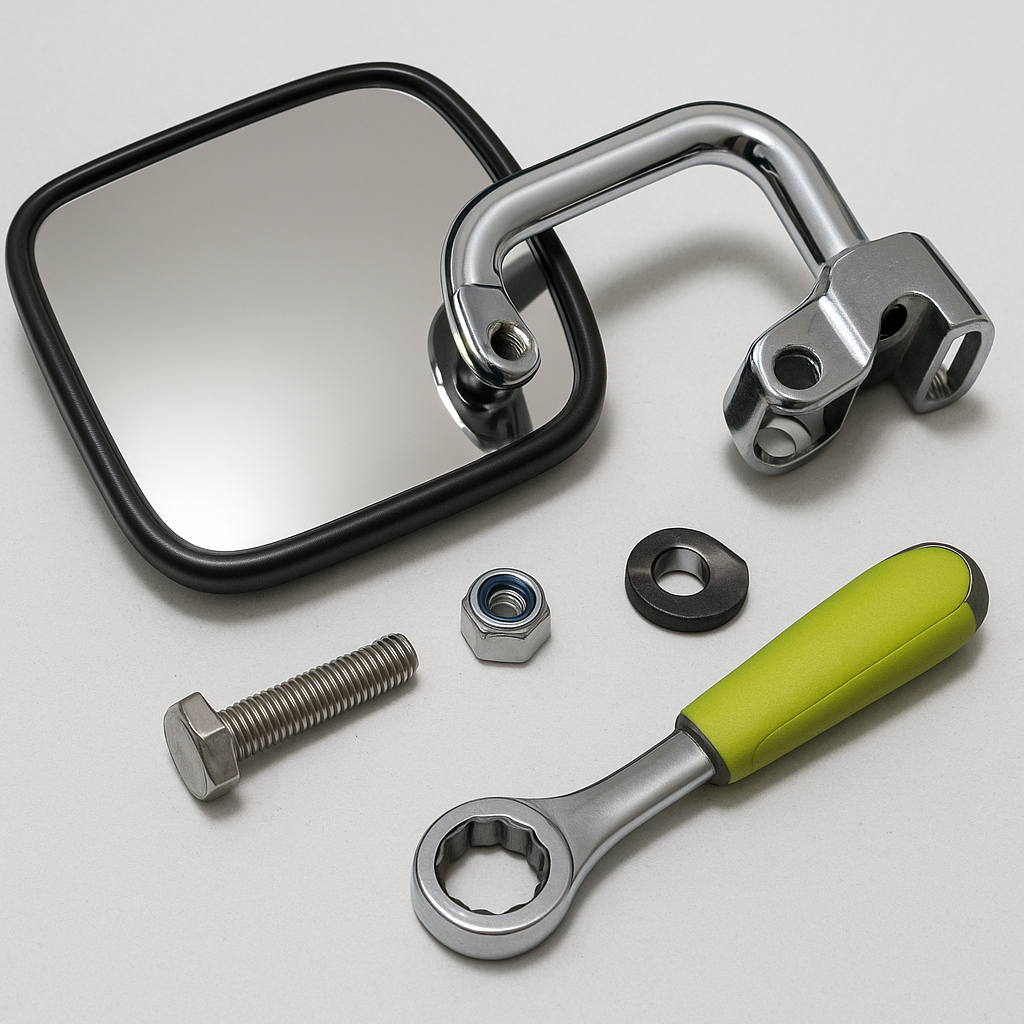
The clamp bolt or knob is the most common failure point. On mirrors that use a simple hex bolt and nut, vibration over time will work the fastener loose, especially on carts that see rough terrain. Check whether the bolt threads are stripped — if the nut tightens but then spins freely without increasing clamping force, the threads are gone and the hardware needs replacing. A lock washer or threadlocker (like a small amount of medium-strength thread locker fluid) applied to the bolt threads can prevent future loosening without making the mirror impossible to reposition. On mirrors with a plastic knob tightener, the knob itself can crack or strip internally; if it won't generate real clamping force, the knob needs to be replaced or swapped for a proper bolt setup.
Inspect the Clamp Body for Damage
Plastic clamp bodies crack, and aluminum ones can deform if they've been overtightened in the past. Look closely at the clamp housing — hairline cracks near the bolt hole are a sign the clamp is failing structurally and won't hold even if you replace the bolt. A cracked clamp needs to be replaced entirely. If you can see daylight through the clamp when it's tightened down on the tube, the clamp is either the wrong size or already deformed beyond usefulness.
Check the Mirror Arm and Pivot Joint
Some mirrors stay mounted to the cart just fine but droop or rotate at the arm joint — the pivot point between the clamp and the mirror head itself. This is separate from the mounting problem and is usually caused by a loose pivot bolt or a worn friction washer inside the joint. Tighten the pivot bolt if one is accessible. If the joint still won't hold position after tightening, the friction surfaces inside are worn smooth, and the arm assembly needs to be replaced. Don't overtighten a pivot joint trying to compensate — you can snap the arm or crack the mirror housing.
Look at Where You're Mounting It
Some mounting locations just don't work well. A windshield frame that flexes noticeably when you push on it will never hold a mirror solidly — the clamp will loosen as the frame flexes and springs back repeatedly. Soft plastic channels and thin aluminum extrusions are common culprits. If the mounting surface itself is the problem, consider moving the mirror to a more rigid location, like a steel roof strut or a dedicated mirror bracket that mounts to a sturdier point on the cart. Some carts also have factory-drilled mounting holes that are the cleanest option if you're using a mirror designed to bolt directly rather than clamp.
When to Just Replace the Mirror Assembly
If the clamp body is cracked, the threads are stripped, the pivot joint is loose and won't tighten, or the mirror has been remounted several times and nothing holds — replace it. Trying to salvage a failed mirror mount with zip ties, tape, or improvised shims creates a false sense of security. A mirror that falls off at speed, or that rotates out of position every time you hit a bump, gives you no useful visibility and is a hazard. Universal-fit mirrors are widely available, and selecting one with a clamp diameter that actually matches your mounting tube is the single most important factor in getting a secure, lasting install.