A golf cart mirror that won't stay put isn't just annoying — it's a real safety issue. If your mirror spins freely in the wind, rattles loose over bumps, or has actually fallen off while driving, the fix is usually straightforward once you know what's causing it. The problem almost always comes down to one of a few specific failure points: the mounting hardware, the mirror joint, or the surface it's attached to. Here's how to work through them.
Start With the Mount Itself
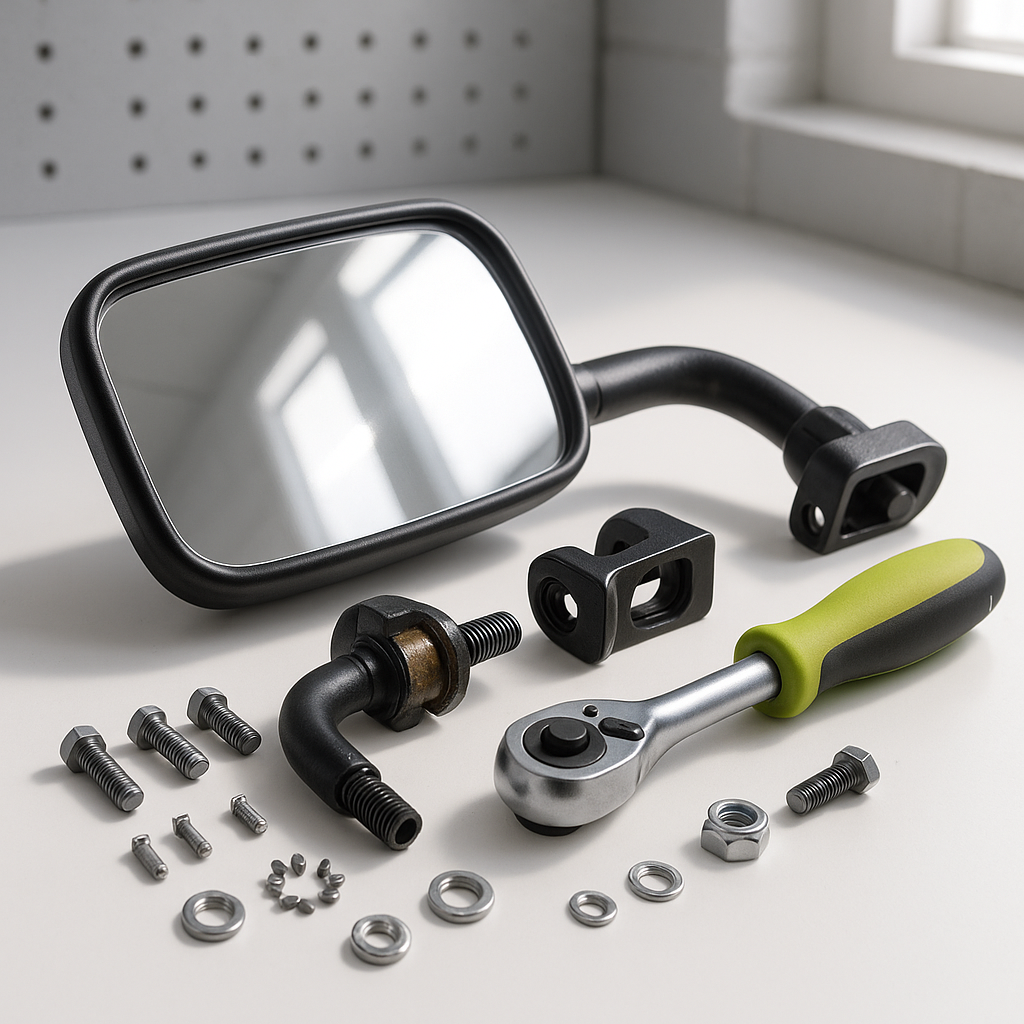
The first thing to check is how the mirror attaches to the cart. Most golf cart mirrors clamp onto the windshield frame, roof support bar, or a dedicated mounting post. If that clamp has worked loose, no amount of fiddling with the mirror head will help. Grab the entire mirror assembly and try to wiggle it — if the base shifts or rotates independently of the bar it's clamped to, that's your problem. The fix is usually as simple as tightening the clamping bolt or nut, but if the clamp has been over-tightened and stripped in the past, or if the threads are corroded, you may need to replace the hardware entirely rather than just snugging it down again.
Check the Clamping Surface
Even a properly tightened clamp can slip if it's sitting on a round, smooth bar with nothing to grip. Many golf cart support bars are powder-coated or painted, which reduces friction significantly. If your mirror consistently spins or slides along the bar despite tight hardware, try cleaning the bar and clamp contact area with isopropyl alcohol to remove any grease or wax buildup. In stubborn cases, a thin wrap of self-adhesive rubber or grip tape around the bar under the clamp adds enough friction to keep things locked in place without damaging the finish.
Inspect the Mirror Pivot Joint
If the mount itself is solid but the mirror head still won't hold its angle, the problem is in the pivot joint — the mechanism that lets you adjust the mirror face up, down, left, and right. These joints rely on friction, usually from a nylon washer, rubber gasket, or a compression fit between plastic parts. Over time that friction wears down, especially if the mirror has been adjusted repeatedly or if UV exposure has degraded the plastic. Try tightening any adjustment screw or bolt at the pivot point. On some mirrors this is a small Phillips or hex screw recessed into the joint. If the screw is already fully tightened and the joint still flops around, the friction surface is worn out and the joint assembly or the entire mirror head likely needs to be replaced.
Look for Cracked or Damaged Mounting Points
Plastic mirror housings and brackets can develop hairline cracks that aren't obvious until you flex the part in your hands. If your mirror wobbles specifically at one point in the assembly — not at the clamp, not at the pivot — run your fingers along the bracket and housing looking for cracks, stress fractures, or broken tabs. A cracked plastic arm may appear to tighten but will never hold securely because the structure itself has failed. This is one of those situations where repair attempts rarely last; replacement is the right call.
Consider Vibration From the Cart Itself
Sometimes the mirror hardware is fine but the vibration coming through the cart's frame is severe enough to shake any loosely-sprung mirror out of position over time. This is especially common on carts running larger tires, lifted suspensions, or on rough terrain. If your mirror holds position when the cart is parked but gradually drifts out of alignment while driving, look for mirror designs that use tighter-tolerance pivot joints or locking adjustment mechanisms rather than simple friction fits. Mirrors designed for off-road or utility use typically handle vibration better than standard golf course mirrors.
Don't Overlook the Windshield Frame
If your mirror mounts to the windshield frame and the mirror won't stay put, the frame itself might be the loose component. Golf cart windshield frames can flex or come partially unsecured over time, especially on older carts. Before assuming the mirror hardware is at fault, check whether the windshield frame itself is firmly attached to the cart. A frame that rocks or shifts will transfer that movement directly to any mirror clamped onto it, making even a perfectly good mirror look like it's failing.
Most golf cart mirror problems are fixable with basic tools and a few minutes of honest inspection. Work through the assembly from the mounting point outward — base, clamp, bracket, pivot, mirror head — and you'll find the weak link. When a component is genuinely worn or broken, replace it rather than forcing it to work; a mirror that looks installed but fails on the road is worse than no mirror at all.