If you climb into your golf cart and immediately notice a musty, sour, or moldy smell, you're not alone. Golf carts spend their lives outdoors, often in humid climates or stored in poorly ventilated sheds, and the interior — seats, floor mats, and carpet — soaks up moisture like a sponge. Ignoring it doesn't make it go away. Mold and mildew spread, materials break down faster, and the smell gets worse over time. The good news is that with a little systematic diagnosis, you can find the source and deal with it properly.
Start With the Floor Mats and Carpet
The floor is almost always the first place moisture accumulates and the last place owners think to check. Pull your floor mats completely out and flip them over. If the underside is damp, discolored, or has visible mold growth, you've found at least part of the problem. Check the floor surface underneath as well — on carts with a rubber or composite floor pan, moisture can sit trapped between the mat and the floor for weeks. On carts with carpet installed, press firmly in several spots. Any sponginess or squishing sensation means water has soaked into the backing and possibly into the substrate beneath it. Wet carpet backing is nearly impossible to fully dry while it's installed, and it will keep producing that musty odor until it's removed and dried — or replaced.
Inspect the Seats Carefully
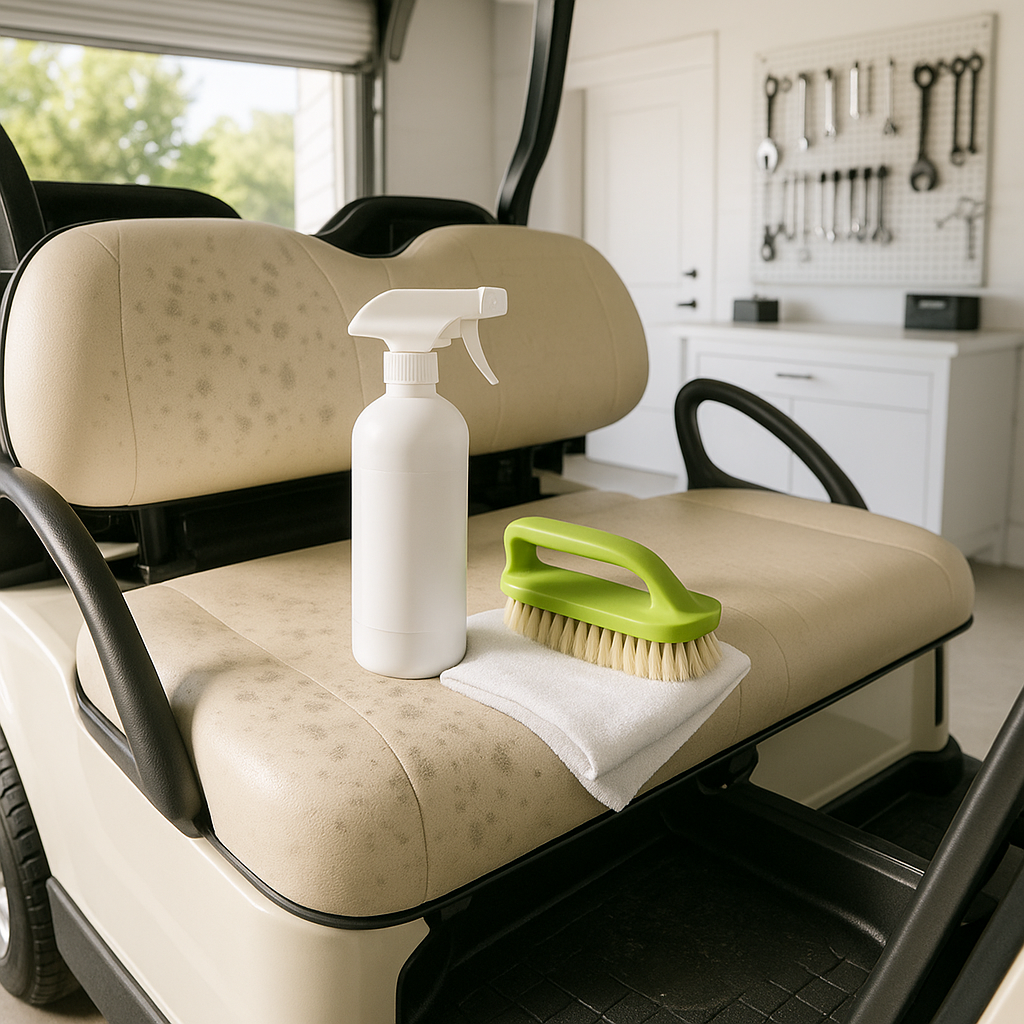
Golf cart seats take a beating from sun, rain, and temperature swings. Vinyl seat covers develop small cracks over time, and once water gets through those cracks into the foam cushioning underneath, the foam holds onto that moisture for a very long time. Press on your seat cushions firmly in several places and pay attention to any spongy, waterlogged feel. Check the seams and underside of the seat bottom especially — these are common entry points. If the foam underneath has developed mold, the odor will be noticeable even if the vinyl surface looks okay. In severe cases you can sometimes smell the mold through the seat material even when the surface is dry to the touch.
Check for Active Leak Sources
Before you clean anything, figure out where the water is coming from — otherwise the problem will return. The most common sources are a roof or windshield that isn't sealing properly, letting rain funnel directly into the seating area or pooling at the front floor. Check the junction where your windshield meets the roof or frame after a rain and look for drip marks or staining that indicates a regular path water is taking. Also consider the cart's storage situation: carts stored without a cover in humid environments will accumulate condensation inside over many weeks, especially when there's temperature swings between night and day. Even a cart kept under a carport can get surprising moisture intrusion depending on the airflow and prevailing wind direction.
Smell It Strategically — Zone In on the Source
If you can't immediately see the problem, use your nose methodically. Close the cart up on a warm day for an hour, then open it and take a slow breath near the floor, then near the seat cushions, then near any storage pockets or areas beneath the dash. The smell will be noticeably stronger nearest the actual source of mold growth. Pay attention to any enclosed or low-airflow areas — glove boxes, under-seat storage, and any compartments that rarely get opened are prime spots for mold to develop quietly. A flashlight check of any enclosed storage areas can reveal dark spotting or fuzzy growth that isn't obvious at a casual glance.
Cleaning vs. Replacing — Know When to Make the Call
Surface mold on vinyl or rubber floor mats can often be cleaned effectively with a mildew-specific cleaner and a stiff brush, followed by thorough drying in direct sunlight. But if the foam inside a seat cushion has gone moldy, or if carpet has been wet long enough for mold to reach the backing or substrate, cleaning the surface won't solve the problem. The mold is still present in the material, and the smell will return within weeks. In those cases, replacement is the honest answer — new floor mats, new seat foam, or new upholstery. It's not the fun diagnosis, but it's the accurate one, and quality replacement materials installed correctly will outlast a repeatedly patched moldy original.
Preventing It From Coming Back
Once you've addressed the source and replaced or cleaned the affected materials, prevention is straightforward. Keep a quality cover on the cart when it's not in use, especially in rainy seasons or if stored outdoors. Make sure any roof or windshield seals are in good condition and reseal them if you spot gaps. After any significant rain exposure, lift floor mats and allow the floor area to air out before closing the cart back up. Some owners keep a small desiccant pack in enclosed storage areas to help control ambient humidity. These small habits make a real difference in how long your interior materials stay clean and fresh.