A musty or moldy smell inside a golf cart is one of those problems people put up with for way too long. It seems minor, but it almost always means moisture has gotten trapped in your floor mat, seat foam, or carpet and hasn't dried out. Left alone, mold and mildew will keep growing, the smell gets worse, and the materials underneath start to break down. The good news is this is almost always fixable once you track down where the moisture is hiding.
Start by Pulling Out the Floor Mat
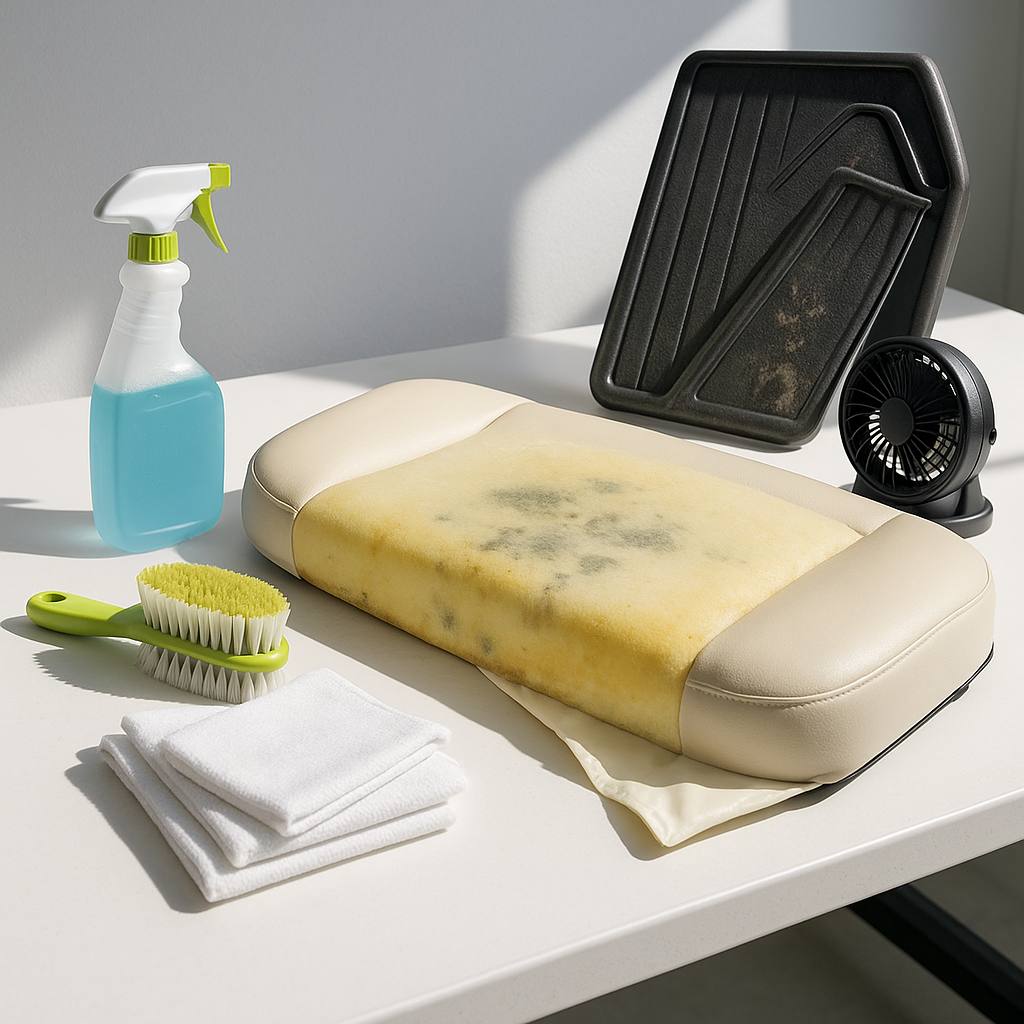
The floor mat is the number one culprit. Water gets tracked in from wet shoes, rain blows in from the open sides, and the mat sits on top of a flat pan that doesn't drain well. Lift the mat completely out and flip it over. If the underside smells worse than the top, moisture has been sitting between the mat and the floor. Check the floor pan itself — if there's any rust staining, discoloration, or visible dampness, it's been wet repeatedly. Let both the mat and the pan dry out completely in the sun before doing anything else. Skipping this step and just putting the mat back means the smell will return within days.
Check the Seat Foam Next
Seat cushions absorb water through cracked or worn vinyl covers. Once foam is saturated, it takes a surprisingly long time to dry on its own — and if it never fully dries, mold sets in deep inside where you can't see it. Press firmly on different areas of the seat and feel for any sponginess or unusual softness that could indicate waterlogged foam. Smell the seam areas and the underside of the seat base where the cover tucks under. If the cover has cracks or splits anywhere, water has almost certainly worked its way in through those spots during rain or washing.
Look at Any Carpet or Fabric Trim Pieces
Some carts have carpet sections on the kick panels, rear areas, or fold-down seats. These are even harder to dry out than floor mats because they're usually glued or fastened down and don't get airflow underneath. If your cart has any fabric interior pieces, press and smell each one. Even a small damp patch left for a few weeks in a closed garage or storage area is enough to develop a full mildew smell that spreads to the whole interior.
Treat the Affected Materials Before Reinstalling
Once you've identified where the moisture is, don't just dry it and put it back. Mold spores remain on the surface even after drying. For vinyl seats and rubber floor mats, a diluted white vinegar solution or a purpose-made mold and mildew cleaner works well — scrub all surfaces including the underside, then rinse and dry fully in the sun. For foam that's heavily saturated or has visible mold growth, replacement is the more practical answer. Foam that's been wet long enough to smell is usually compromised structurally as well, and no amount of surface cleaning gets into the interior of the foam.
Address Why the Moisture Got In
Fixing the smell is only half the job. If you don't address what let the water in, the problem repeats. The most common entry points are cracked seat covers that let rain soak directly into the foam, a floor pan with no drainage path so water pools after washing the cart, and storage situations where the cart sits closed up while still damp. Inspect your seat cover carefully — even small cracks let in enough water over time. If you regularly wash the cart with a hose, make sure the floor mat is pulled and the pan dries before the mat goes back. When storing the cart, give everything time to air out before closing it in a garage or under a tight cover.
When to Replace Instead of Repair
If the foam inside a seat has gone gray or black with mold, or the smell is baked in after repeated attempts to clean it, replacement is the right call. The same applies to carpet or fabric panels that have been wet so many times the backing has started to separate or the fibers have gone stiff. Trying to salvage materials that far gone rarely works and you'll spend more time on repeated cleaning attempts than a replacement would cost. New floor mats and seat covers are not expensive, and starting fresh with dry, clean materials is almost always more effective than rehabilitating heavily contaminated ones.