If your golf cart's accelerator pedal doesn't feel right — whether it's slow to respond, sticks partway down, returns sluggishly, or does nothing at all when you press it — you're dealing with a problem that sits at the intersection of mechanical and electrical systems. That makes it easy to chase the wrong cause. This guide walks through the most common culprits in a logical order so you can figure out what's actually wrong before buying anything.
Start With the Mechanical Side First
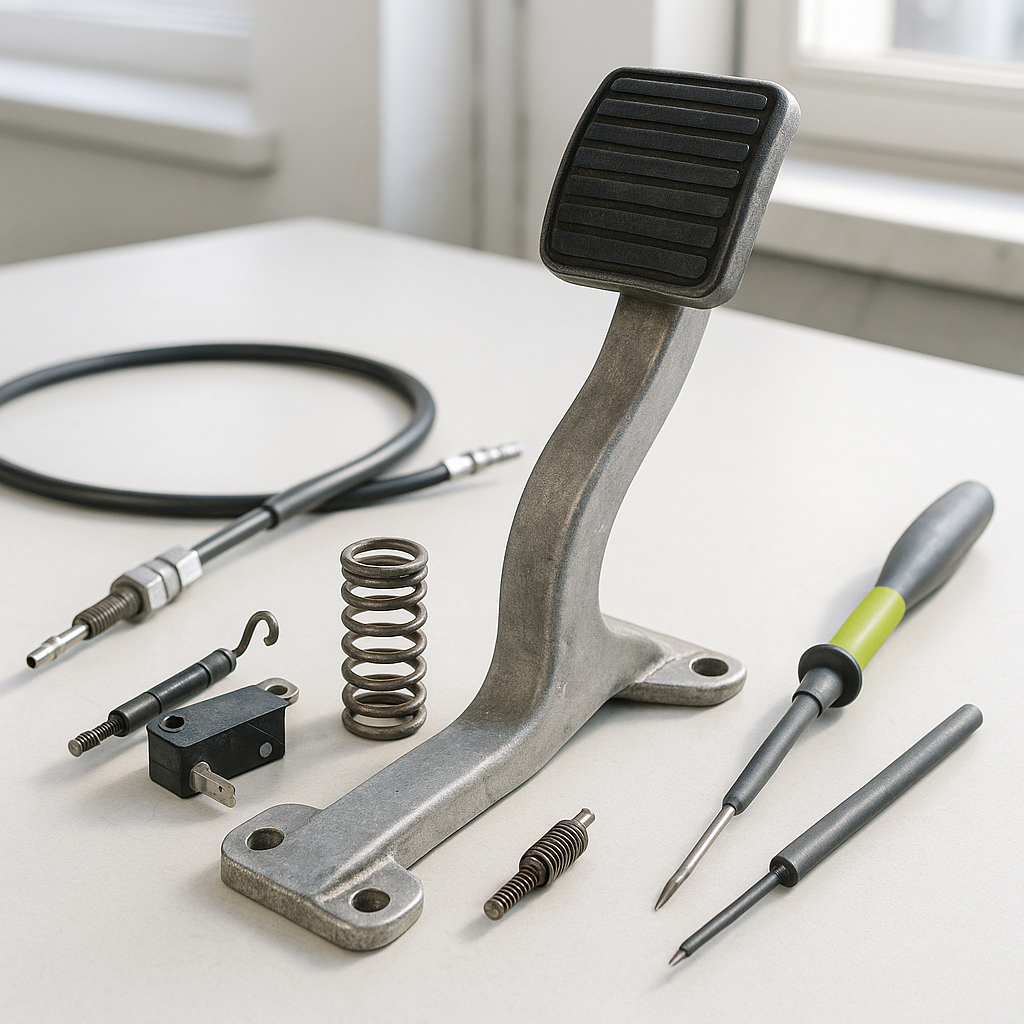
Before you suspect electronics, check what you can see and feel. Get under the cart or look at the pedal assembly and trace the linkage from the pedal pad to wherever it connects — whether that's a throttle cable, a micro switch, or an inductive sensor depending on your cart's setup. Look for obvious problems: a bent or kinked cable, a return spring that's stretched out or snapped, a pivot point that's corroded or dry, or debris that's physically jamming the pedal travel. On older carts especially, floor mat material — particularly aftermarket mats or worn OEM carpet — can bunch up under the pedal and limit its range of motion. Pull back any floor covering around the pedal box and check that nothing is interfering with full up-and-down movement.
Check the Throttle Cable If Your Cart Has One
Many gas golf carts and some older electric models use a cable to connect the pedal to the throttle or governor. A cable that's fraying, improperly routed, or has too much slack will give you a mushy, delayed feel at the pedal even if everything electrical is fine. With the cart off and key out, manually press the pedal and watch the far end of the cable move at the engine or carburetor. The movement should be smooth, proportional, and without hesitation. If the cable feels gritty, binds partway through, or has visible kinking near the housing ends, that's your problem. Cables are wear items and relatively inexpensive to replace.
Test the Micro Switch or Throttle Sensor
On electric golf carts, the pedal typically activates either a micro switch (which signals the controller to engage) or a potentiometer-style throttle position sensor that tells the controller how hard you're pressing. A failed micro switch is one of the most common reasons an electric cart simply doesn't move when you press the pedal — you hear the solenoid click, but nothing happens. You can test a micro switch with a basic multimeter set to continuity mode: with the cart off and the switch disconnected, press the pedal and check whether the switch actually opens and closes as designed. No continuity change when actuated means the switch is bad. Throttle position sensors can also fail or drift out of range, which often produces erratic speed response — surging, hesitation, or a cart that takes a long time to build speed even with the pedal floored.
Don't Overlook the Pedal Return Spring
A return spring that's lost tension is a real safety concern, not just a comfort issue. If your pedal is slow to come back up after you release it, or stays partially depressed, the spring is suspect. On some carts the spring is integral to the pedal box assembly; on others it's a separate component you can inspect and replace independently. Test it by pressing the pedal slowly and releasing — it should snap back decisively with no lag. A sluggish return can also fool you into thinking the throttle sensor is sticky when the problem is purely mechanical. Always fix a weak return spring before moving further into electrical diagnosis.
Check for Corrosion and Loose Wiring at the Pedal Assembly
The pedal area is low to the ground and catches a lot of moisture, especially on carts used in wet conditions or washed frequently. Connectors at the micro switch or throttle sensor corrode from the outside in, and can look fine while making poor contact inside the pin sockets. Unplug each connector at the pedal assembly, inspect the terminals for green corrosion or pushed-back pins, and reseat everything firmly. A shot of electrical contact cleaner and fresh dielectric grease on the connectors goes a long way. Also check that the wires running to the pedal aren't chafed against the frame — a partially shorted wire can cause intermittent or erratic pedal response that's genuinely hard to trace otherwise.
If the Pedal Feels Mechanically Fine but the Cart Still Won't Respond
Once you've confirmed the pedal moves freely, returns properly, and the switch or sensor appears to actuate correctly, the problem shifts upstream — to the controller, solenoid, or battery system. A controller that isn't receiving a clean signal from the throttle sensor may not send power to the motor even with everything else working. At that point you'll want to consult your cart's wiring diagram and, if possible, a controller diagnostic tool or a shop with the right equipment. But in most cases, working through the pedal assembly mechanically and electrically first will turn up the issue before you get that far.