A pedal that doesn't spring back — or feels heavy and sticky throughout its travel — isn't just annoying. On a golf cart, it's a real safety issue. An accelerator that hangs down keeps power applied longer than you want. A brake pedal that doesn't return fully can drag your brakes and wear them prematurely. Either way, this is worth diagnosing before you keep driving. The good news is that the causes are usually mechanical, visible, and fixable without specialized equipment.
Start With a Visual Inspection
Get off the cart and look at both pedals with the key out and the cart on a flat surface. Push each pedal down slowly by hand and watch what happens when you release it. A healthy pedal returns crisply and seats firmly in its rest position. If yours sticks midway, returns sluggishly, or only comes back partway, note exactly where in the travel the resistance shows up — that narrows down where to look. Also check whether the pedal physically rocks side to side or has any visible cracks, bends, or deformation in the pedal arm or bracket.
Check the Return Spring First
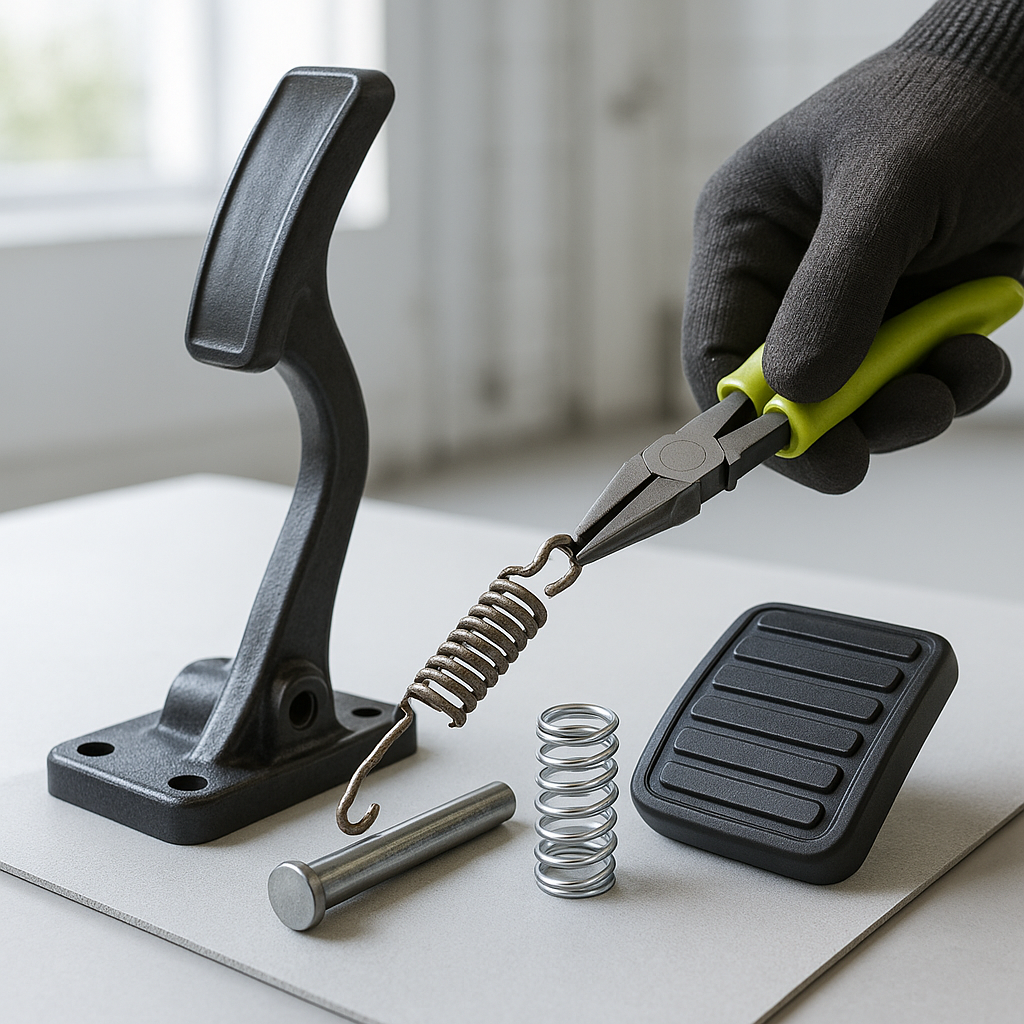
Most golf cart accelerator and brake assemblies rely on a return spring to pull the pedal back to its resting position. These springs are under repeated stress every time the pedal is used, and they do weaken or break over time — especially on older carts or carts that see heavy daily use. Locate the spring (it's typically visible near the pedal pivot point or along the pedal arm) and look for stretching, corrosion, or a broken coil. A spring that's lost tension won't pull the pedal back reliably even if nothing else is wrong. This is one of the most common causes of a lazy-returning pedal and one of the cheapest fixes.
Look for Debris, Binding, or Floor Mat Interference
It sounds basic, but debris is a surprisingly common culprit. Gravel, dried mud, a shifted floor mat, or even a misaligned pedal cover can physically block a pedal from returning all the way. If your cart has a floor mat or foot pedal cover, check that it's sitting flat and isn't bunched up under or behind the pedal. Lift the mat entirely and test pedal movement — sometimes the fix is that simple. Also run your hand along the pivot points and check for any grit or buildup that could be causing the pedal shaft to bind in its bracket.
Inspect the Pedal Pivot and Bushing
The pedal pivots on a shaft or pin running through a bracket, and that connection usually has a plastic or metal bushing. When the bushing wears down or the pivot corrodes, the pedal can start to bind or drag rather than swinging freely. Try moving the pedal side to side slightly while pushing it — excessive play or a rough, gritty feel through the pivot suggests wear here. A dry pivot can often be improved temporarily with a spray lubricant, but if the bushing is worn through, it needs to be replaced to get smooth, reliable action back.
Electric Carts: Check the Throttle Sensor and Linkage
On electric golf carts, the accelerator pedal connects to either a potentiometer (pot box) or an inductive throttle sensor that tells the controller how much power to apply. These components are connected to the pedal via a mechanical linkage — a rod, cable, or arm. If that linkage is bent, has come partially loose, or has a worn connection point, it can create resistance that makes the pedal feel stiff or prevents it from returning fully. Trace the linkage from the pedal down to the sensor and look for any binding, kinking, or obvious misalignment. Don't force anything — if it looks off, straightening or reseating the linkage carefully is the right move before assuming the sensor itself has failed.
Gas Carts: Check the Throttle Cable
On gas-powered carts, the accelerator pedal connects to the carburetor via a throttle cable. A frayed, kinked, or corroded cable won't slide smoothly through its housing, which means it can stick in the open position or resist returning. Run your eye along the cable from the pedal down to the engine and look for sharp bends, rust, or sections where the outer housing looks cracked or compressed. The cable end at the carburetor should also seat cleanly and move freely when the pedal is pressed and released. If the cable moves but the throttle plate on the carburetor doesn't fully close, the issue may be a sticking throttle plate rather than the pedal itself.
When to Stop and Get Help
Most stuck-pedal issues are mechanical and approachable for a handy cart owner. But if you've checked the spring, pivot, linkage, and debris situation and the problem still isn't clear — or if the pedal returns fine but the cart continues to accelerate after you let off — stop driving the cart and have a qualified technician look at it. A runaway throttle condition is dangerous regardless of cause, and it's not worth guessing your way through an electrical or controller issue without the right diagnostic tools.