If your golf cart drifts or yanks to one side the moment you press the brake pedal, don't write it off as a minor quirk. Brake pull means the stopping force isn't being applied evenly across both rear wheels, and that imbalance only gets worse over time — especially on hills, wet pavement, or any situation where you need to stop quickly. The good news is that the cause is almost always mechanical, which means it's diagnosable with basic inspection tools and a methodical approach.
Start With the Obvious: Tire Pressure and Condition
Before you tear into the brake system itself, check tire pressure on both sides. A significantly underinflated tire on one side creates rolling resistance that can mimic brake pull. Look at the tires for uneven wear as well — cupping or heavy wear on one side can affect how the cart tracks under braking. Inflate both tires to the correct pressure, take the cart for a short test drive, and see if the pull persists. If it does, the problem is almost certainly in the brakes.
Check the Brake Cables for Uneven Tension
Most golf carts use a mechanical drum brake system operated by cables. When one cable stretches, frays, or seizes in its housing, it either pulls too early or doesn't pull enough compared to the opposite side. Run your hand along each cable and look for kinks, fraying near the end fittings, and corrosion on the housing. Then have a helper slowly press the brake pedal while you watch the cable movement — both sides should move at the same time and by a similar amount. If one cable lags behind or barely moves, that's your culprit. A seized cable often won't be obvious until you physically pull on it and feel the stiffness.
Inspect the Brake Drums and Shoes
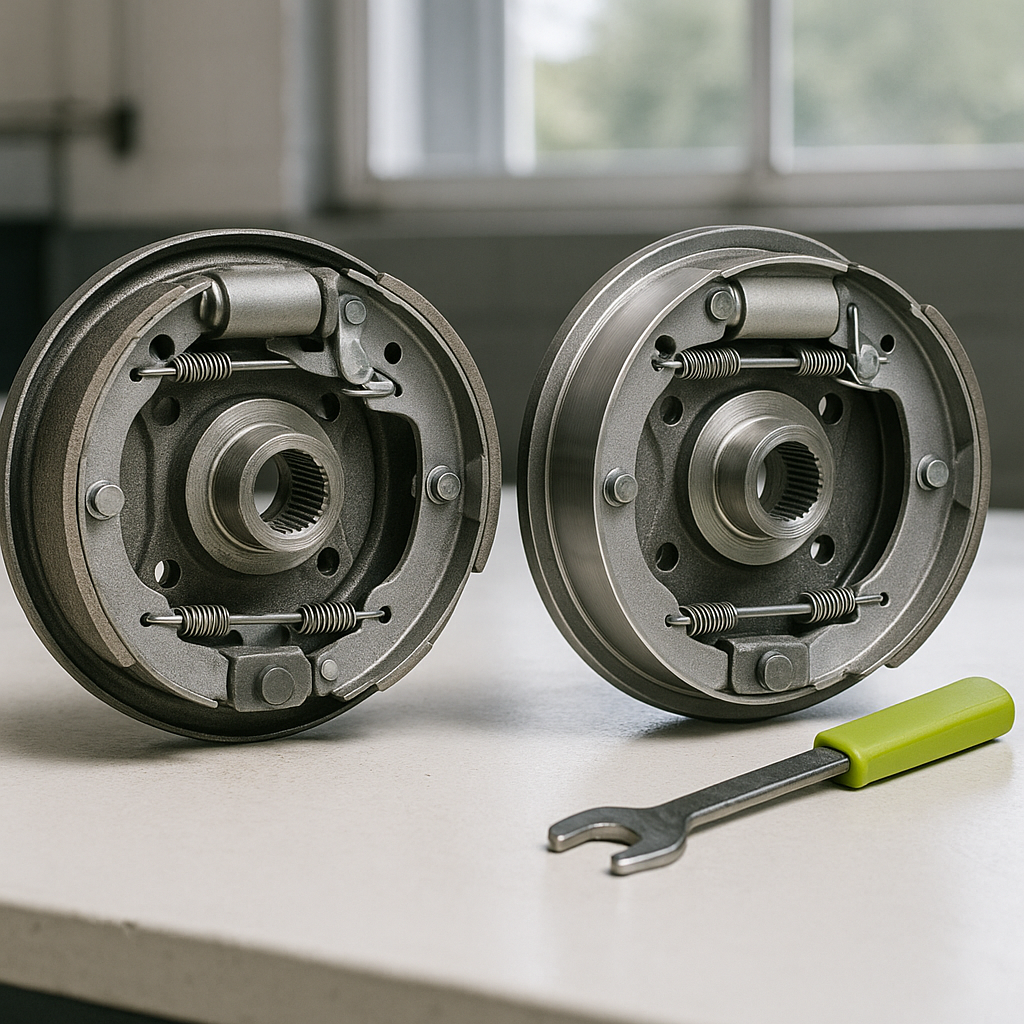
Remove the rear wheels and pull the brake drums if you suspect the problem is inside the drum assemblies. Look for oil or grease contamination on the brake shoes — a leaking axle seal is a common cause of this, and a greasy shoe will grab inconsistently or barely grab at all. Also check for glazing on the shoe surface, which happens when brakes overheat and the friction material hardens. A glazed shoe on one side won't create the same friction as a fresh shoe on the other, causing the cart to pull toward the working side. While the drum is off, measure the drum interior if you can — a deeply grooved or out-of-round drum won't contact the shoe evenly and will contribute to inconsistent braking.
Look at the Wheel Cylinders (Hydraulic Systems) or Brake Actuators
Some golf carts, particularly certain gas models and newer electric platforms, use hydraulic brakes rather than purely mechanical ones. If yours does, a stuck or leaking wheel cylinder on one side will cause exactly this kind of pull. Look for brake fluid weeping around the cylinder boots. A cylinder that's seized won't release fully, keeping light pressure on that drum and dragging the cart toward that side even when you're not braking — which is a related but distinct symptom worth checking for. Hydraulic brake systems require proper bleeding after any cylinder work, so factor that in before buttoning everything back up.
Check the Brake Drum for Warping or Damage
A drum that's been overheated — from riding the brake downhill or from a dragging shoe — can warp slightly. A warped drum creates a pulsing, inconsistent contact with the shoe, which under hard braking translates to uneven force and pull. You can sometimes feel this as a rhythmic pulsing through the pedal rather than a steady pull, but the two symptoms can overlap. A drum that's visibly cracked, deeply scored, or has hot spots (discolored or bluish patches on the braking surface) should be replaced rather than turned on a lathe — by the time drums on a golf cart reach that condition, the metal is often too thin to machine safely.
Adjust Both Sides and Retest
After inspecting and correcting whatever you found, the brake adjustment on both sides needs to match. Most mechanical drum brake systems have a star wheel adjuster accessible through a slot in the backing plate. The shoes should be snug enough that the drum drags very slightly when spun by hand, then back off just until it spins freely. Do both sides the same way. Mismatched adjustment — even with otherwise identical hardware — is one of the most common reasons a brake pull comes back after a repair. Once adjusted, take the cart through several slow stops and verify the pull is gone before driving it on any grade.
When to Replace vs. Adjust
If inspection turns up worn-out shoes with minimal friction material remaining, contaminated shoes that can't be cleaned reliably, or a cable that's corroded through its housing, replacement is the right call rather than adjustment. Brake components are inexpensive relative to the safety risk of a cart that doesn't stop straight. Always replace shoes in axle pairs — putting one new shoe against one worn shoe just recreates the imbalance you started with. The same logic applies to cables: if one is compromised, inspect the other closely, because they've lived the same life and the second one usually isn't far behind.