A golf cart that pulls hard to one side when you apply the brakes isn't just annoying — it's a sign that your braking force is uneven, and that imbalance can get worse over time. Unlike a car with power steering and a heavy chassis to mask the problem, a golf cart will follow that pull aggressively, especially on hills or wet pavement. The good news is that brake pull almost always has a mechanical cause you can track down with a methodical inspection, even without a lift or specialty tools.
Start With the Obvious: Tire Pressure and Condition
Before you pull anything apart, check your tire pressure on both rear tires (or all four, if you have four-wheel brakes). A significantly underinflated tire on one side creates rolling resistance that mimics brake pull. It's a two-minute check that rules out the simplest cause. While you're at it, look at the tires for any obvious damage, bulging, or extremely uneven wear — a tire that's structurally compromised can behave unpredictably under braking load.
Inspect the Brake Cables and Cable Tension
Most golf carts use a mechanical drum brake system actuated by cables, and cable-related problems are the single most common cause of brake pull. Each rear wheel has its own cable run from the brake pedal or equalizer bar. If one cable has stretched, frayed, is kinked, or is routed through a corroded housing, it won't transmit the same force as the other side. Get under the cart and trace both cables from the equalizer all the way to each brake drum assembly. Look for kinks, fraying near the ends, or sections of cable housing that are cracked or crushed. Pull the cables gently by hand — they should move smoothly with similar resistance on both sides. A cable that binds or feels stiff in its housing is delivering inconsistent brake force, and that will pull the cart.
Check the Brake Drum and Shoes on Each Side
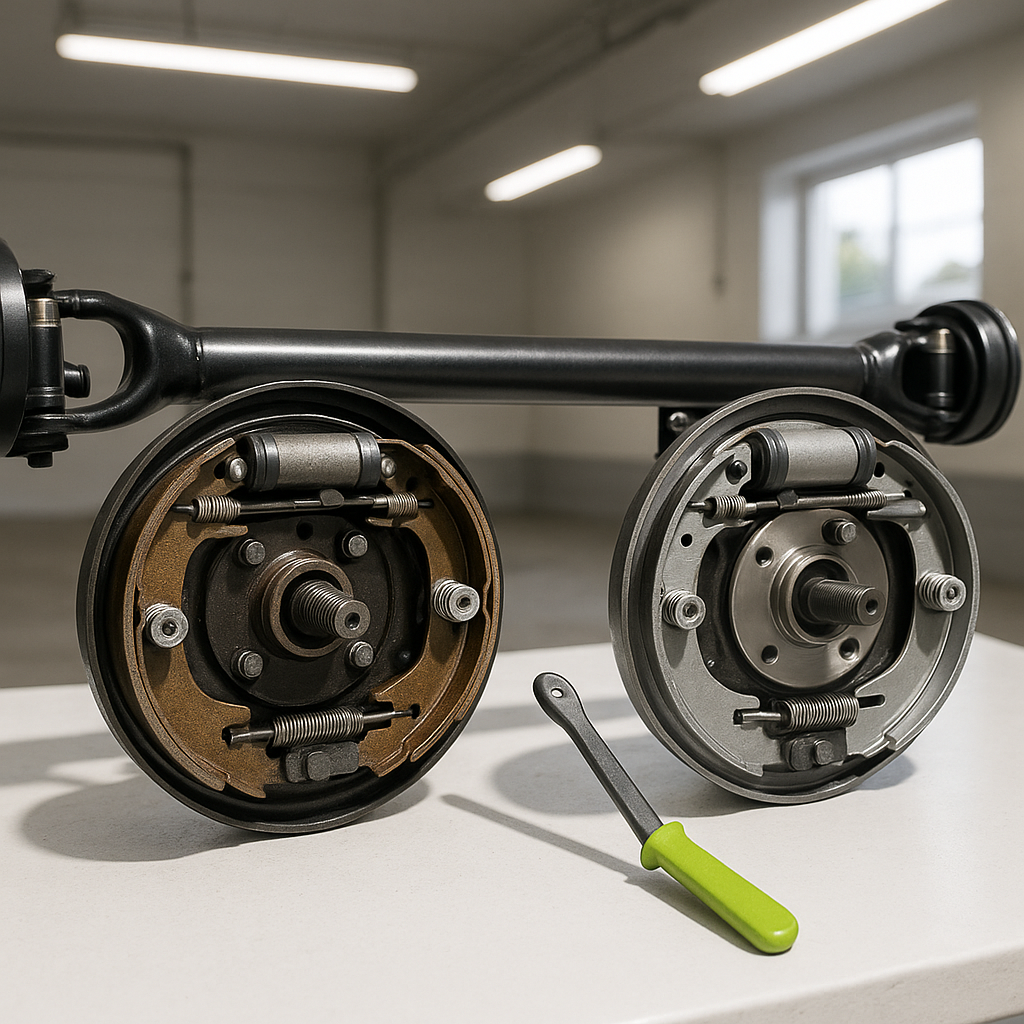
If the cables look good, the problem is likely inside one of the drums. Remove the drums on both sides and inspect them together so you can compare. Look for glazing on the drum surface — a hard, shiny layer that develops when brakes overheat or were dragged for a period — because a glazed drum won't generate consistent friction. Also check the brake shoes themselves. If one side has oil or grease contamination (often from a leaking wheel seal or axle bearing), those shoes will grab inconsistently or barely at all. Contaminated shoes need to be replaced, not cleaned — brake cleaner won't restore proper friction material that has soaked up grease. Compare the lining thickness on both sides as well. If one side is significantly more worn than the other, that's a sign the system has been out of balance for a while.
Look at the Wheel Cylinders (Hydraulic Systems Only)
Some golf carts — particularly older models and certain utility vehicles — use hydraulic drum brakes rather than fully mechanical ones. If yours has wheel cylinders, check each one for seepage or visible leaking around the boots. A wheel cylinder that's partially seized won't push the shoes out with full force, so that wheel contributes less stopping power and the cart pulls toward the working side. You can also have a helper press the brake pedal while you watch the drum-side hardware move — both sides should actuate with the same speed and authority.
Check the Brake Drum for Warping or Scoring
Drums can go out-of-round over years of use, especially if they've been run hot. A warped or heavily scored drum creates an inconsistent contact surface — the shoes grab during part of each rotation and slip during another part. This usually shows up as a pulsing or grabbing feeling in addition to pull, not just a smooth drift. If the drum surface has deep grooves or obvious high spots, the drum needs to be replaced rather than adjusted around.
Inspect the Adjuster and Shoe Return Springs
Inside each drum, the shoes are held in position by return springs and adjusted by a star wheel adjuster or similar mechanism. A broken or weak return spring on one side means those shoes don't fully release after braking — they drag slightly, creating heat and uneven wear, and they can make the cart feel like it's pulling on that side even when you're not pressing the pedal. Spin each drum by hand with the brake released. It should turn with only the lightest resistance. If one side takes noticeably more effort to spin, something is dragging — either a stuck adjuster, a weak return spring, or a shoe that's out of position. Correct shoe-to-drum clearance matters here too; a properly adjusted drum should have a very slight drag but spin freely overall.
When to Adjust vs. When to Replace
If you've found a stretched cable, glazed drum, or contaminated shoes, you're looking at parts replacement — adjustment alone won't fix a brake that's fundamentally compromised on one side. Replace in axle pairs whenever possible; putting new shoes on one side and leaving worn shoes on the other just recreates the imbalance. After any brake work, do a series of slow, controlled stops in a safe area before putting the cart back into regular use. Brake pull should be gone immediately after a correct repair. If the cart still drifts, go back through the inspection — a second cause is sometimes hiding behind the first.