Installing a lift kit is one of the most common upgrades golf cart owners make, and for good reason — more ground clearance opens up rougher terrain and bigger tire options. But a rough, bouncy, or unstable ride after a lift install is a frequent complaint, and it's almost never caused by just one thing. The good news is that the most common culprits are diagnosable with basic tools and a careful eye. Work through these checks systematically before assuming your lift kit is defective or incompatible.
Start with the Hardware: Check Every Fastener
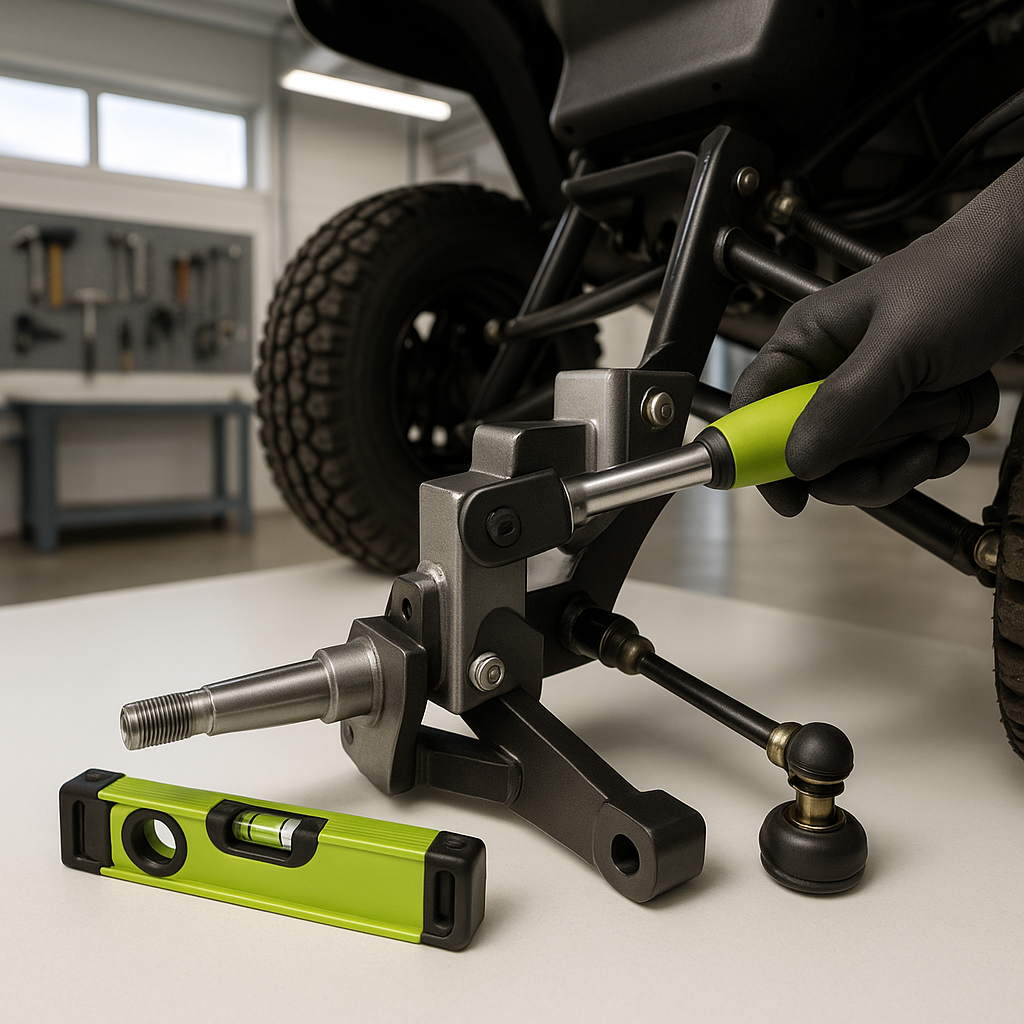
The first thing to inspect after a rough-ride complaint is simple: are all the lift kit fasteners fully tightened and torqued down? Lift spindles, A-arm drop brackets, and block spacers all rely on tight, secure connections. Loose hardware doesn't just cause rough handling — it can cause rattling, clunking over bumps, and in serious cases, dangerous instability. Go back to every bolt in the lift assembly and verify it's fully seated. It's surprisingly common for one or two fasteners to work loose during the first few rides after install as components settle.
Inspect the Suspension Components for Damage or Misalignment
A lift changes the geometry of your entire front suspension. If any component wasn't reinstalled correctly — or if a ball joint, tie rod end, or A-arm bushing was already worn before the install — the new geometry will amplify the problem rather than hide it. Check all rubber bushings for cracking or deformation. Grab each front wheel at the 9 and 3 o'clock positions and try to wiggle it; play here indicates worn tie rod ends or a loose steering component. Then check at 12 and 6 o'clock — movement there often points to ball joint wear or a loose spindle connection.
Check Your Tire Size and Pressure
Lift kits are typically paired with larger tires, and both of those changes affect ride quality significantly. Oversized tires that are overinflated will transmit every surface imperfection directly to the frame. Check that your tire pressure matches the manufacturer's recommendation for your specific tire — this is often lower than people expect for off-road or all-terrain tires. Also confirm that the tires are properly balanced. An unbalanced tire causes vibration that gets worse with speed and is often mistaken for a suspension problem. If you swapped tires at the same time as the lift, balance is worth ruling out first.
Look at Camber and Alignment
Lift kits — especially spindle-style lifts — change the camber angle of the front wheels. Some kits are designed to maintain factory geometry; others introduce noticeable positive or negative camber. If your tires are visibly tilted inward or outward at the top compared to the bottom, or if the cart pulls to one side, alignment is your issue. Misalignment doesn't just cause rough handling and uneven tire wear — it creates constant resistance in the steering that can make the whole cart feel unsettled, especially on uneven ground. A basic toe and camber check with a straight edge and tape measure can tell you a lot, but a proper alignment tool will give you more confidence.
Evaluate Your Shocks
Many golf carts come from the factory with minimal shock absorbers — or none at all on the rear. Lifting the cart changes the shock mounting angle and effective travel, and factory shocks (if present) may not be appropriate for the new ride height or larger tires. If your cart bottoms out easily, bounces excessively after hitting a bump, or feels like it's floating on rough terrain, the shocks are worth examining. Look for leaking fluid around the shock body, collapsed or bent shafts, or bushings that have torn away from the mount. Upgrading to shocks designed for lifted applications is often necessary to get the ride quality back to where it should be.
Check the Rear Suspension and Leaf Springs
It's easy to focus all your attention on the front of the cart after a lift install, but the rear deserves equal attention. If your cart uses a rear leaf spring suspension, check that the springs are seated correctly in their perches and that the U-bolts clamping the axle to the springs are tight and even. A leaf spring that's shifted in its mount will cause the axle to sit unevenly, which directly affects how the cart tracks and rides. Also look for any cracked or broken spring leaves, which can happen when a heavier tire-and-wheel combination puts more stress on components that weren't upgraded to match.
When to Reconsider the Kit Itself
If you've worked through all of the above and the ride is still poor, it's worth stepping back and asking whether the lift kit is the right match for your specific cart. Not all lift kits are engineered to the same standard, and a kit designed for one model year may not fit cleanly on another — even within the same brand family. Gaps in bracket fitment, incorrect spindle geometry for your chassis, or a design that doesn't account for your cart's original suspension style can all result in a ride that can't be fully corrected with adjustments alone. In those cases, the right answer is usually a better-matched kit rather than more time chasing a problem that's built into a poor fit.